
Charlotte’s industrial market is not one market. It is a collection of distinct submarkets with different vacancy rates, pricing, building stock, and access patterns. A 1,500 Sq Ft warehouse in Steele Creek costs roughly 40% more than the same space in Gastonia, but that premium buys tighter vacancy and central positioning.
Choosing the wrong submarket means overpaying for a location you do not need, or underestimating drive times that eat into your day. This guide breaks down Charlotte’s industrial neighborhoods so you can match your business needs to the right area. For the full overview, start with our Charlotte small warehouse guide.
How Charlotte’s Small Warehouse Geography Works
Charlotte’s industrial development follows the highway system. I-77 runs north to south through the metro, I-85 cuts northeast to southwest, and I-485 loops the outer suburbs. Most industrial concentration sits west and southwest of Uptown, near Charlotte Douglas International Airport.
That pattern matters for two reasons. First, access to your customers and jobs: if your work is spread across the metro, central positioning minimizes average drive time. Second, access from highways to your door: a warehouse two miles from I-77 with congested surface streets is less accessible than one five miles away with a straight shot.
True small-bay product under 5,000 Sq Ft is scarce everywhere. Vacancy runs under 4% across the metro even as overall industrial vacancy exceeds 11%.
Southwest Charlotte / Steele Creek
Charlotte’s tightest industrial submarket. The I-77 and I-485 corridor attracts businesses needing central metro access without paying for an Airport address, with a mix of newer flex buildings and established multi-tenant industrial.
- Vacancy: 4.1%, the lowest in the metro. Spaces lease fast and competition is real.
- Pricing: $14 to $18/Sq Ft NNN for small warehouse, $16 to $18/Sq Ft for flex. All-in monthly for 1,500 Sq Ft runs $2,200 to $2,800.
- Building stock: Newer construction dominates, more flex than heavy industrial, climate control standard, ceilings typically 20 to 24 feet.
- Best for: Metro-wide operations needing central positioning, professional appearance, and modern facilities. E-commerce operations prioritizing carrier access.
- Trade-offs: Highest pricing in the metro, limited heavy industrial, and less negotiating leverage in a tight market.
Airport / West Charlotte
Charlotte’s industrial core. The area around Charlotte Douglas holds the metro’s densest concentration of warehouse and distribution space, mixing large logistics facilities, multi-tenant industrial, and older flex buildings.
- Vacancy: Elevated overall, but concentrated in large spaces over 100,000 Sq Ft. Small-bay vacancy stays tight.
- Pricing: $10 to $15/Sq Ft NNN for small warehouse, $13 to $17/Sq Ft for flex. All-in monthly for 1,500 Sq Ft runs $1,600 to $2,400.
- Building stock: Everything from 1970s-era industrial to recent construction. Heavy industrial features like floor drains, 3-phase power, and drive-in doors are more common here.
- Best for: Contractors needing heavy industrial features, operations valuing function over finish, and businesses needing air-cargo proximity.
- Trade-offs: Building quality varies, so due diligence on specific properties matters more.
Gaston County (Gastonia / Mount Holly / Belmont)
Charlotte’s value play. Gaston County sits west of the metro across the Catawba River, offering lower costs for businesses that can handle a 20 to 30 minute drive from Uptown.
- Vacancy: Moderate, with more availability than infill Charlotte, though quality small-bay space still moves quickly.
- Pricing: $10 to $12/Sq Ft NNN for small warehouse, $12 to $14/Sq Ft for flex. All-in monthly for 1,500 Sq Ft runs $1,500 to $2,000, roughly 30 to 40% below Southwest Charlotte.
- Building stock: Mix of older industrial parks and newer development. Walmart’s announced fulfillment center signals continued investment, and permissive zoning makes outdoor storage easier.
- Best for: Cost-sensitive operations, western-metro customers, and contractors needing yard space.
- Trade-offs: Distance limits convenience for metro-wide operations, with fewer nearby amenities.
North Charlotte (Huntersville / Mooresville / Davidson)
A growing submarket serving the Lake Norman corridor, mixing established industrial parks with new development as population pushes north along I-77.
- Vacancy: Moderate. New construction keeps vacancy from tightening as much as Southwest Charlotte.
- Pricing: $12 to $15/Sq Ft NNN for small warehouse, $14 to $16/Sq Ft for flex. All-in monthly for 1,500 Sq Ft runs $1,900 to $2,400.
- Building stock: Newer on average, more flex than heavy industrial, with some parks built for smaller tenants.
- Best for: Businesses serving the northern suburbs and Lake Norman, and owners who live north of the city.
- Trade-offs: Limited heavy industrial inventory and premium pricing for the newest buildings.
East Charlotte / Matthews / Mint Hill
Less industrial inventory than the west side, but it serves businesses focused on the eastern suburbs. The Independence Boulevard (US-74) corridor holds most of the area’s industrial and flex space.
- Vacancy: Limited inventory means fewer options rather than high vacancy. What exists tends to lease.
- Pricing: $12 to $16/Sq Ft NNN for small warehouse, $14 to $17/Sq Ft for flex. All-in monthly for 1,500 Sq Ft runs $1,900 to $2,500.
- Building stock: Flex space dominates, true industrial product is scarce, and ceilings are often lower.
- Best for: Businesses whose customers and jobs concentrate east of Charlotte.
- Trade-offs: Fewest industrial options of any major submarket, and flex space often restricts industrial uses.
NoDa: Where WareSpace Sits
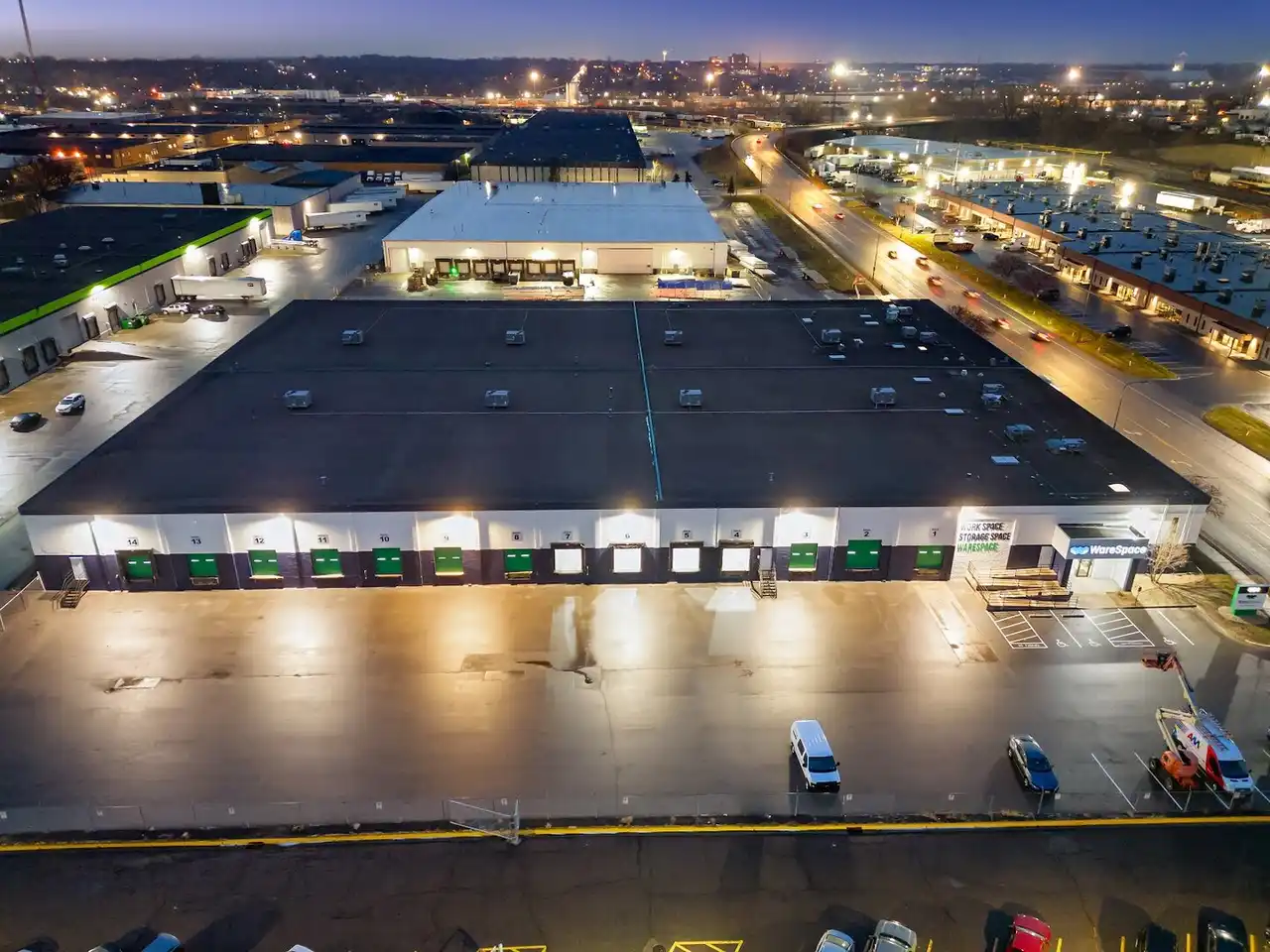
WareSpace Charlotte is open at 322 W 32nd Street in the NoDa arts district, minutes from Uptown. It is roughly 5 minutes to I-77, 7 minutes to I-85, 8 minutes to I-485, 9 minutes to the city center, and 15 minutes to Charlotte Douglas, with the 9th Street LYNX Blue Line station about 8 minutes away. Small-bay units run 200 to 2,000 Sq Ft with all-inclusive pricing:
- 200 to 400 Sq Ft: starting at $1,000/mo all-inclusive
- 500 to 800 Sq Ft: from $1,400/mo all-inclusive
- 900 to 1,400 Sq Ft: from $1,900/mo all-inclusive
- 1,500 to 2,000 Sq Ft: from $2,400/mo all-inclusive
Every unit includes climate control, electricity, WiFi, loading dock access, industrial racking, warehouse equipment, conference rooms, 24/7 access, and security, on 6-month terms with no NNN surprises.
Comparing Charlotte Submarkets
| Submarket | Small warehouse | Vacancy | Drive to Uptown | Best for |
|---|---|---|---|---|
| Southwest / Steele Creek | $14-18/Sq Ft | 4.1% | 15-20 min | Metro-wide operations, e-commerce |
| Airport / West | $10-15/Sq Ft | Tight (small-bay) | 10-15 min | Contractors, function over finish |
| Gaston County | $10-12/Sq Ft | Moderate | 25-35 min | Value seekers, outdoor storage |
| North Charlotte | $12-15/Sq Ft | Moderate | 20-30 min | Lake Norman, northern suburbs |
| East Charlotte | $12-16/Sq Ft | Limited inventory | 15-25 min | Eastern suburbs focus |
Charlotte Neighborhood FAQs
What is the cheapest area for warehouse space in Charlotte? Gaston County (Gastonia, Mount Holly, Belmont) offers the lowest rates at $10 to $12/Sq Ft NNN, roughly 30 to 40% below infill Charlotte, with a 25 to 35 minute drive from Uptown. Airport / West Charlotte offers mid-range pricing at $10 to $15/Sq Ft closer to the city.
Where is warehouse vacancy lowest in Charlotte? Southwest Charlotte / Steele Creek has the metro’s tightest vacancy at 4.1%. Small-bay space under 5,000 Sq Ft runs tight across all submarkets, under 4% metro-wide, even as overall industrial vacancy exceeds 11%.
How do I choose between Charlotte submarkets? Start with where your customers and jobs are, since minimizing drive time often matters more than rent savings. Then match building stock to your needs, factor in employee commutes, and consider growth trajectory. A $4/Sq Ft savings on 1,500 Sq Ft equals about $6,000 a year, which may or may not justify the trade-offs.
Is there warehouse space in South Charlotte? Very little. South Charlotte along I-485 and South Boulevard is primarily retail and office. Some flex space exists, but true warehouse product is scarce, so businesses usually expand their search to Steele Creek.
Ready to see the space? Book a tour of WareSpace Charlotte or get an instant quote.


