


Your garage met your needs at 20 orders a week. At 20 orders a day, inventory has consumed your living room, packing happens on the kitchen table, and the FedEx driver knows your home address better than your friends do.
The jump to dedicated warehouse space is the first major infrastructure decision most e-commerce businesses face. It’s also where many get stuck—Charlotte’s industrial market is built for companies shipping containers, not cases. Finding 1,000-3,000 SF with climate control, carrier pickups, and room to actually work takes more effort than finding 50,000 SF.
Charlotte offers advantages for e-commerce: its central East Coast location puts most of the eastern U.S. within 2-day ground shipping, major carrier hubs operate out of Charlotte Douglas, and warehouse options are expanding. The challenge is finding a small space with the right features at a price that makes sense for your margins.
What Small Warehouse Space Costs in Charlotte for E-comm Sellers (2026)
Move-in costs run $8,000-12,000 for traditional leases (security deposit, first month, insurance, utility deposits). Add $3,000-10,000 for racking, packing stations, or buildout. Co-warehousing typically requires $5,000-7,000 upfront with no buildout.
Space Type
Annual Rent
All-In Monthly (1,500 SF)
Basic small warehouse
$12-15/SF NNN
$1,900-2,400
Climate-controlled warehouse
$14-17/SF NNN
$2,200-2,700
Flex space with office
$15-18/SF NNN
$2,400-2,900
Co-warehousing (all-inclusive)
$20-28/SF
$2,500-3,500
NNN expenses add $2.50-4.00/SF annually. Budget another $150-300/month for utilities.
The math compared to your garage: A $2,500/month warehouse feels expensive against $0 rent at home. But factor in the inventory you can’t stock, the orders backing up because you have no space to pack efficiently, and the time spent on drop-off runs. If proper space lets you double shipments, it pays for itself.
What E-Commerce Fulfillment Space Requires
Climate control. Non-negotiable for most consumer products. Temperature and humidity swings damage electronics, cosmetics, supplements, food, and anything customers expect to arrive in perfect condition. Even products that tolerate variation sell better when they don’t arrive heat-damaged in August. Verify the space is actually climate-controlled—some listings say “climate-controlled building” when only common areas are conditioned.
Carrier access. Daily UPS, FedEx, and USPS pickups eliminate drop-off runs that burn hours weekly. Verify pickup schedules and cutoff times before signing—missing a 3 pm pickup means orders ship tomorrow. Some buildings offer carrier drop boxes or negotiated pickup windows.
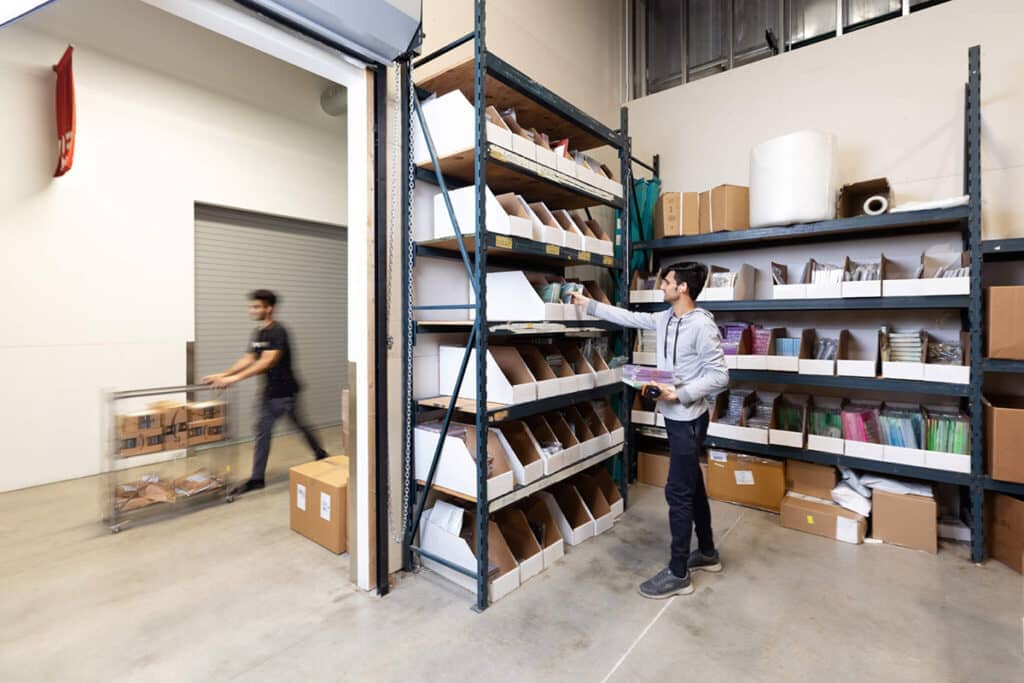
Layout for workflow. Fulfillment isn’t just storage. You need a receiving area near the loading access, storage organized by velocity (fast-movers accessible, slow-movers high or deep), packing stations with supplies within reach, and outbound staging near the pickup area. A 1,500 SF space that’s all storage with no room to work doesn’t function. Sketch your workflow before touring.
Ceiling height. Vertical storage maximizes square footage. 16-20 foot ceilings accommodate multi-level racking. 12-foot ceilings limit you to single-level storage and reduce effective capacity by 30-40%.
Loading access. If you’re receiving inventory by the case, a standard roll-up door works. Pallet deliveries from suppliers need dock-high or drive-in access. Consider how your receiving volume might change as you scale.
Security. Inventory is cash sitting on shelves. 24/7 access control, cameras, and alarm systems protect your investment. Some buildings include security; others require you to add it.
Electrical. Label printers, computers, heat guns, maybe a heat sealer or shrink wrap station. Standard 120V handles most e-commerce operations, but verify outlet placement—some warehouse spaces have minimal electrical outside office areas.
Warehouse Lease vs. 3PL: Which Makes Sense for your E-comm Operation in Charlotte
Before signing a lease, decide if third-party logistics makes more sense for your current stage.
3PL works better when:
- Volume is under 300-500 orders monthly
- You lack capital for lease deposits and buildout
- You want variable costs that scale with sales
- You need geographic distribution for faster shipping
Your own space works better when:
- Volume exceeds 500-1,000 orders monthly
- Per-order cost matters more than flexibility
- Packaging and presentation require hands-on control
- You’re doing custom kitting, bundling, or assembly
- You want to build operational assets rather than pay fees
The crossover point depends on your product, margins, and fulfillment complexity. Many e-commerce businesses start with 3PL and bring fulfillment in-house as they scale. Others start in their own space from day one. Neither path is universally correct.
If you’re unsure, run the numbers: get 3PL quotes for your current volume and compare against warehouse costs plus your time. The answer usually becomes clear.
Best Charlotte Areas for E-Commerce Fulfillment
Charlotte’s submarkets offer different trade-offs for e-commerce. Carrier logistics and shipping efficiency matter more here than for other business types.
Airport / West Charlotte ($10-15/SF) puts you closest to FedEx and UPS hubs at Charlotte Douglas. More carrier route frequency and potentially later pickup windows. Functional buildings without premium finishes keep costs down.
Southwest Charlotte / Steele Creek ($14-18/SF) offers modern, climate-controlled buildings along major distribution corridors. Reliable carrier access but premium pricing and tight vacancy (4.1%).
Gaston County ($10-12/SF) saves 30-40% on rent but sits further from carrier hubs. Verify pickup schedules before committing—some locations work fine, others may require drop-off runs that defeat the savings.
North Charlotte ($12-15/SF) serves businesses in the Lake Norman corridor with newer building stock and good I-77 access.
For e-commerce specifically, proximity to carrier hubs often matters more than general highway access. A slightly more expensive space with reliable 5pm pickups beats a cheaper space where the cutoff is 2pm.
Looking for e-commerce warehouse space in Charlotte?
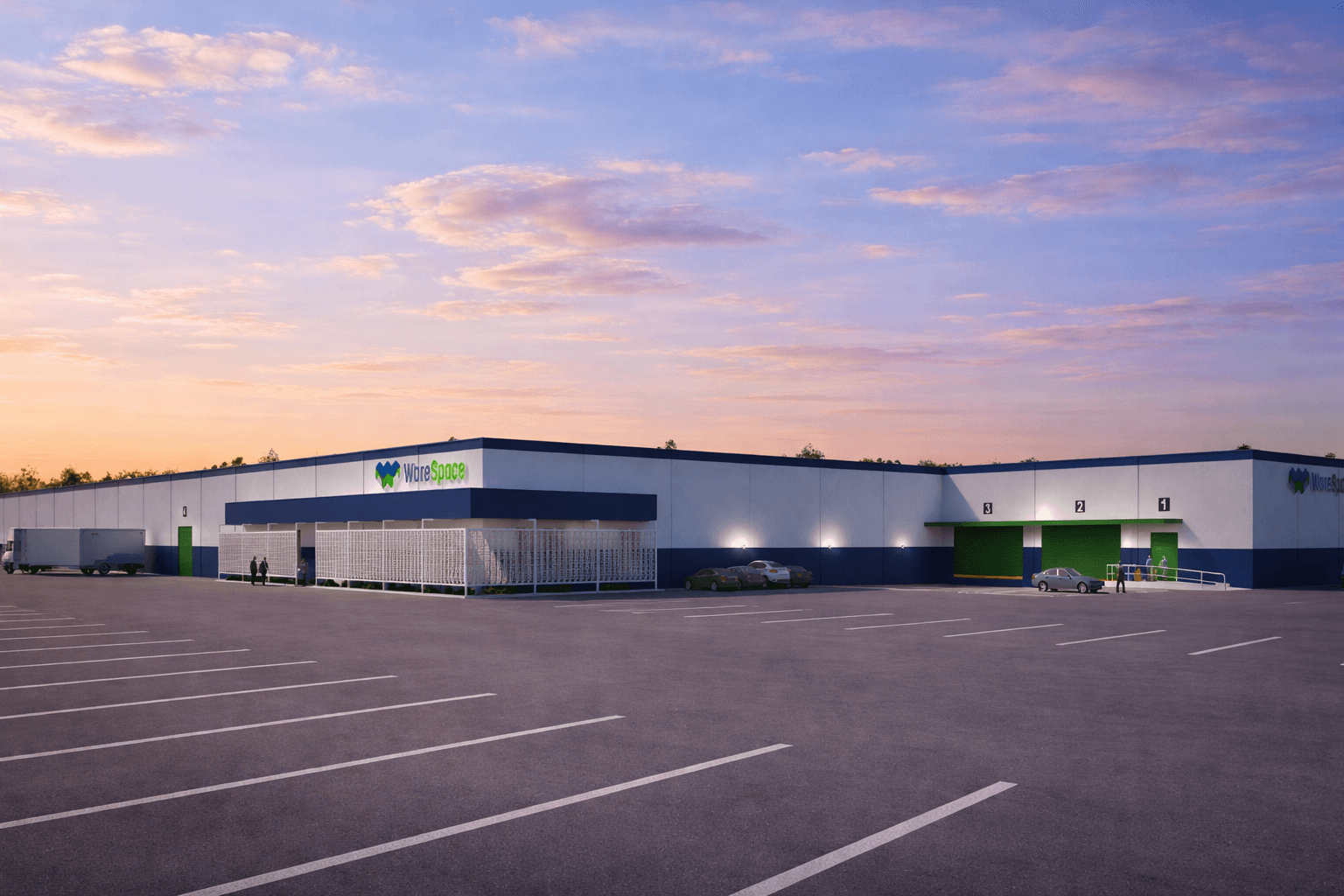
WareSpace opens in Charlotte’s NoDa neighborhood (322 W 32nd Street) in early 2026. Climate-controlled units from 200-2,000 SF with daily carrier pickups, loading dock access, and all-inclusive pricing. No long-term lease, no NNN surprises, no buildout required.
FAQ
How much does e-commerce warehouse space cost in Charlotte?
Climate-controlled small warehouse space runs $14-17/SF NNN annually, or roughly $2,200-2,700/month all-in for 1,500 SF. Basic warehouse without climate control costs $12-15/SF. Co-warehousing with everything included runs $20-28/SF. Budget $8,000-12,000 for move-in costs plus $3,000-10,000 for racking and packing station setup.
What features do e-commerce businesses need in warehouse space?
Climate control tops the list for most consumer products. Beyond that: daily carrier pickups (verify schedules and cutoff times), enough ceiling height for vertical racking (16+ feet ideal), layout that accommodates receiving, storage, packing, and staging workflow, and reliable security. Loading dock access becomes important as you scale to pallet-quantity receiving.
Should I lease warehouse space or use a 3PL?
Generally, 3PL makes sense under 300-500 orders monthly when variable costs and flexibility matter more than per-order efficiency. Your own space typically wins above 500-1,000 monthly orders when you need cost control, custom fulfillment, or hands-on quality management. Run the numbers for your specific volume and margins to find the crossover point.
Where is the best location for e-commerce fulfillment in Charlotte?
Airport/West Charlotte offers the closest proximity to FedEx and UPS hubs, potentially later pickup windows, and functional space at $10-15/SF. Southwest Charlotte provides modern climate-controlled buildings at premium pricing ($14-18/SF). For e-commerce specifically, carrier pickup schedules and cutoff times often matter more than general location, so verify before signing.
How much space do I need for e-commerce fulfillment?
Depends on inventory size and workflow needs. A rough starting point: 500-1,000 SF handles low-volume operations with limited SKUs. 1,500-2,500 SF accommodates growing brands with room for racking, packing stations, and inventory expansion. Above 3,000 SF typically indicates either high SKU counts, bulky products, or significant volume. Start with your current inventory footprint and add 30-50% for workflow space.
 ►
Explore 3D Space
►
Explore 3D Space