

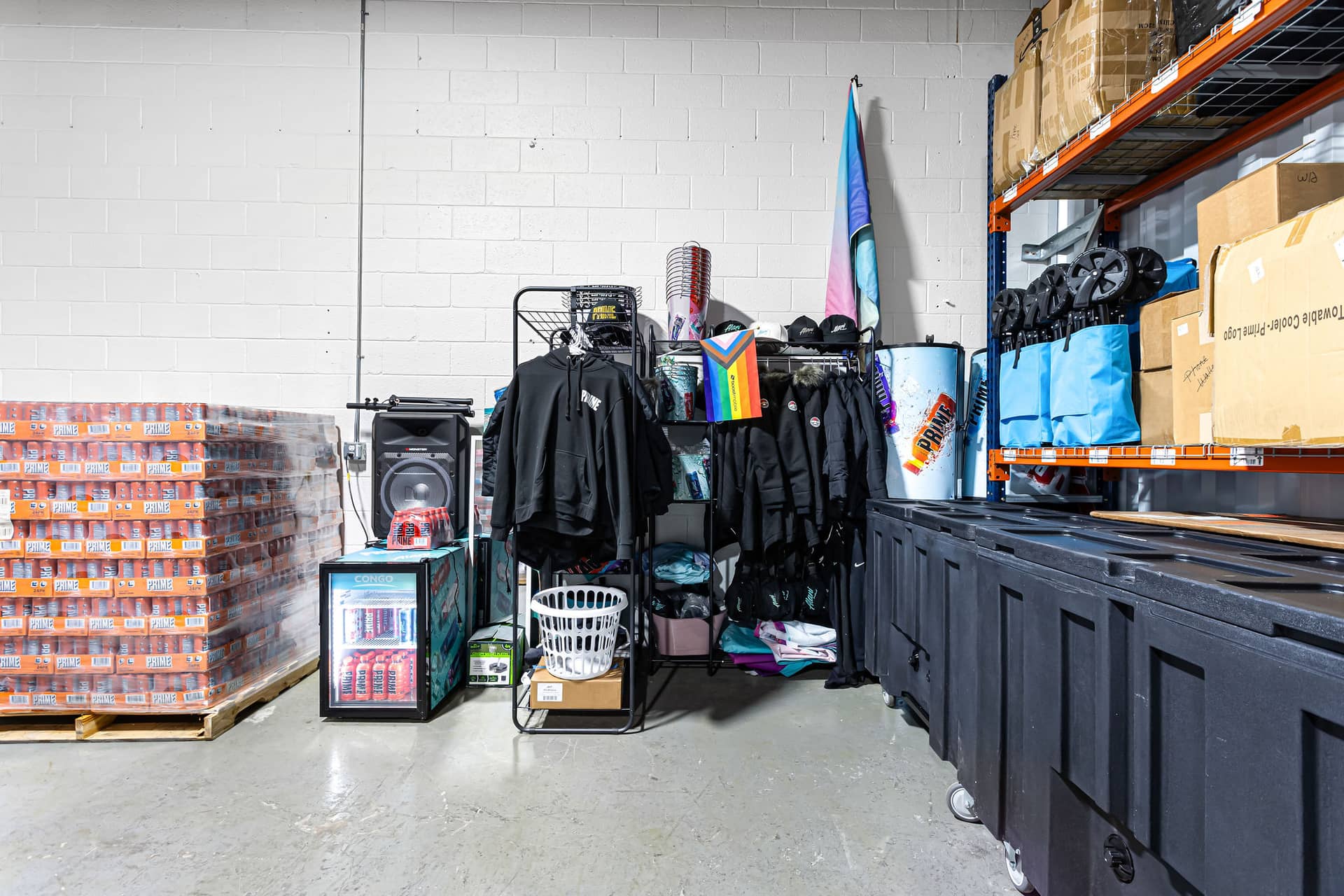
The production wrapped three weeks ago, and you’re still figuring out what to do with everything.
Props filling a storage unit that charges extra every time you access it. Costumes in a space that isn’t climate-controlled—and Georgia humidity is already doing damage. Equipment scattered across two locations because nothing was big enough to hold it all.
Georgia’s film industry generated $2.6 billion in direct spending last year. The state has world-class soundstages, talented crews, and the tax incentives that keep productions coming. What it doesn’t have enough of is proper storage infrastructure for everything those productions create.
This guide covers what film production companies, prop houses, and entertainment industry businesses need to know about warehouse space in Atlanta.
Film Industry Storage Challenges in Atlanta
Production Creates Massive Inventory
Every production accumulates assets:
Props and set dressing — Thousands of items, from hero props to background pieces. Many needed for potential reshoots, sequels, or future projects.
Costumes and wardrobe — Garments representing significant investment, often custom-made, irreplaceable if damaged.
Equipment — Camera packages, lighting, grip equipment, specialty items between productions.
Set pieces — Large, awkward items that don’t fit standard storage but need protection between uses.
Picture vehicles — Cars, trucks, specialty vehicles that can’t sit in parking lots.
The production ends, but the stuff doesn’t disappear.
The Wrong Storage Destroys Assets
Self-storage units and inadequate warehouses cost the industry millions in damaged assets:
Climate damage — Temperature fluctuations warp wood, crack plastics, and degrade adhesives. Humidity grows mold on fabric and paper. Georgia summers hit 95°F with high humidity—conditions that destroy costumes, props, and equipment.
Access limitations — Standard storage unit doors are 8 feet wide. Getting a 12-foot set piece through them involves damage, disassembly, or both.
Security gaps — Entertainment assets are targeted. Generic storage facilities weren’t designed to protect high-value production inventory.
No operations allowed — Need to pull props for a reshoot at 11 PM? Need to repair a costume before returning to set? Self-storage doesn’t allow on-site work.
Film Industry Warehouse Requirements in Atlanta
Climate Control for Production Storage
Climate control isn’t optional for entertainment storage:
Costumes and wardrobe — Fabric degrades in temperature swings. Humidity causes mold. Vintage or period pieces can be irreplaceable.
Props with organic materials — Wood, leather, paper, natural fibers—all vulnerable to Atlanta’s climate swings.
Electronics and equipment — Camera gear, lighting electronics, and technical equipment need stable conditions.
Art department materials — Painted surfaces, printed materials, specialty finishes sensitive to humidity.
Temperature range: 65-75°F maintained. Humidity: 40-60% controlled. Anything else risks your inventory.
Access Requirements for Film Production Warehouse
Productions don’t follow business hours:
24/7 availability — 4 AM prop pulls for early call times. Weekend access for emergency needs. Production schedules demand around-the-clock access.
Loading dock access — Set pieces, bulk costume loads, and equipment cases require efficient load-in and load-out. Standard doors don’t cut it.
Vehicle accommodation — Box trucks, production vans, occasionally larger vehicles need to get close to loading areas.
Short-notice flexibility — Productions discover mid-shoot that they need additional space, or wrap accelerates and everything needs storing tomorrow.
Security for Entertainment Industry Storage
Film assets are high-value and sometimes irreplaceable:
Controlled access — Key card, code, or biometric entry. Not a padlock anyone can pick.
Surveillance — Camera coverage of common areas, loading docks, and building exterior.
Individual unit security — Your space locks separately from the building.
Access logging — For chain-of-custody documentation. Productions increasingly need records of who accessed what and when.
Organization and Work Space
Storage isn’t just about putting things somewhere—it’s about finding them again:
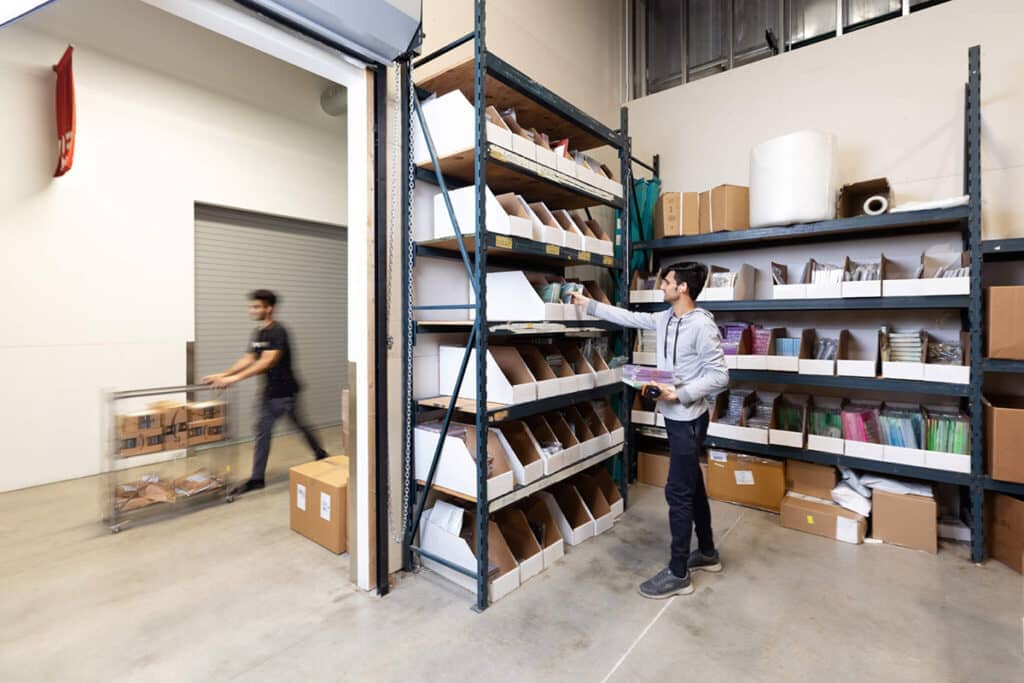
Racking systems — Vertical storage maximizes space. Organization enables retrieval.
Adequate lighting — You need to see what you’re looking for.
Room to work — Space to pull items, pack for transport, do minor repairs, receive returns.
Layout flexibility — Different productions have different inventory profiles. Fixed configurations rarely work.
Film Storage Uses in Atlanta
Prop House Storage Needs
Companies that rent props to multiple productions need:
- Large inventory storage (often 1,500+ SF)
- Showroom or client viewing area
- Processing space for cleaning, repairing, cataloging
- Frequent loading facilities
- Climate control for delicate items
Production Company Storage Needs
Ongoing series or companies with multiple projects need:
- Secure storage for production-owned assets
- Access for multiple authorized personnel
- Flexibility to scale with production schedules
- Proximity to primary shooting locations
Wardrobe and Costume Storage Needs
Costume houses and production wardrobe departments need:
- Climate control (essential, not optional)
- Hanging storage capacity
- Work space for alterations and repairs
- Clean, dust-free environment
Equipment Storage Needs
Equipment rental companies and productions with owned gear need:
- Secure storage for high-value items
- Power for equipment charging and testing
- Loading dock access for case transport
- Space for maintenance and prep
Finding Film Production Warehouse Space in Atlanta
Location Considerations for Entertainment Storage
Consider which productions you serve:
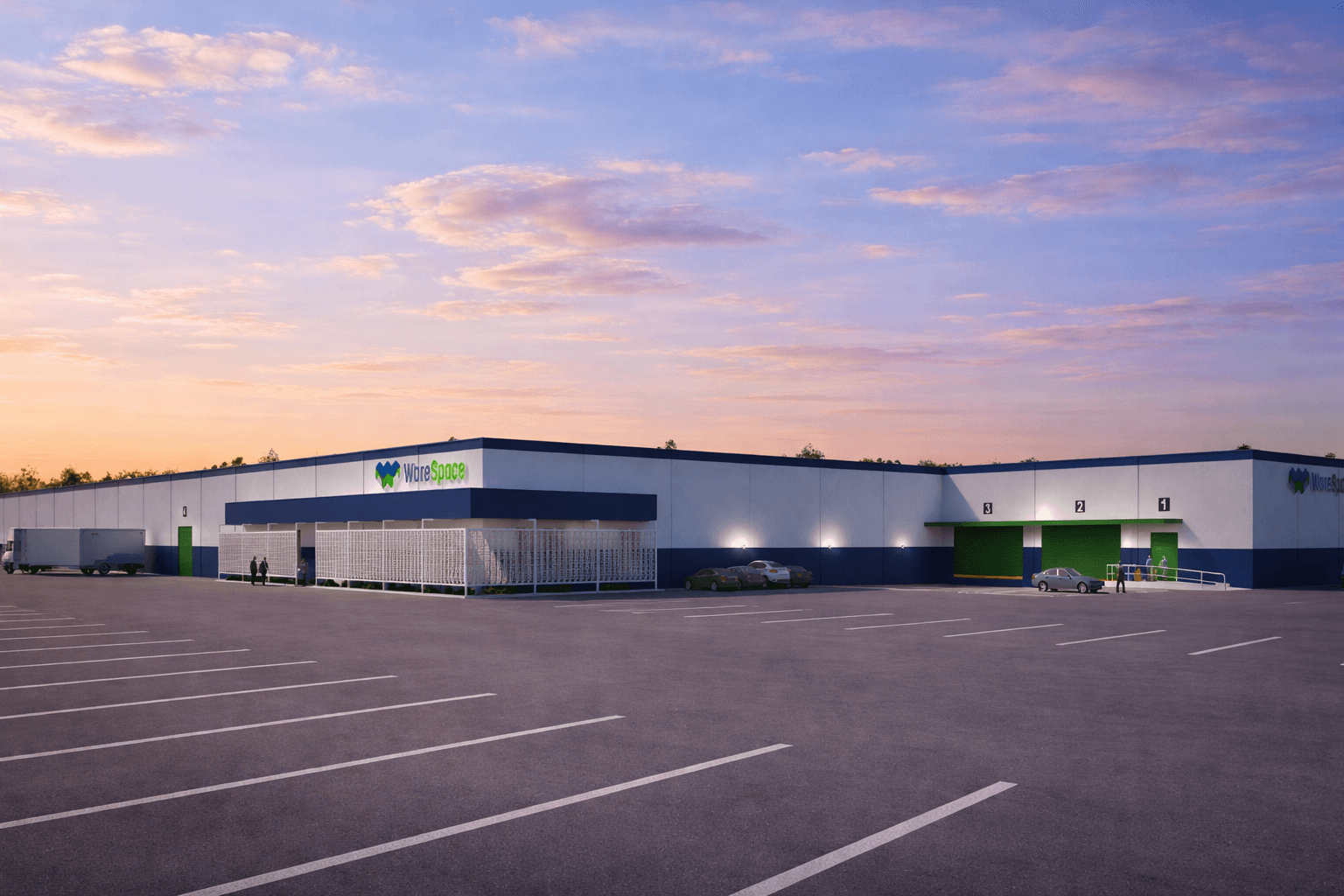
Northeast Atlanta / Doraville — Assembly Studios and post-production cluster. WareSpace Presidential Parkway is here.
South Atlanta / Fayette County — Trilith Studios (formerly Pinewood). Primary location for major studio work.
Serving multiple studios — Prioritize locations with good I-285 access to reach all production areas.
For storage serving a single production, locate near that production. For ongoing operations serving multiple clients, central access matters more.
Size Planning for Film Storage
Entertainment storage fluctuates:
- Peak during active production
- Reduced between projects
- Sudden expansion for large productions
Flexible lease terms let you match space to actual needs rather than paying for peak capacity year-round.
Questions to Ask When Touring Production Storage Space in Atlanta
About climate:
- What’s the temperature range maintained?
- Is humidity controlled?
- What happens during power outages?
About access:
- 24/7 availability?
- Loading dock dimensions?
- Can production vehicles access the loading area?
About security:
- What access control system?
- Is there surveillance?
- Can I get access logs?
About terms:
- Minimum lease length?
- Can I expand on short notice?
- What’s the notice period to downsize?
Film Production Storage at WareSpace Atlanta
WareSpace Presidential Parkway serves Atlanta’s entertainment industry:
- Climate-controlled units — Temperature and humidity protection for costumes, props, and equipment
- 24/7 secure access — Night pulls and early call times accommodated
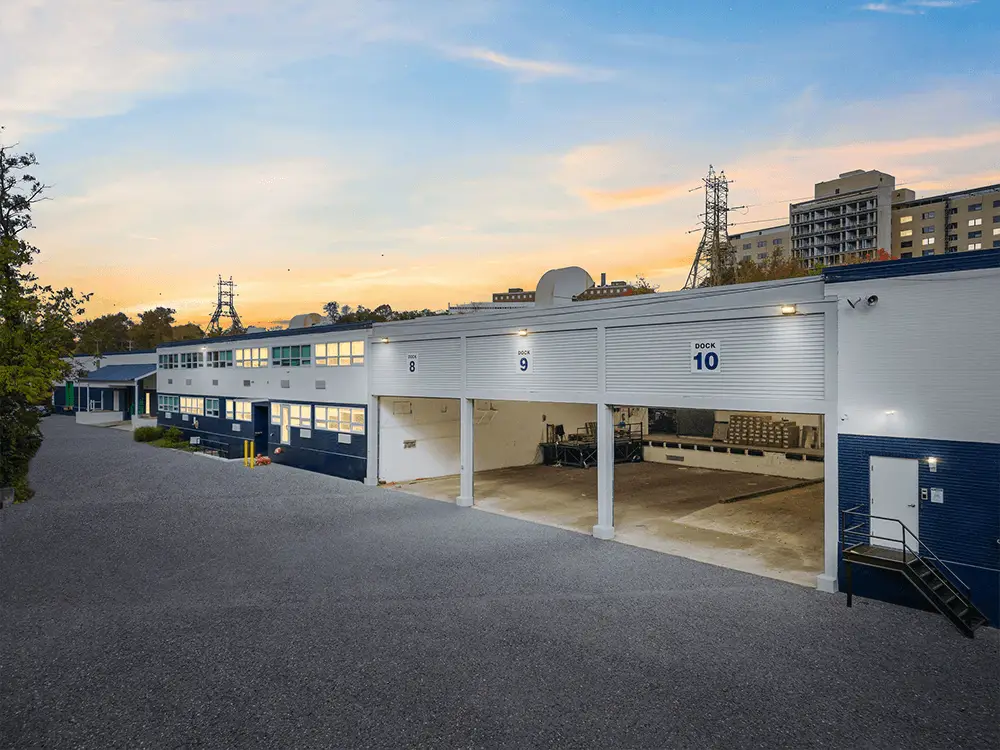
- Loading dock access — Efficient movement of set pieces and bulk materials
- 200-2,000 SF flexible sizes — Scale with production needs
- 6-month terms — Align with production schedules, not arbitrary lease cycles
- Northeast Atlanta location — Close to Assembly Studios, accessible to all metro production areas
Schedule a tour to see the facility and discuss your production storage needs.
Frequently Asked Questions
Why does film production need climate-controlled storage?
Costumes, props, and production materials are often irreplaceable. Temperature fluctuations damage fabric, warp wood, and degrade electronics. Humidity promotes mold on organic materials. Climate control protects these assets for reshoots, sequels, and future use.
What size warehouse do prop storage companies typically need?
Prop houses with significant inventory typically need 1,500+ SF. Production-specific storage, smaller prop operations, and wardrobe storage can work well in 500-1,500 SF. Match space to inventory volume while maintaining room for organization and access.
Is Northeast Atlanta or South Atlanta better for film storage?
Depends on which productions you serve. Northeast Atlanta offers proximity to Assembly Studios and Doraville’s post-production cluster. South Atlanta provides closer access to Trilith. For companies serving multiple studios, locations with good I-285 access provide flexibility to reach all production areas.
Can I get 24/7 access to warehouse space for production needs in Atlanta?
Some facilities offer 24/7 access; others restrict hours. For film industry use, 24/7 is typically essential—production schedules don’t follow business hours, and urgent pulls happen at all times. Confirm access policies before committing.
What security features should film storage have in Atlanta?
Essential: controlled access (key card, code, or biometric), surveillance cameras, individually lockable units, adequate lighting. Many productions require visitor logs and access records for chain-of-custody documentation.
What’s the typical lease term for film industry warehouse space in Atlanta?
Traditional industrial leases require 3-5 year commitments—poorly matched to production schedules. Flexible facilities like WareSpace offer 6-12 month terms that align with production timelines, allowing expansion for active productions and contraction between projects.
Can I store picture vehicles at warehouse facilities in Atlanta?
Some facilities accommodate vehicles; many cannot. Requirements include appropriate door sizes, floor load capacity, and ventilation. Confirm vehicle capability specifically before committing if picture vehicle storage is needed.
 ►
Explore 3D Space
►
Explore 3D Space