


Charlotte’s service economy is substantial, and most service companies start from home – trucks parked in driveways, parts bins in garages, dispatch run from the dining room. That creates warehouse needs most listings don’t address: somewhere to park the trucks overnight, store equipment and parts inventory, stage jobs for the next day, and run dispatch operations without working out of your kitchen.
Finding space that checks these boxes at a reasonable price takes more effort than it should.
Small Warehouse Pricing for Charlotte Service Businesses (2026)
Service companies typically need less square footage than e-commerce or manufacturing but have specific requirements around vehicle access and parking that affect pricing.
Space Type
Annual Rent
All-In Monthly (2,000 SF)
Basic industrial with yard
$10-13/SF NNN
$2,100-2,700
Flex space with office
$14-17/SF NNN
$2,800-3,400
Drive-in warehouse
$12-15/SF NNN
$2,400-3,000
Co-warehousing (all-inclusive)
$20-28/SF
$3,300-4,700
NNN expenses add $2.50-4.00/SF annually. Utilities run $150-350/month, depending on climate control needs and office usage.
Parking and yard space often matter as much as interior square footage. Some properties include parking in the lease; others charge a separate fee. Yard storage for trailers, equipment, or materials typically runs $2-4/SF annually.
The service business calculation: A 2,000 SF space with adequate parking at $2,800/month replaces a home garage, eliminates HOA issues, provides professional staging, and lets you hire without employees trampling through your house. If that efficiency gain produces one additional billable service call per day, the space pays for itself.
Move-in costs run $7,000-11,000 for traditional leases: security deposit (1-2 months), first month’s rent, insurance, and utility deposits. Minimal buildout is typically needed—most service companies need shelving for parts, a basic office setup, and not much else. Budget $2,000-5,000 for initial organization and setup.
What Service Company Small Warehouse Space Requires
Service businesses share some needs with contractors but have distinct operational patterns worth addressing separately.
Vehicle access and parking. This is the central requirement. You need doors wide enough for your largest vehicle (measure, don’t assume), a turning radius for trucks with trailers, and parking for your fleet plus employee vehicles. A 2,000 SF warehouse with two parking spaces doesn’t work for a company running four trucks.
Drive-in capability. Most service companies benefit from drive-in access rather than dock-high loading. You’re not receiving pallets—you’re loading and unloading equipment, tools, and parts from truck height. Grade-level drive-in doors (10×10 minimum, 12×14 for larger vehicles) provide the most flexibility.
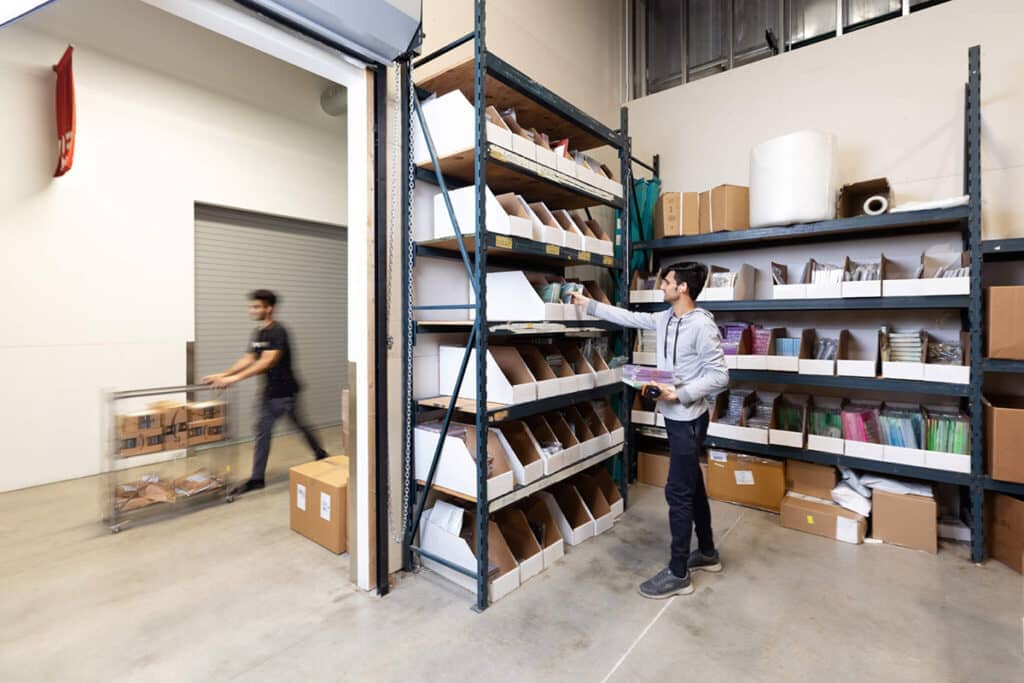
Parts storage and organization. Service calls succeed or fail based on having the right parts on the right truck. Your space needs room for organized inventory: shelving, bins, a system for tracking stock, and restocking trucks. This doesn’t require a lot of square footage, but it needs to be incorporated into your layout.
Staging area. Space to prep equipment for tomorrow’s jobs, load trucks efficiently, and handle returns from completed work. The daily rhythm of a service business—load morning, return evening, prep for tomorrow—needs workflow space, not just storage.
Small office for dispatch. Scheduling, customer communication, invoicing, and routing. Doesn’t need to be large—100-300 SF handles most small service operations—but should be separated from the warehouse for noise and climate control. Many flex spaces include finished office; basic industrial spaces may require buildout.
Security. Trucks, equipment, and parts inventory represent significant value. Gated yards, access control, cameras, and alarm systems protect your assets. Verify what’s included versus what you need to add.
Electrical for equipment. Battery charging for cordless tools, possibly air compressors, and maybe specialty equipment, depending on your trade. Standard 120V handles most service company needs, but verify outlet availability in the warehouse area.
Compliance considerations by trade:
- HVAC: Refrigerant storage requirements (EPA Section 608)
- Pest control: Pesticide storage regulations (NC Department of Agriculture)
- Medical equipment: Potential health department requirements for cleaning/refurbishment
- Restoration: Dehumidifier and equipment storage, possibly vehicle washing area
Verify any trade-specific requirements before signing. Zoning that permits general warehouse use may not cover regulated storage or activities.
Best Charlotte Areas for Service Business Operations
Location priorities differ for service companies. You’re not shipping to customers—you’re driving to them. Central positioning minimizes average drive time across your service area.
Airport / West Charlotte ($10-15/SF)
Charlotte’s heaviest industrial concentration offers the best options for service companies: older buildings with drive-in access, yard space for fleet parking, and functional layouts. More permissive zoning for commercial vehicles and outdoor storage. Lower finish level keeps costs down for businesses that don’t need polish.
Best for: Service companies prioritizing function and cost. Operations needing yard space or outdoor equipment storage. Businesses serving the full metro want central positioning.
Southwest Charlotte / Steele Creek ($14-18/SF)
Premium pricing but excellent highway access via I-77 and I-485. More flex space than heavy industrial—better for service companies wanting professional office alongside operations. Tighter vacancy means fewer options and faster decisions required.
Best for: Service companies with customer-facing office needs. Operations where professional appearance matters for sales. Businesses serving south Charlotte and the I-77 corridor south.
Gaston County ($10-12/SF)
Best value with 30-40% savings versus infill Charlotte. More permissive zoning for outdoor storage, commercial vehicles, and industrial uses. The trade-off is a 25-35 minute drive to central Charlotte, which may add significant windshield time depending on your service area.
Best for: Service companies whose work concentrates on the western metro. Cost-sensitive operations are comfortable with the commute trade-off. Businesses needing significant yard space for equipment or vehicles.
North Charlotte ($12-15/SF)
Serves the Lake Norman corridor with good I-77 access. A mix of older industrial and newer flex space. Reasonable positioning for service areas covering the northern suburbs.
Best for: Service companies focused on Lake Norman and northern suburbs. Business owners living north of Charlotte want shorter personal commutes.
Matching location to service area: Map your jobs from the past six months. Where’s the concentration? A location that’s central to your actual service area—not just central to Charlotte—minimizes drive time and maximizes billable hours. If 70% of your calls are in south Charlotte, Gaston County’s savings don’t offset the daily windshield time.
Need service business warehouse space in Charlotte?
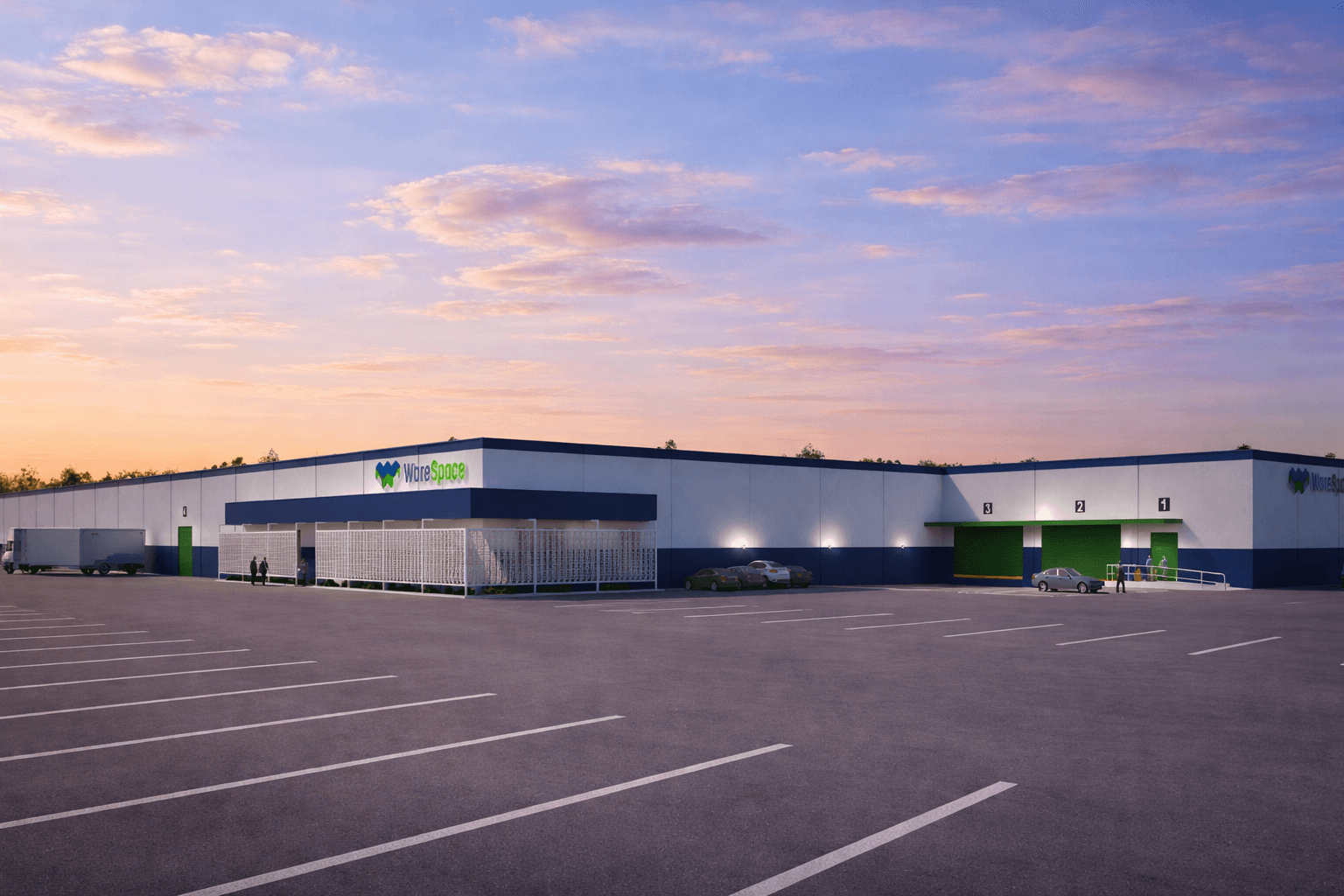
WareSpace opens in Charlotte’s NoDa neighborhood (322 W 32nd Street) in early 2026. Units from 200-2,000 SF with drive-in access, flexible terms starting at 6 months, and all-inclusive pricing that covers rent, utilities, and shared amenities. No long-term lease, no NNN surprises.
FAQ
How much does service business warehouse space cost in Charlotte?
Basic industrial space with yard access runs $10-13/SF NNN, or roughly $2,100-2,700/month all-in for 2,000 SF. Flex space with finished office costs $14-17/SF NNN ($2,800-3,400/month). Add $2-4/SF annually for dedicated yard storage if needed. Gaston County offers 30-40% savings versus infill Charlotte locations. Move-in costs run $7,000-11,000 plus $2,000-5,000 for shelving and basic setup.
What features do service companies need in warehouse space?
Vehicle access is the priority: drive-in doors sized for your trucks (12×14 for larger vehicles), adequate turning radius, and parking for fleet plus employee vehicles. Beyond that: parts storage with room for organized inventory, staging area for daily truck loading, small office for dispatch and admin, and security for equipment and vehicles. Trade-specific requirements (refrigerant storage, pesticide regulations, etc.) may add compliance considerations.
How much parking do service businesses need?
More than most listings provide. Count your fleet vehicles, add employee personal vehicles, and include space for maneuvering trucks with trailers. A four-truck operation with four employees needs a minimum 8-10 spaces plus a circulation room. Verify that parking is included in the lease—some properties charge separately or limit the number of spaces per tenant.
Where should service businesses get warehouse space in Charlotte?
Depends on your service area, not just general Charlotte access. Map where your jobs actually concentrate and position them accordingly. Airport/West Charlotte offers central positioning with functional space at $10-15/SF. Southwest Charlotte provides premium access but higher pricing. Gaston County saves 30-40% but adds drive time. Match your location to your service area—time spent driving to central Charlotte from a cheap location is time not spent billing.
What’s the difference between service business and contractor warehouse needs?
Significant overlap, but service businesses typically need less heavy industrial infrastructure (no floor drains, 3-phase power, or heavy equipment) and more focus on fleet staging and parts inventory. Contractors often need space to fabricate or assemble; service companies primarily store, organize, and deploy. Service operations also tend toward smaller footprints with proportionally more parking relative to interior space.

 ►
Explore 3D Space
►
Explore 3D Space