Denver’s industrial market tells two completely different stories depending on how much space you need.
If you’re Amazon looking for 500,000 SF near DIA, you have options. Overall industrial vacancy has climbed to 7.9-9.4% in Q3 2025—a decade high—with landlords offering 2-4 months free rent to fill big-box space.
If you’re a growing business looking for 1,500 SF to get out of your garage, good luck. Properties under 20,000 SF maintain just 3.5-5.1% vacancy, and virtually nothing new is being built in that size range.
This isn’t a temporary blip. Developers have spent the past decade building massive logistics facilities near Denver International Airport while completely ignoring the small warehouse segment. The result: 715,000+ small businesses in Colorado competing for a shrinking pool of appropriately-sized space.
The Two Denver Industrial Markets: Big-Box Oversupply vs. Small-Bay Scarcity
The headline vacancy numbers mask what’s actually happening in Denver industrial real estate. Here’s the breakdown:
Segment
Vacancy Rate
What’s Happening
Overall industrial
7.9-9.4%
Decade-high vacancy, landlord concessions
Properties 5,000-20,000 SF
5.1%
Tight, limited options
Properties under 10,000 SF
3.46%
Severe scarcity
West Denver submarket
1.2%
Lowest vacancy metro-wide
Southwest Denver
2.0%
Double-digit quarterly rent growth
The 380+ basis point gap between small-bay and overall vacancy isn’t closing. New construction remains focused on 100,000+ SF big-box facilities near DIA—the 3.1-3.3 million SF currently under construction contains virtually zero small-bay product.
For small-warehouse users, this creates both challenges and opportunities. Challenge: limited inventory means acting fast when suitable space appears. Opportunity: the current tenant-favorable market (for big-box) has created negotiating leverage that extends somewhat to small-bay, with landlords more flexible on terms through mid-2026.
What Small Warehouse Space Actually Costs in Denver (2026 Pricing)
Denver small warehouse pricing varies dramatically by submarket, building age, and amenities. Here’s what the market actually looks like:
Average asking rents by source:
- CBRE: $9.61/SF/year NNN (metro average, all sizes)
- Colliers: $11.71/SF/year NNN (metro average)
- Cushman & Wakefield: ~$12.48/SF/year (asking rents)
Small-bay premium: Properties under 25,000 SF command $12-15/SF NNN—a $1.50-3.00/SF premium over larger spaces. Flex spaces with higher office ratios run $13.30-16.90/SF.
The NNN reality check: Most Denver industrial leases are triple-net, meaning you pay base rent plus property taxes, insurance, and common area maintenance. NNN expenses typically add $4-6/SF annually. That “$10/SF” listing actually costs $14-16/SF all-in before utilities.
Current listing examples:
- 5,346 SF in Baker/South Denver: $8.95/SF/year NNN ($47,847 annually) — older 1968 building
- 2,800 SF in Englewood: $30/SF/year ($84,000 annually) — newer year-2000 building
- Flexible co-warehousing (300-5,000 SF): $22.08/SF/year all-inclusive with shared amenities
Budget guidance for small warehouse users: Plan for all-in occupancy costs of $12-20/SF annually (rent plus NNN expenses) for quality small-bay space in desirable submarkets. That translates to:
Space Size
Monthly All-In Cost Range
500 SF
$500-833
1,000 SF
$1,000-1,667
2,000 SF
$2,000-3,333
5,000 SF
$5,000-8,333
Where to Find Small Warehouse Space in Denver (Submarket Guide)
Denver’s eight major industrial submarkets offer dramatically different conditions. Rents range from $4.27/SF in the I-76/Brighton corridor to $30/SF for premium Englewood space—a 7x spread that makes location choice critical.
Tightest small-bay markets (act fast, pay premium):
West Denver — 1.2% vacancy (lowest metro-wide)
- Asking rents: $11-14/SF NNN
- Building stock: Older buildings, 12-22 foot clear heights, grade-level access
- Best for: Central operations, businesses serving mountain communities, those needing van/small truck access
- Trade-off: Extremely limited availability; expect competition for any suitable listing
Southwest Denver — 2.0% vacancy, double-digit quarterly rent growth
- Asking rents: $10-14/SF NNN
- Best for: Small businesses, contractors, local distribution
- Trade-off: Rising rents as demand outpaces supply
Highest rents, limited small-bay inventory:
Central Denver/RiNo — 7.6-8.5% vacancy (misleading—small-bay much tighter)
- Asking rents: $12-15.17/SF NNN
- Character: Industrial-chic aesthetics, exposed brick, timber beams
- Best for: Creative industries, breweries, businesses with customer-facing components
- Trade-off: Gentrification converting industrial to creative/retail; truck access challenging
Value-oriented options (trade location for savings):
DIA/Airport Corridor — 4.3% vacancy (Airport Central)
- Asking rents: $6-8/SF NNN
- Reality: Very limited small-bay inventory—this is big-box territory (102 million SF of mostly 100,000+ SF facilities)
- Best for: Air freight users, large-scale fulfillment only
I-76/Brighton — 20.8-22.1% vacancy (highest metro-wide)
- Asking rents: $4.27-6/SF NNN
- Best for: Value-focused users, manufacturing, businesses okay with secondary location
- Trade-off: High vacancy may signal demand concerns; furthest from central Denver
What Small Businesses Actually Need in Denver Warehouse Space
Before signing a lease, match space features to your actual operations:
Loading access matters more than you think:
- Grade-level/drive-in doors: Ideal for vans, pickup trucks, and businesses without forklifts. Most older Denver small-bay buildings feature this configuration.
- Dock-high loading: Essential if you receive pallet shipments or ship LTL freight. Less common in small-bay properties—verify before assuming.
Climate considerations for Denver: Denver’s semi-arid climate offers advantages (low humidity ideal for storage) but creates heating cost exposure. Heating degree days total 6,000-6,200 annually—significantly above national average. Budget for heating as a material operating expense, particularly in older buildings with less efficient systems.
Cooling costs run lower than you’d expect. Low humidity and 20-30°F nighttime temperature drops reduce air conditioning needs compared to humid climates.
Power capacity: Older Denver industrial buildings may have limited electrical capacity. If your operations require 240V service, welding equipment, compressors, or significant machinery, verify the power infrastructure before signing.
Clear height: Small-bay properties typically offer 12-22-foot clear heights, compared with 32-40 feet in new big-box construction. For most small business operations, this is adequate—you’re not stacking pallets six high.
The Current Window: Why Negotiating Leverage Exists Through Mid-2026
Denver’s overall industrial market has shifted tenant-favorable, and some of that leverage extends to small-bay:
Current landlord concessions:
- 2-4 months free rent (more common in larger spaces, but available)
- $5-15/SF tenant improvement allowances
- Flexible lease terms (shorter commitments than typical)
Why this window exists: The construction pipeline has contracted to 3.1-3.3 million SF—down 30.7% quarter-over-quarter and the lowest level since Q4 2015. As new deliveries slow and absorption continues, market conditions will tighten.
Strategic timing: Negotiate aggressively through mid-2026 to capture concessions that will evaporate as the supply/demand balance shifts. This window is particularly valuable for small-bay users—while you’ll still face limited inventory, landlords are more flexible on terms than they’ve been in years.
Denver’s Small Business Ecosystem Creates Sustained Demand
The fundamentals driving small warehouse demand in Denver aren’t going away:
Population and business formation:
- Metro population: 3.05 million (July 2024), growing 1.1% year-over-year
- Projected population: 3.6 million by 2030
- Small businesses: 715,576 in Colorado (99.5% of all businesses)
- Denver County business applications: 20,873 in 2023 (highest in Colorado)
Key industry drivers:
- Transportation and warehousing: 65,525 small businesses statewide
- Construction: 80,339 small business establishments
- Aerospace/defense supply chain: 300+ companies, 500+ suppliers
- Outdoor recreation: $17.2 billion GDP, 132,500 jobs
- Craft brewing: 415-468 breweries statewide, 165+ in Denver metro
Logistics positioning: Denver’s central location enables two-day ground shipping to 95% of the U.S. population. One-day truck delivery reaches Salt Lake City (525 miles), Albuquerque (450 miles), Kansas City (600 miles), and Omaha (540 miles).
Common Mistakes When Leasing Small Warehouse Space in Denver
Focusing on base rent instead of all-in cost: That “$10/SF” listing costs $14-16/SF after NNN expenses, and $16-20/SF after utilities. Budget for total occupancy cost, not advertised rent.
Underestimating heating costs: Denver’s 6,000+ heating degree days mean winter utility bills will be higher than national averages. Factor this into operating budgets, especially for older buildings.
Assuming small-bay availability matches headline vacancy: The 8-9% vacancy you read about is big-box. Small-bay runs 3.5-5%. Adjust your search timeline and expectations accordingly.
Waiting for the “perfect” space: In a 3.5% vacancy market, suitable spaces lease quickly. If a space meets 80% of your requirements, move fast—the perfect space may not exist or may lease before you decide.
Ignoring submarket trade-offs: The $4.27/SF space in Brighton looks attractive until you factor in the commute from central Denver and carrier service limitations. Match location to operational reality.
FAQ
How much does small warehouse space cost in Denver?
Small warehouse space in Denver (under 25,000 SF) typically runs $12-15/SF NNN annually, with flex spaces at $13.30-16.90/SF. Add $4-6/SF for NNN expenses (property taxes, insurance, CAM), bringing all-in costs to $16-21/SF before utilities. Value-oriented submarkets like I-76/Brighton offer $4-6/SF NNN, while premium locations like Central Denver/RiNo command $12-15/SF NNN. For a 2,000 SF space, budget $2,000-3,500/month all-in, depending on location and building quality.
What is the vacancy rate for small warehouse space in Denver?
While overall Denver industrial vacancy has reached 7.9-9.4% (a decade high), small warehouse space remains much tighter. Properties in the 5,000-20,000 SF range maintain just 5.1% vacancy, and spaces under 10,000 SF run at 3.46%. West Denver (1.2% vacancy) and Southwest Denver (2.0% vacancy) are the tightest submarkets. This gap exists because virtually all new construction targets big-box logistics users, leaving small-bay supply constrained.
Where should I look for small warehouse space in Denver?
For tight vacancy with central access, target West Denver (1.2% vacancy, $11-14/SF) or Southwest Denver (2.0% vacancy, $10-14/SF). For creative/customer-facing businesses, Central Denver/RiNo offers character ($12-15/SF) despite parking challenges. For budget priority, I-76/Brighton delivers the lowest rents ($4-6/SF) but carries higher vacancy and secondary location trade-offs. Avoid the DIA corridor for small-bay needs—it’s dominated by 100,000+ SF big-box facilities.
What’s included in NNN lease expenses in Denver?
Triple-net (NNN) leases require tenants to pay property taxes, building insurance, and common area maintenance (CAM) in addition to base rent. In Denver, NNN expenses typically add $4-6/SF annually to base rents. A space advertised at $10/SF NNN actually costs $14-16/SF all-in before utilities. Some flex spaces offer modified gross or all-inclusive rates that bundle these expenses—clarify lease structure before comparing options.
Are there short-term warehouse lease options in Denver?
Traditional Denver industrial leases run 3-5 years. The current tenant-favorable market has increased landlord flexibility on terms through mid-2026, with some willingness to negotiate shorter commitments. Co-warehousing operators like ReadySpaces offer month-to-month or 6-12 month terms at premium rates ($22/SF all-inclusive). For businesses with uncertain growth or seasonal needs, these flexible options cost more per square foot but eliminate long-term commitment risk.
When is the best time to lease small warehouse space in Denver?
Now through mid-2026 offers the best negotiating leverage in years. Landlord concessions (2-4 months free rent, $5-15/SF tenant improvement allowances) are available as the overall market has softened. However, small-bay inventory remains constrained—the window is about negotiating leverage on terms, not abundant space selection. As the construction pipeline contracts to decade lows and absorption continues, this tenant-favorable window will close.
Done searching through big-box listings that don’t fit your business?
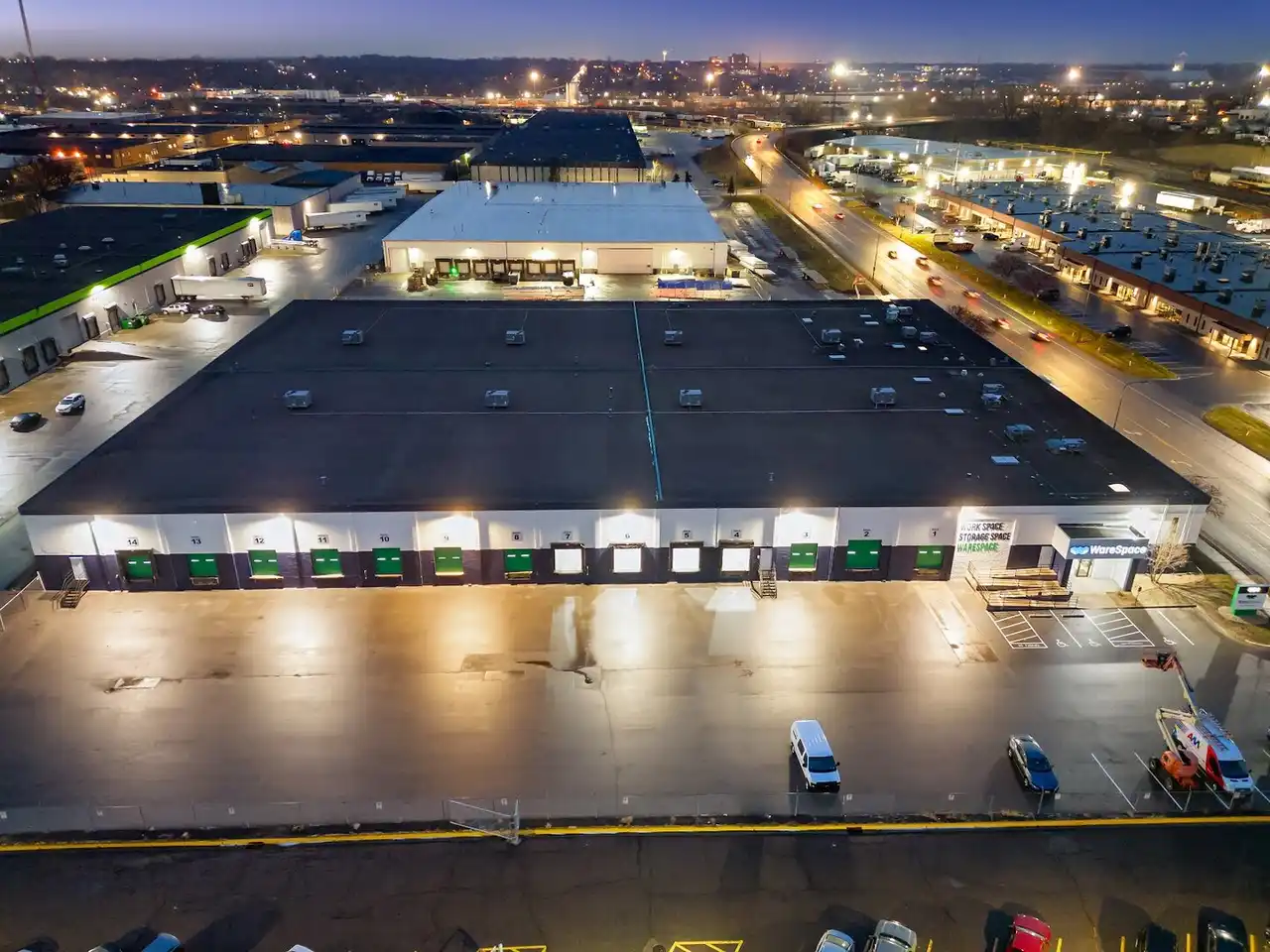
WareSpace Denver offers small warehouse units from 200-2,000 SF—the size range that’s hardest to find in Denver’s bifurcated market. Flexible terms, all-inclusive pricing, and move-in ready space without the 3-year commitment or NNN surprises.
See what’s actually available in your size range → Book a Tour