


You found a Denver warehouse listing at $10/SF. For 2,000 SF, that’s $20,000 annually—$1,667/month. Seems reasonable.
Then you read the fine print: “NNN.” Triple-net. You’re responsible for property taxes, insurance, and common area maintenance on top of base rent. Add $4-6/SF annually. Now you’re at $14-16/SF.
Then you factor in utilities. Heating costs in Denver’s 6,000+ heating degree day climate aren’t trivial. Add another $1-3/SF depending on building efficiency. Now you’re at $15-19/SF.
Then there’s the move-in costs nobody mentioned until you were ready to sign.
Understanding the complete cost picture before you start touring prevents budget surprises that derail your plans. Here’s what Denver warehouse space actually costs in 2025.
Base Rent: The Advertised Number That’s Only Part of the Story
Advertised asking rents in Denver vary by property size, type, and location:
Metro averages (all industrial, all sizes):
- CBRE: $9.61/SF/year NNN
- Colliers: $11.71/SF/year NNN
- Matthews: $11.49/SF/year NNN
- Cushman & Wakefield: ~$12.48/SF/year
Small-bay premium: Properties under 25,000 SF command $12-15/SF NNN—$1.50-3.00/SF above larger spaces. Flex spaces with higher office ratios (15-40% office) run $13.30-16.90/SF NNN.
Submarket variation:
Submarket
Base Rent Range ($/SF/Year NNN)
I-76/Brighton
$4.27-6
DIA/Airport
$6-8
Southwest Denver
$10-14
West Denver
$11-14
Northwest/US-36
$11.50-13
Southeast/DTC
$10-14
Central/RiNo
$12-15.17
Premium Englewood
Up to $30
Current listings confirm this range. A 5,346 SF warehouse in Baker/South Denver lists at $8.95/SF/year NNN. A 2,800 SF space in Englewood commands $30/SF/year—demonstrating the substantial spread even within small-bay inventory.
NNN Expenses: The Hidden $4-6/SF That Most Tenants Underestimate
Most Denver industrial leases are triple-net (NNN), requiring tenants to pay:
Property taxes: Denver’s commercial property tax rate applies to assessed value. For industrial properties, this typically runs $2-3/SF annually, though it varies by specific property and assessment.
Building insurance: The landlord’s property insurance is, passed through to tenants. Typically $0.50-1.00/SF annually.
Common Area Maintenance (CAM): Shared costs for parking lot maintenance, landscaping, snow removal, exterior lighting, common area repairs, and property management. Typically $1.50-3.00/SF annually, with significant variation by property condition and management efficiency.
Total NNN estimate: $4-6/SF annually added to base rent.
What this means in practice:
Advertised Base Rent
+ NNN Expenses
= Actual Rent
$10/SF NNN
$4-6/SF
$14-16/SF
$12/SF NNN
$4-6/SF
$16-18/SF
$15/SF NNN
$4-6/SF
$19-21/SF
NNN expense variability: NNN expenses aren’t fixed. Property taxes can increase with reassessment. Insurance premiums fluctuate. CAM charges depend on actual maintenance needs—a year with major parking lot repairs or roof work will spike CAM costs.
Some leases cap CAM increases at 3-5% annually, protecting tenants from dramatic swings. Others pass through actual costs with no cap. Review lease terms carefully before signing.
Alternative lease structures: Some flex spaces offer modified gross or all-inclusive rates that bundle base rent and operating expenses. Co-warehousing operators typically quote all-inclusive pricing. These simplify budgeting but often carry premiums—you’re paying for cost predictability.
Utility Costs: Denver’s Altitude Affects Your Operating Budget
Denver’s 5,280-foot elevation and semi-arid continental climate create specific utility cost patterns:
Electricity:
- Commercial average: 9.39¢/kWh (6.94% below the 10.09¢ national average)
- Industrial average: 6.95¢/kWh
- Average monthly commercial electric bill: $449
Denver’s below-average electricity rates help offset other costs. However, Xcel Energy’s time-of-use rates price summer on-peak electricity (5-9 PM weekdays) at 20.9-21.3¢/kWh versus 7.75-7.9¢/kWh off-peak—a 170%+ differential that rewards operational flexibility.
Natural gas (heating): This is where Denver differs from many markets. Heating degree days total 6,000-6,200 annually—significantly above the national average. Winter heating costs are a material operating expense, particularly in older buildings with less efficient HVAC systems.
Temperature ranges from average January lows of 17°F to July highs of 89°F. Daily temperature swings of 20-30°F are common, requiring HVAC systems that handle variability.
The climate upside:
- Low humidity is ideal for storage (less climate control needed for moisture-sensitive products)
- Modest cooling needs: 700-900 cooling degree days annually versus 6,000+ heating degree days
- Natural night cooling: 20-30°F temperature drops reduce air conditioning requirements
- 300 days of sunshine accelerate snow melt, reducing prolonged winter disruption
Utility budget guidance: For a small warehouse space in Denver, estimate $1-3/SF annually in utilities depending on building efficiency, your operational hours, and heating/cooling requirements. A 2,000 SF space might run $2,000-6,000 annually in utilities—$167-500/month.
Move-In Costs: What You’ll Need Before Day One
Beyond monthly occupancy costs, budget for upfront move-in expenses:
Typical landlord requirements:
- First month’s rent
- Last month’s rent (often required)
- Security deposit (typically 1-2 months’ rent)
- Utility deposits
Example for a $2,500/month space:
Item
Cost
First month’s rent
$2,500
Last month’s rent
$2,500
Security deposit
$2,500-5,000
Utility deposits
$500-1,000
Total due at signing
$8,000-11,000
Setup costs you’ll incur:
- Shelving and racking: $1,000-5,000+ depending on needs
- Workbenches and packing stations: $500-2,000
- Basic office furniture: $500-2,000
- Internet setup: $200-500
- Security system: $500-2,000
- Signage and minor improvements: $500-2,000
Total move-in budget: Plan for 4-6 months of rent equivalent to cover complete move-in costs (deposits, first/last, and basic setup). For a $2,500/month space, budget $10,000-15,000 to open the doors.
All-In Cost Calculation: What You’ll Actually Pay Monthly
Here’s the complete cost picture for a hypothetical 2,000 SF small warehouse in Denver:
Scenario: Mid-market small-bay space in Southwest Denver
Cost Component
Annual
Monthly
Base rent ($12/SF NNN)
$24,000
$2,000
NNN expenses ($5/SF)
$10,000
$833
Utilities ($2/SF)
$4,000
$333
Total occupancy cost
$38,000
$3,167
Cost per square foot comparison:
What They Quote
What You Actually Pay
$12/SF (base rent)
$19/SF (all-in)
That 58% gap between quoted and actual cost is why understanding the full picture matters before you start comparing listings.
Range by submarket and quality:
Location/Quality
All-In Cost ($/SF/Year)
Monthly (2,000 SF)
Value (I-76/Brighton)
$10-14
$1,667-2,333
Mid-market (Southwest)
$16-20
$2,667-3,333
Premium (Central/RiNo)
$20-25
$3,333-4,167
Flex/office-heavy
$22-28
$3,667-4,667
Negotiating Leverage: What Concessions Are Actually Available
The current Denver market offers real negotiating opportunities through mid-2026:
Available concessions:
- 2-4 months free rent (more common for larger spaces, but available)
- $5-15/SF tenant improvement allowances
- Flexible lease terms (shorter commitments)
How to calculate concession value:
Example: 3 months free rent on a 3-year lease at $2,500/month
- Total lease value: $90,000 (36 months × $2,500)
- Concession value: $7,500 (3 months free)
- Effective rent: $82,500 ÷ 36 = $2,292/month
- Savings: 8.3%
Example: $10/SF TI allowance on 2,000 SF
- Allowance value: $20,000
- Can offset: racking installation, minor electrical upgrades, office buildout
What small-bay tenants can realistically expect: Big-box tenants get the most aggressive concessions. Small-bay tenants benefit from the overall tenant-favorable environment but face tighter inventory. Realistic expectations:
- 1-2 months free rent (versus 3-4 for larger spaces)
- $5-10/SF TI allowance (versus $10-15 for larger spaces)
- More flexibility on the lease term than 18 months ago
Cost Comparison: Traditional Lease vs. Co-Warehousing
Two models serve Denver’s small warehouse market:
Traditional NNN lease:
- Base rent: $10-15/SF NNN
- NNN: $4-6/SF
- Utilities: $1-3/SF
- = All-in: $15-24/SF
- Lease term: 3-5 years typical
- Move-in costs: 4-6 months equivalent
Co-warehousing (all-inclusive):
- All-in rate: $20-25/SF
- Includes: Rent, utilities, maintenance, shared amenities
- Lease term: Month-to-month or 6-12 months
- Move-in costs: 1-2 months equivalent
When co-warehousing makes sense:
- You need flexibility (uncertain growth, seasonal business)
- Move-in speed matters (no build-out time)
- Predictable budgeting is a priority (no NNN surprises)
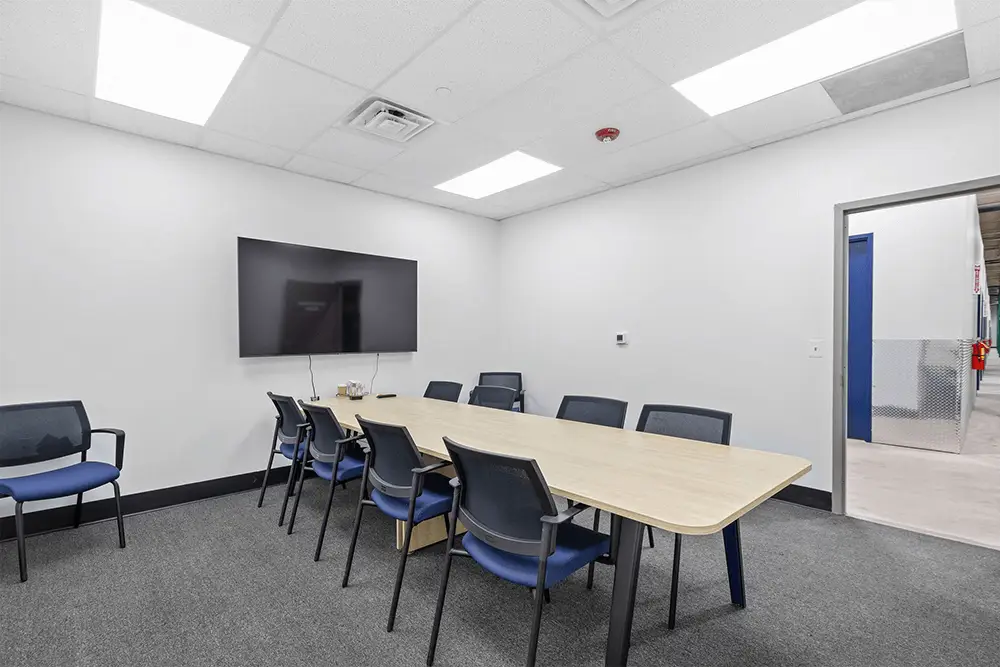
- You value shared amenities (loading docks, equipment, conference rooms)
When a traditional lease makes sense:
- You’re confident in the 3-5 year space needs
- Lower total cost over the lease term is the priority
- You need a fully private, customized space
- You’re comfortable managing NNN variability
FAQ
What does NNN mean for Denver warehouse leases?
NNN (triple-net) means you pay base rent plus property taxes, building insurance, and common area maintenance (CAM). In Denver, NNN expenses typically add $4-6/SF annually to base rent. A space advertised at $10/SF NNN actually costs $14-16/SF before utilities. Some flex spaces offer modified gross or all-inclusive rates that bundle these expenses—clarify lease structure before comparing listings.
How much are utilities for warehouse space in Denver?
Estimate $1-3/SF annually for utilities, depending on building efficiency and your operations. Denver’s commercial electricity rates (9.39¢/kWh) run below the national average, but heating costs are significant due to 6,000+ heating degree days annually. A 2,000 SF warehouse might run $2,000-6,000 annually in utilities ($167-500/month), with winter months higher than summer due to heating needs.
What move-in costs should I budget for Denver warehouse space?
Plan for 4-6 months of rent equivalent for a complete move-in. This includes: first month’s rent, last month’s rent (typically required), security deposit (1-2 months), utility deposits, and basic setup costs (shelving, workbenches, minor improvements). For a $2,500/month space, budget $10,000-15,000 to open the doors.
Why is small warehouse space more expensive per square foot than a large warehouse?
Small-bay properties (under 25,000 SF) command $1.50-3.00/SF premiums over larger spaces due to supply scarcity, not superior quality. While overall Denver industrial vacancy runs 8-9%, small-bay vacancy remains 3.5-5%. Virtually no new small-bay is being built because the economics favor big-box development. Limited supply plus sustained demand equals premium pricing.
Are there ways to reduce Denver warehouse costs?
Several strategies can lower costs: (1) Target value-oriented submarkets like I-76/Brighton ($4-6/SF vs. $12-15/SF in premium areas) if location trade-offs work for your business. (2) Negotiate aggressively through mid-2026 while landlord concessions remain available. (3) Consider co-warehousing if you need flexibility—higher per-SF cost but no multi-year commitment risk. (4) Choose older buildings with lower rents, understanding you may face higher utility costs from less efficient systems.
Tired of calculating NNN, utilities, and hidden costs?
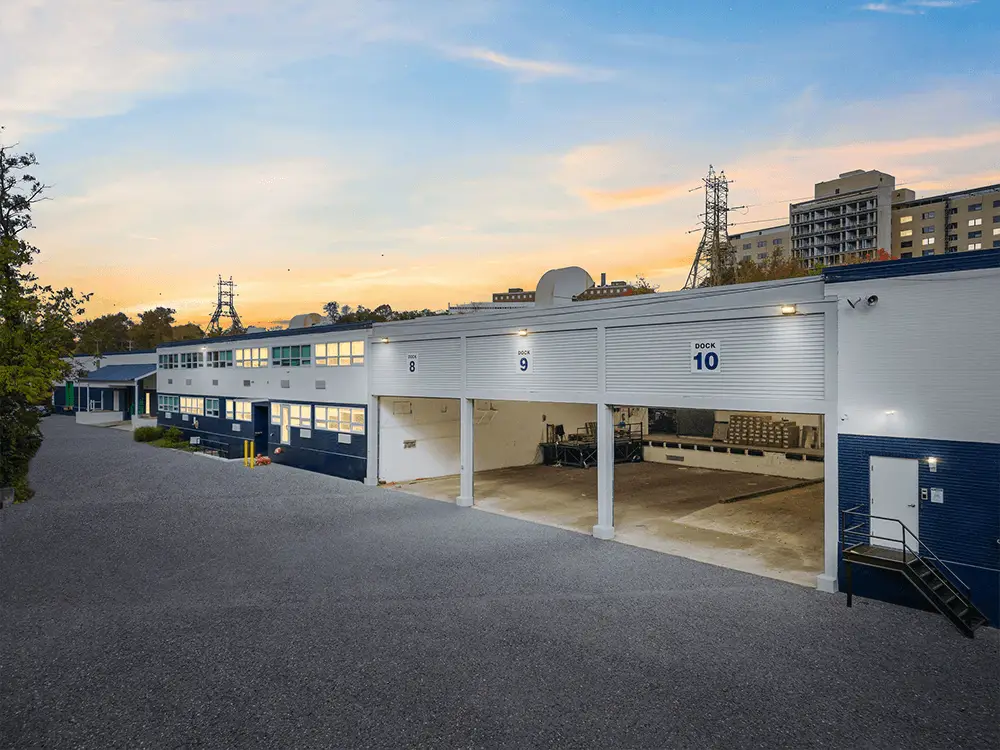
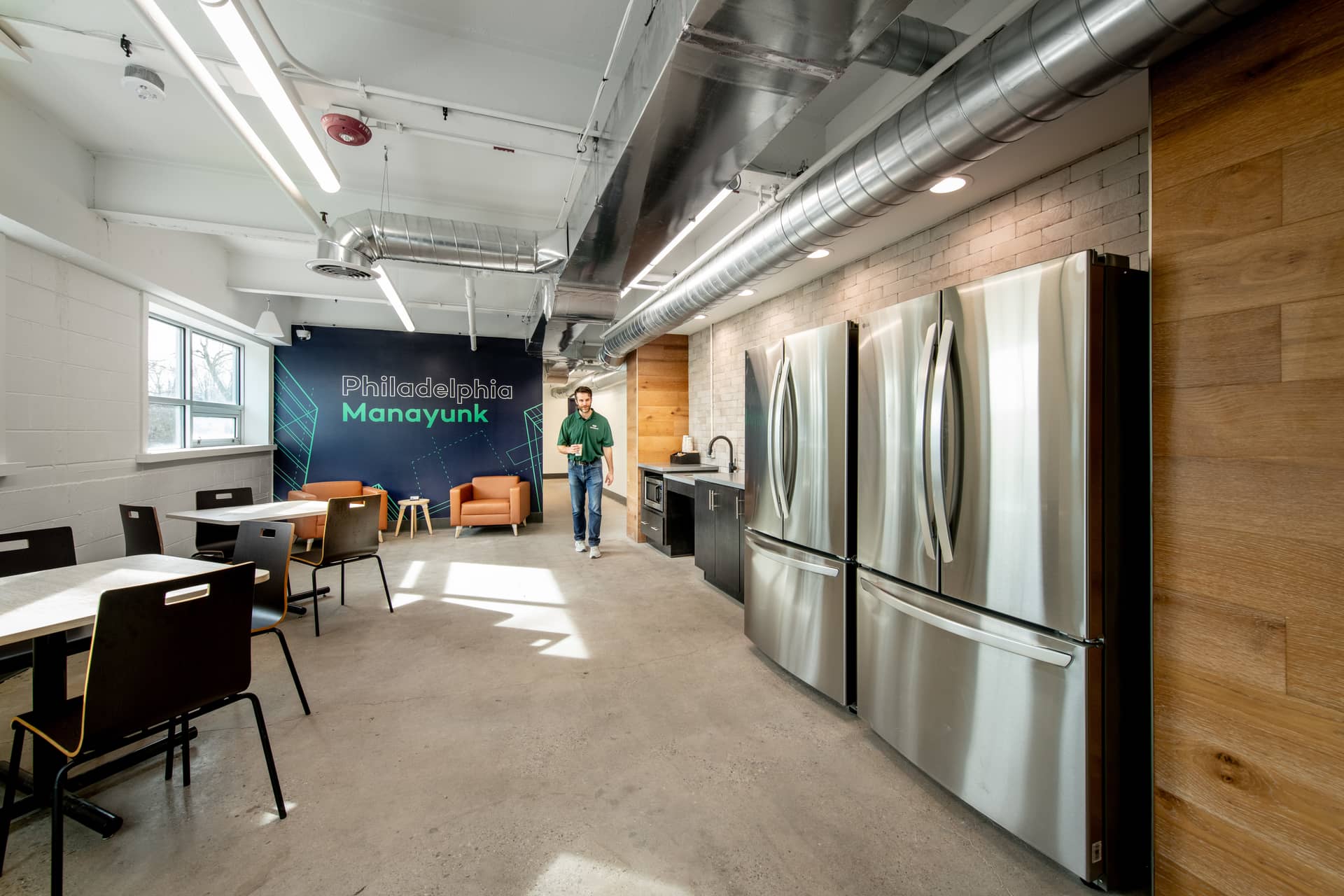
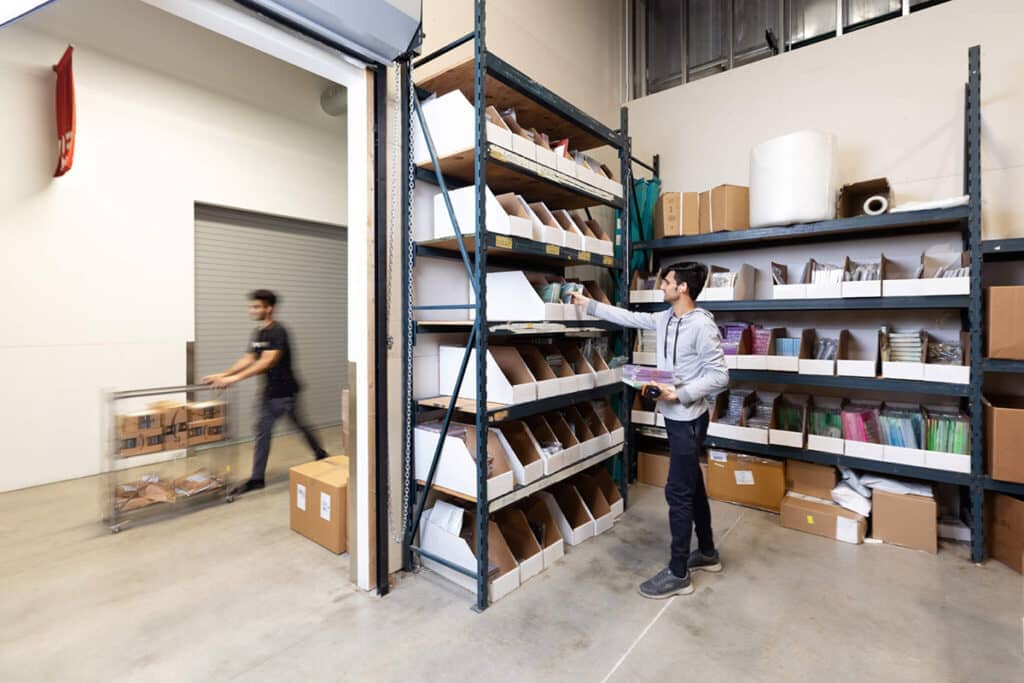
WareSpace Denver offers all-inclusive pricing—one monthly rate covering rent, utilities, maintenance, and amenities. No NNN surprises, no utility deposits, no cost unpredictability.
 ►
Explore 3D Space
►
Explore 3D Space