

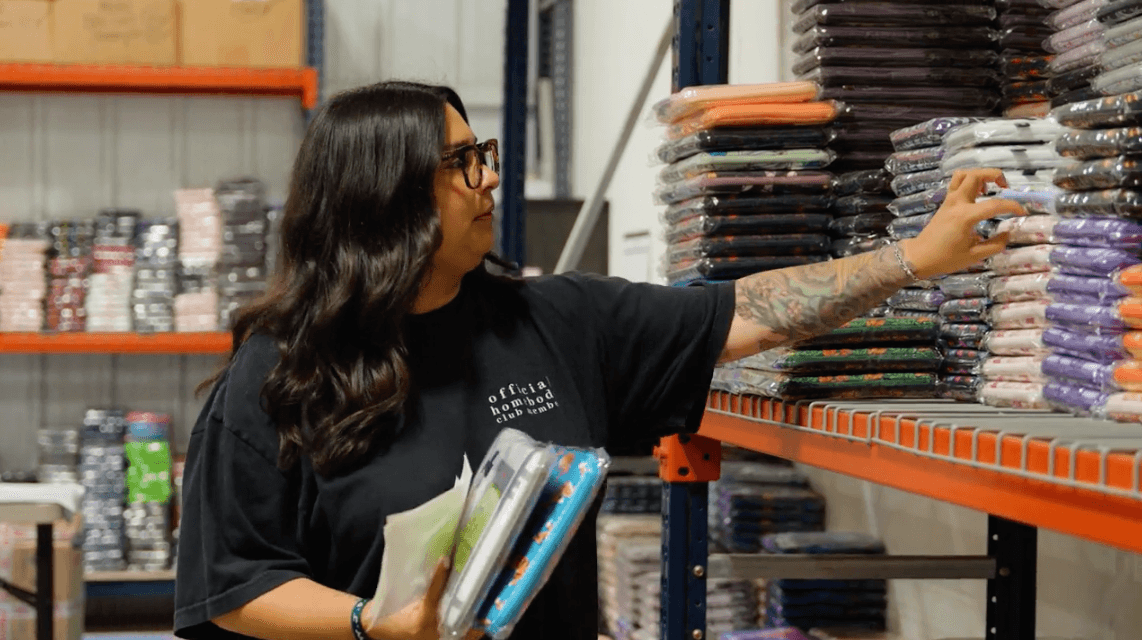
Most e-commerce sellers hit the same wall somewhere between 100 and 300 orders per week. The garage that got you here stops working. Fulfillment takes twice as long because you’re digging through inventory and working around obstacles. You’re ordering smaller quantities to fit the space, missing bulk pricing, and running out of fast movers.
California has 77,000 Amazon sellers – more than Florida and Texas combined. Orange County sits 25 miles from the nation’s busiest port complex. If you’re importing products and shipping nationally, you’re in the right geography. This guide covers what e-commerce warehouse space costs here, how much you need, and how to evaluate your options.
How Much Does E-commerce Warehouse Space Cost in Orange County?
You have three paths, each with different economics.
- Traditional leases in Orange County run $15-20/SF annually for base rent, plus NNN charges ($4-6/SF), utilities ($150-250/month), and insurance ($100-167/month). For 1,000 SF, expect $1,833-2,584/month all-in. You’ll also need $7,000-12,000 upfront for deposits, racking, and equipment, and most landlords want 3-5 year terms. For a full breakdown, see our Orange County warehouse cost guide.
- Co-warehousing bundles everything into one payment. At WareSpace Santa Ana, units start at $900/month for space fitting 10+ pallets and scale to $2,000/month for larger operations. Racking, climate control, loading access, WiFi, and utilities are included. Upfront cost is one month’s deposit, and terms start at 6 months.
- 3PL (outsourced fulfillment) means someone else handles storage and shipping. Typical costs run $2.50-5.00 per order for pick and pack, plus $15-40/pallet monthly for storage. At 1,200 orders/month, expect $3,200-6,500 before shipping.
When does your own space make sense? At a $4.00 average 3PL cost per order, running your own space becomes cheaper around 400 consistent monthly orders. At 800 monthly orders, you’re saving $1,500-2,000/month. The tradeoff is your time – 3PL frees you to focus on product and marketing.
How Much E-commerce Warehouse Space Do You Need?
Two variables drive space requirements: order volume and SKU count. A seller doing 300 orders weekly from 30 SKUs needs far less room than one doing 300 orders from 300 SKUs.
Weekly Orders
SKU Count
Space Needed
50-100
Under 50
300-500 SF
100-250
50-150
500-800 SF
250-500
100-300
800-1,200 SF
500-1,000
200-500
1,200-2,000 SF
A functional operation needs room for receiving (100-150 SF), inventory storage (40-50 SF per pallet position), packing (50-80 SF per station), and shipping staging (50-100 SF). Even in 500 SF, keeping these zones distinct speeds up the workflow.
Size for 12-18 months ahead if you’re growing. Moving warehouses means changing addresses with carriers, suppliers, and return customers – plus 2-4 weeks of disrupted operations.
Why Port Proximity Matters for Orange County E-commerce Sellers
Orange County sits 25-27 miles from the San Pedro Bay Port Complex – the Port of Los Angeles and Port of Long Beach combined. Together they handle 31% of all U.S. containerized trade.
The infrastructure follows the volume. Amazon operates 16 fulfillment centers in Southern California. UPS processes over 300,000 packages daily through its regional facilities. FedEx Ground’s Ontario hub serves as the primary sort facility for the Southwest. When you’re 25 miles from the ports instead of 60, you’re plugged into this network more efficiently.
What this means for importers: Moving a container from the ports to Santa Ana costs approximately $350-500, compared to $500-800+ to Inland Empire locations 50-60 miles away. At 4+ containers monthly, that’s $600-1,200/month in drayage savings.
Closer proximity also means faster inventory turns, lower safety stock requirements, and quicker response when demand spikes.
When port proximity doesn’t matter: If you’re sourcing domestically, drop-shipping, or running print-on-demand, port proximity isn’t your advantage. Focus on carrier access and your own commute instead.
For a full comparison of Orange County vs. Inland Empire economics, see our location comparison guide.
What to Look for in Orange County E-commerce Warehouse Space
- Loading access depends on how you receive inventory. Parcel-only operations (UPS, FedEx) work fine with drive-in access at grade level. Regular pallet receiving – weekly or more – requires reliable dock access.
- 24/7 access matters for e-commerce. Prime Day, Black Friday, and Q4 generally require early mornings, late nights, and weekends. A lease restricting hours restricts revenue during the periods that matter most.
- Climate control is less critical in Orange County than in humid markets like Florida. The Mediterranean climate is mild. Climate control helps for temperature-sensitive products, electronics, and workspace comfort, but it’s not a survival requirement for most inventory.
- Carrier proximity affects shipping cutoffs. Warehouses closer to UPS and FedEx hubs get later pickup times, meaning more same-day shipments.
Best Orange County Areas for E-commerce Warehouses
For e-commerce, optimize for your commute and carrier access – here are our top three choices:
- Central Orange County (Santa Ana, Tustin) offers the best balance for most sellers. Central positioning, I-5 and I-405 access, reasonable rents at $14-18/SF. Multiple carrier facilities within 15 minutes. WareSpace Santa Ana is located here.
- Irvine/Airport area has premium rents ($18-22/SF) and the tightest vacancy in the county. Only makes sense if you have specific reasons to be in Irvine.
- North County (Anaheim, Fullerton) works well for sellers living in that area or doing significant business in LA County. Moderate rents at $15-18/SF.
Common Mistakes E-commerce Sellers Make When Leasing Warehouse Space in Orange County (And How to Avoid Them)
Mistake 1: Starting with 3PL Too Long
At $4/order average 3PL cost, you break even on your own space around 400 monthly orders. At 800 orders, you’re leaving $1,500-2,000/month on the table. Many sellers stay with 3PL out of inertia long past when the math favors their own space.
How to avoid it: Calculate your true 3PL cost per order (including storage, pick/pack, and special handling). Compare to your own space cost. Revisit quarterly as volume grows.
Mistake 2: Underestimating Humidity Damage (If You’re Storing in Unconditioned Space)
Orange County’s Mediterranean climate is mild compared to Florida, but summer temperatures still reach 85°F+. Temperature swings and occasional humidity spikes damage electronics, cosmetics, supplements, and temperature-sensitive products.
How to avoid it: Know your product requirements. Climate control may be optional for durable goods but essential for sensitive categories.
Mistake 3: Sizing for Current Volume
You fit 200 SKUs today. Q4 hits, you add 50 SKUs for the holidays, receive larger orders to prep for demand, and suddenly can’t move in your space. Fulfillment slows right when speed matters most.
How to avoid it: Size for 12-18 months ahead, including seasonal peaks. A few hundred extra square feet costs $200-400/month. Slow fulfillment during peak season costs far more in lost sales and reviews.
Mistake 4: Ignoring Carrier Cutoff Times
Warehouses closer to carrier hubs get later pickup times. A location 10 minutes from the UPS hub might have 7 pm pickups. A location 30 minutes away might have 4pm cutoffs. Those extra hours mean more same-day shipments.
How to avoid it: Ask about carrier pickup schedules when evaluating locations. Call UPS and FedEx to confirm the latest pickup times for specific addresses.
Mistake 5: Not Planning for Returns
Returns run 20-30% for many e-commerce categories. If you don’t have space to receive, inspect, and restock returns, they pile up and become chaos during busy periods.
How to avoid it: Allocate 10-15% of your space for returns processing. Plan the workflow before you move in.
E-commerce Warehouse FAQs for Orange County
How much does e-commerce warehouse space cost in Orange County?
Traditional leases run $1,800-2,600/month all-in for 1,000 SF after base rent, NNN, utilities, and insurance. Co-warehousing runs $900-1,500/month for comparable space with everything included. 3PL runs $3,200-6,500/month at 1,200 orders, not including shipping.
When should I get my own space vs. staying with 3PL?
The math favors your own space around 400+ consistent monthly orders. Below that, or with highly variable volume, 3PL often makes sense. The other factor is your time: if you’d rather focus on product and marketing than fulfillment, 3PL may be worth the premium.
Is Orange County warehouse space worth the premium over the Inland Empire?
Depends on your operation. If you import regularly, the drayage savings (30% lower to OC than IE) can offset the rent premium. If you ship nationally from domestic suppliers and don’t need port access, the Inland Empire’s 25-35% lower rents may pencil better. See our full comparison.
Can I run Amazon FBA prep from warehouse space?
Yes. FBA prep operations work well in a small warehouse space. You need room for receiving, inspection, labeling/repackaging, and staged outbound shipments to Amazon fulfillment centers.
What’s the difference between a storage unit and warehouse space?
Storage units typically prohibit commercial operations, restrict access hours, and don’t allow receiving/shipping. Warehouse space is zoned for commercial use with loading infrastructure and no operational restrictions.
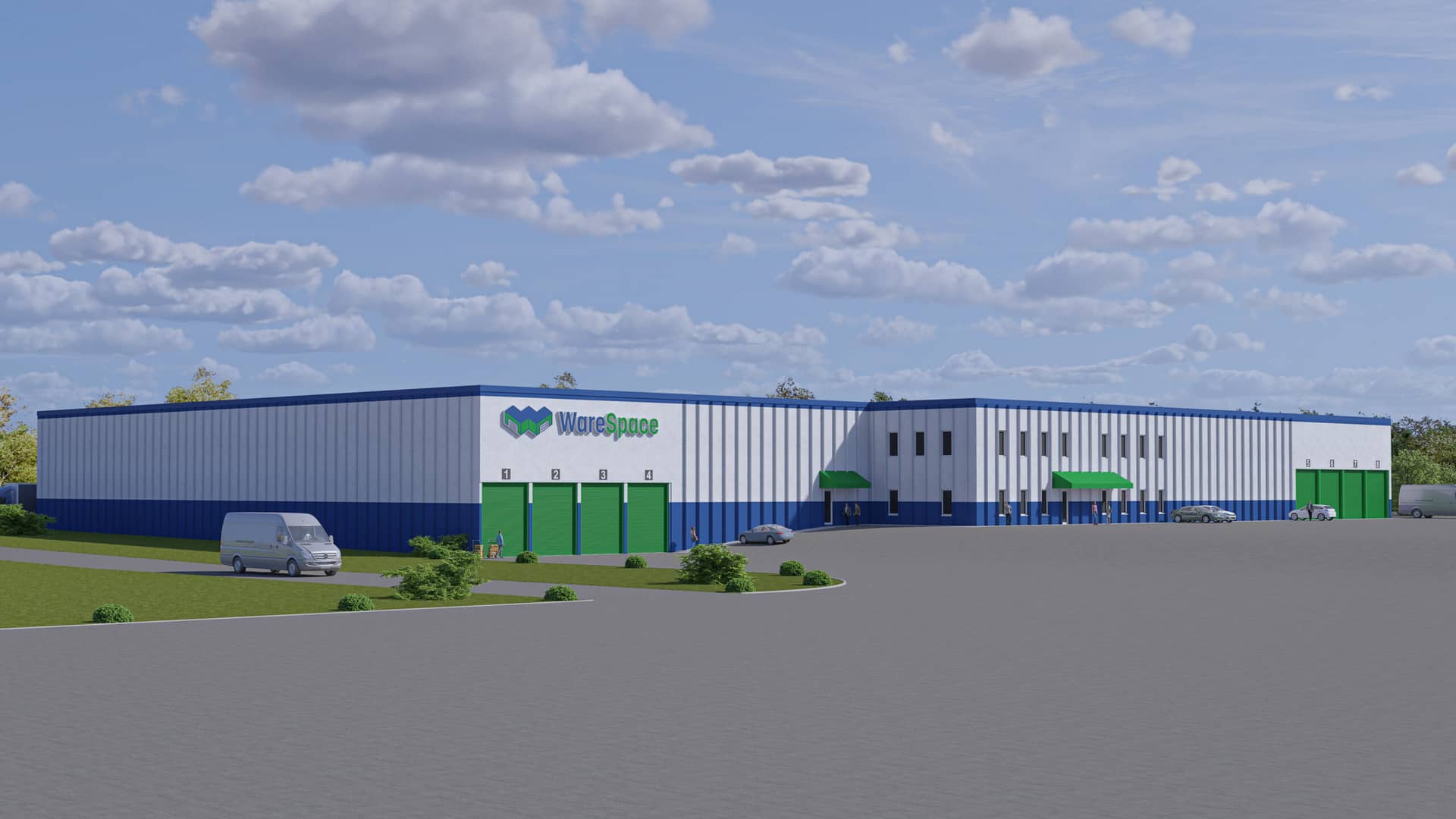
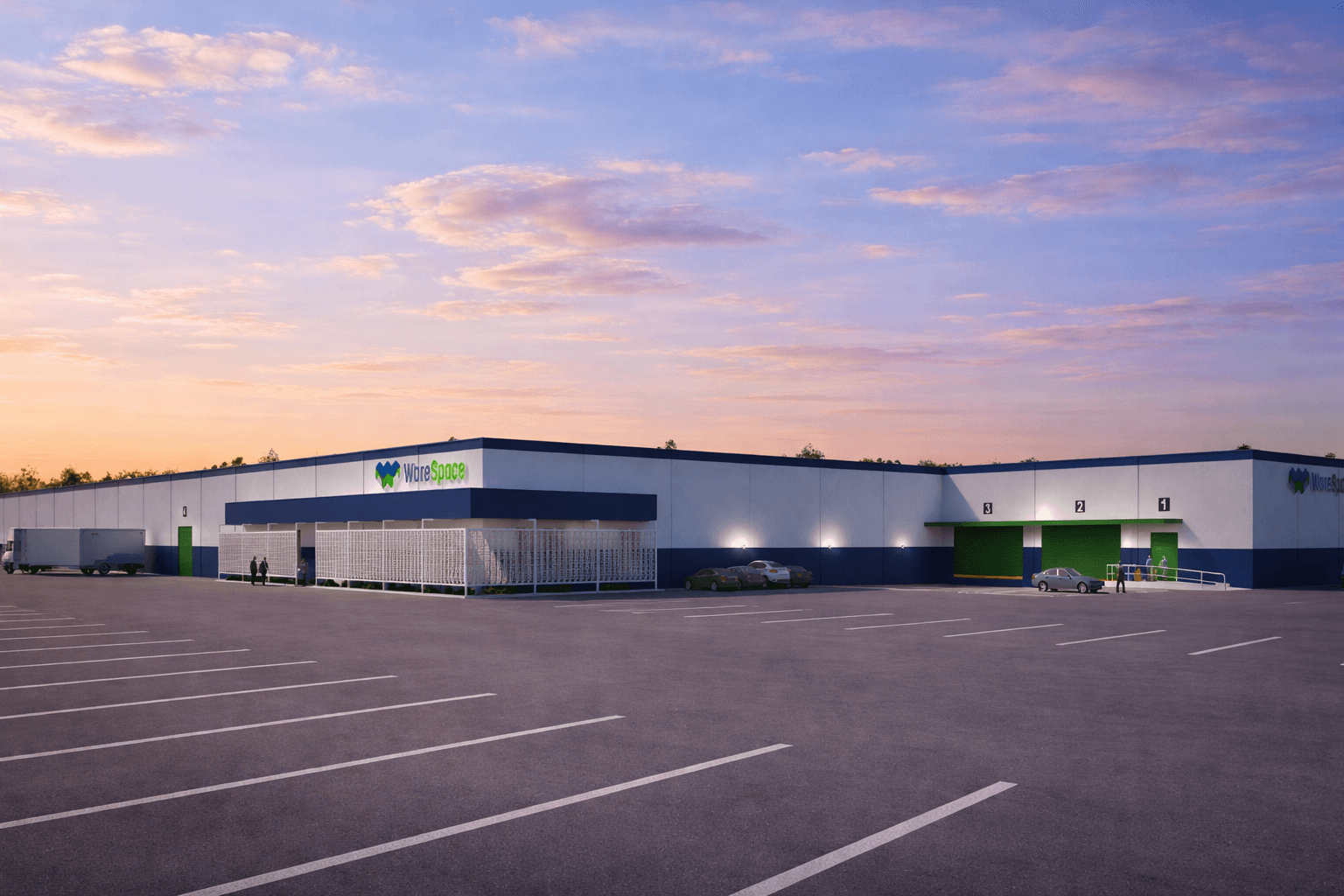
WareSpace Santa Ana opens Fall 2026 at 2601 S Garnsey St. E-commerce warehouse space with loading docks, racking, and 6-month leases starting at $900/month.
 ►
Explore 3D Space
►
Explore 3D Space