
Your truck is full of equipment that should be organized in a shop. Tools shift during drives. That pipe cutter you need is buried under materials loaded for a different job. Your garage at home turned into an unofficial warehouse three projects ago, and your spouse stopped parking inside around the same time.
If you are running a contracting business in Houston, your vehicle is not a warehouse, even if you have been treating it like one.
Why Houston Contractors Need Dedicated Shop Space
Houston construction employed 237,100 workers as of late 2024, one of the largest construction workforces in the country. Behind that number are thousands of contractors running businesses that have outgrown home-based operations.
Equipment ends up scattered across multiple locations. Your trailer is in one place, materials in a storage unit across town, tools in the truck, and half your inventory still in the garage. Every job requires driving to three different places before reaching the work site. There is no space to prep or stage jobs, and leaving expensive tools in a low-security storage unit is asking for trouble.
Eduardo Ramos ran a marble restoration business using four storage units scattered across the same facility. One held grinders, one held chemicals, one held polishers, and one held overflow. He was paying for four separate spaces, driving between them multiple times per day, and still got robbed, losing several thousand dollars in equipment.
“We had one unit where we actually got broken into, and we lost several thousand dollars because of that,” Eduardo explained. “So we don’t have that concern at WareSpace, because you have to go through multiple layers of security.”
What Houston Contractors Actually Need in Warehouse Space
24/7 Access
Jobs do not run on facility schedules. A 6 AM emergency call means accessing equipment at 5 AM. A job running until 9 PM means returning equipment at 10 PM. Eduardo identified 24/7 access as his most important requirement: “I think that’s our biggest tool available to us.” Storage facilities with restricted hours force you to plan equipment access a day ahead, which does not work when clients call with urgent needs.
Climate Control for Houston’s Humidity
Houston averages 75% humidity year-round. That moisture accelerates rust on metal tools, degrades adhesives and sealants, and destroys chemicals that have temperature requirements. Climate control matters for power tools with metal components, electronics and battery chargers, adhesives, sealants and caulks, paints and finishes, and specialty chemicals. Basic hand tools survive temperature swings; precision equipment and anything chemical-based benefits from consistent conditions.
Loading Access for Equipment and Materials
If you are receiving lumber, pipe, electrical supplies, or equipment on pallets, loading dock or drive-in access saves hours over hand-carrying through standard doors. Verify drive-in access, dock-high loading for pallet deliveries, clearance for your tallest vehicle, and whether you can back a trailer to your unit.
Power for Tools and Equipment
Battery-powered tools need charging, some equipment needs testing before heading to job sites, and workshop tasks require power tools. Storage units do not provide outlets; warehouse space does. Verify amperage and outlet locations: standard 120V works for most needs, but some equipment requires 220V.
Room to Work and Secure Storage
Contractors do not just store equipment. You prep it, organize it, repair it, and stage for jobs, so you need a workbench, organizational systems, a staging area for job-specific loadouts, and space for crew to meet before heading to sites. For security, look for multiple access layers, cameras in common areas, individual unit locks you control, and on-site management during business hours.
How Much Shop Space Do Houston Contractors Need
- Solo contractor (200 to 600 Sq Ft): organized tool storage, a workbench, materials for two or three active jobs, and staging space for daily loadouts.
- Contractor with a small crew of two to four (600 to 1,000 Sq Ft): multiple tool sets, larger equipment inventory, more material storage, and space for morning crew briefings.
- Growing operation with five or more crew (1,000 to 2,000 Sq Ft): complete tool sets per crew, significant material inventory, larger equipment like scaffolding and lifts, and a dedicated staging area.
Trade specifics matter. Electricians need space for wire reels and conduit; plumbers need linear pipe storage and fittings organized by size; HVAC contractors need refrigerant storage with climate control and a larger equipment footprint; restoration crews like Eduardo’s need climate control for dehumidifiers, air scrubbers, and chemicals.
Houston Neighborhoods for Contractor Shop Space
Northwest Houston (Beltway 8 / I-10 / US-290)
Best for contractors covering the entire metro. Central positioning with highway access in all directions. From WareSpace Houston at 10795 Hammerly Boulevard, Downtown is 20 to 25 minutes, the Galleria and Energy Corridor 15 to 20 minutes, and Katy 20 to 25 minutes.
Southwest, North, and Southeast Houston
Southwest Houston carries the highest rents but makes sense if your customers cluster around the Galleria, Sugar Land, and Memorial. North Houston offers good I-45 access toward The Woodlands and Spring. Southeast Houston near the port has the lowest rents but longer drive times to the rest of the metro.
What Contractor Shop Space Costs in Houston
A traditional 800 Sq Ft lease looks like base rent around $600/mo plus NNN/CAM near $233, utilities of $150 to $250 for climate control, $2,500 to $5,000 in upfront equipment, and a one to two month deposit, on a 3 to 5 year term with a personal guarantee.
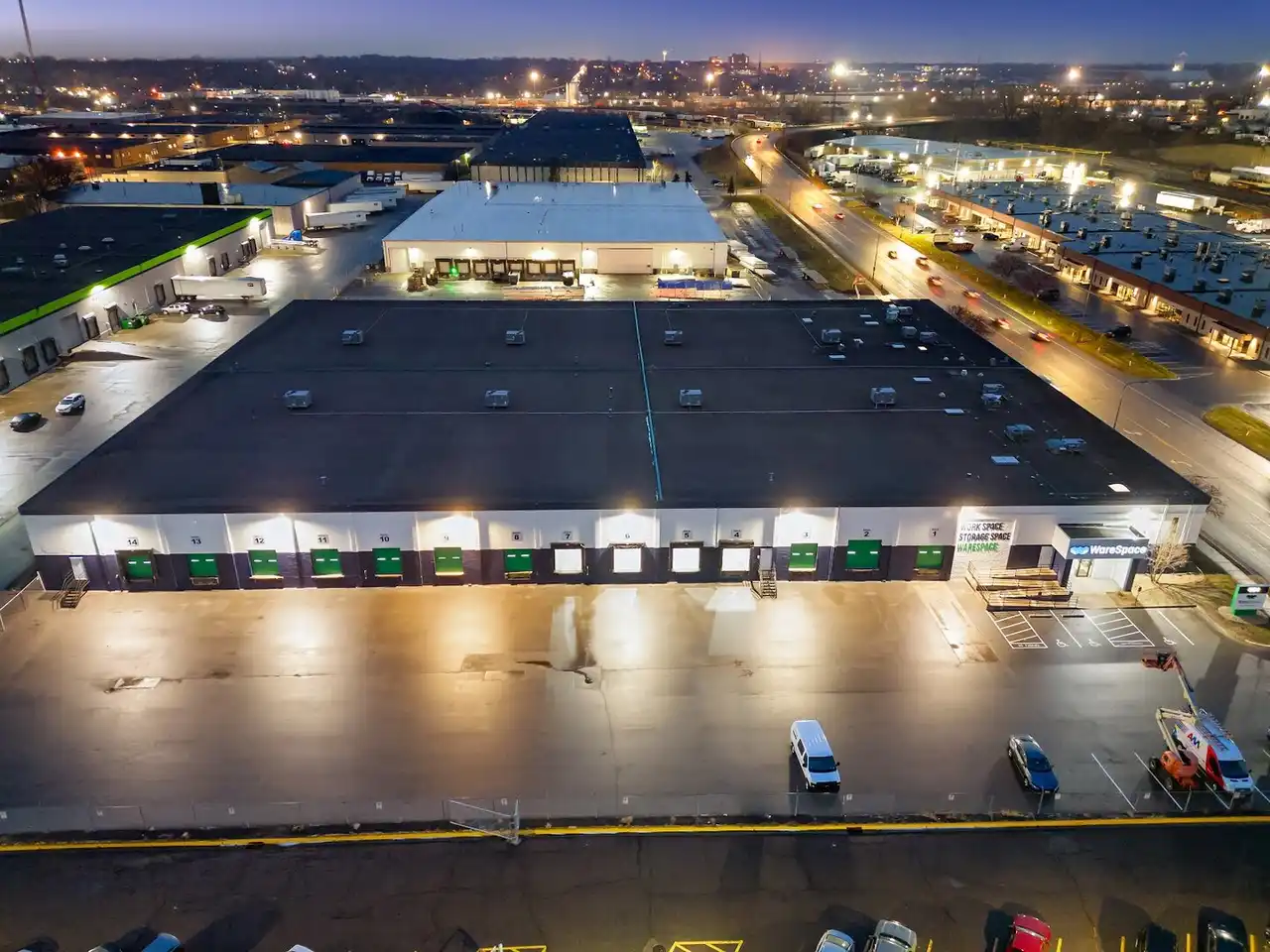
Co-warehousing at WareSpace Houston uses one flat, all-inclusive rate that covers rent, taxes, insurance, CAM, utilities, climate control, loading docks, racking, and WiFi:
- 200 to 400 Sq Ft: starting at $1,000/mo all-inclusive
- 500 to 800 Sq Ft: from $1,400/mo all-inclusive
- 900 to 1,400 Sq Ft: from $1,900/mo all-inclusive
- 1,500 to 2,000 Sq Ft: from $2,400/mo all-inclusive
The deposit is one month, equipment availability varies by building, and terms run a flexible six months. Eduardo upgraded twice within 18 months, most recently to a unit with private dock access, each time with a conversation rather than a lease renegotiation. For the full math, see our Houston warehouse cost guide or pricing page.
Common Contractor Shop Space Mistakes
- Choosing a space too small. Budget 20 to 30% more than your minimum to cover growth and seasonal material swings.
- Ignoring access logistics. Visit with your largest vehicle and confirm trailer parking.
- Focusing only on monthly cost. A cheap space that adds 30 minutes of daily drive time or needs $4,000 in equipment costs more in the long run.
- Skipping lease details. Some warehouse leases prohibit “manufacturing,” which can include simple assembly and prep work. Read the fine print.
Houston Contractor Shop Space FAQs
Can I run my contracting business out of a storage unit in Houston? No. Self-storage facilities prohibit business operations under their lease terms and Texas Property Code Chapter 59. You cannot work on-site, receive deliveries, run power equipment, or meet clients, and units lack outlets and climate control.
Do I need climate control for contractor shop space in Houston? For most contractors, yes. 75% average humidity accelerates rust on metal tools and degrades adhesives, sealants, and chemicals. Basic hand tools survive temperature swings; precision and chemical-based gear benefits from climate control.
Is 24/7 access really important for contractors? For most, yes. Jobs start early and run late, and emergency calls come at inconvenient times. Eduardo called it his “biggest tool available.”
What is the minimum lease term for contractor shop space in Houston? Traditional industrial leases require 3 to 5 years. Co-warehousing like WareSpace offers six-month terms, which reduce risk when project volume fluctuates.
How much shop space does a typical Houston contractor need? Solo: 200 to 600 Sq Ft. Two to four crew: 600 to 1,000 Sq Ft. Five or more crew: 1,000 to 2,000 Sq Ft. Trades with significant pipe or wire inventory need more linear storage.
WareSpace Houston offers contractor shop space from 200 to 2,000 Sq Ft at 10795 Hammerly Boulevard with climate-controlled units, 24/7 access, loading docks, and industrial racking included, all-inclusive starting at $1,000/mo. Get an instant quote or book a tour to see available units.


