
The spare bedroom worked fine when you were shipping 10 orders a week. Then you hit 50. Then 100. Then 200. Now your living room looks like a distribution center, your garage is wall-to-wall inventory, and your family wants their house back.
You are not alone. Texas hosts approximately 133,000 Amazon sellers, about 7% of the US total. Roughly 34% use Fulfillment by Merchant, meaning they ship orders themselves rather than using Amazon’s network. Each of those sellers needs space to store inventory, pack orders, and stage shipments.
The problem is finding something between “my garage” and “signing a lease for 5,000 square feet I do not need yet.” That middle ground, real warehouse space between 200 and 2,000 Sq Ft with flexible terms, barely exists in traditional commercial real estate.
Do You Actually Need Warehouse Space for Your Houston eCommerce Business
Most sellers hit the wall somewhere between 30 and 50 orders a week. Inventory takes over multiple rooms, you are making carrier runs three times a day instead of once, and returns pile up in corners. Signs you have outgrown home fulfillment: inventory stored in three or more locations, family complaining about boxes in living spaces, more than an hour daily lost to retrieval and organization, missed carrier pickup windows, and turning down wholesale because you cannot stage the inventory.
The question is not whether you need more space. It is what kind of space makes sense for your current volume and growth trajectory.
What Houston eCommerce Sellers Need from Warehouse Space
Size That Matches Your Operation
You do not need 5,000 square feet. You need space that fits your current SKU count, inventory depth, and order volume, with room to grow.
- 200 to 400 Sq Ft: solo operation, under 50 SKUs, 50 to 150 orders weekly. Shelving, a small packing station, and a staging area.
- 400 to 800 Sq Ft: growing brand, 50 to 150 SKUs, 150 to 300 orders weekly. Dedicated receiving, organized picking zones, and a proper packing station.
- 800 to 1,400 Sq Ft: established operation, 150 to 300 SKUs, 300 to 500 orders weekly. Multiple picking zones, outbound staging, and a returns area.
- 1,500 to 2,000 Sq Ft: scaling operation, 300+ SKUs, 500+ orders weekly. Full layout with receiving, storage, picking, packing, and shipping zones.
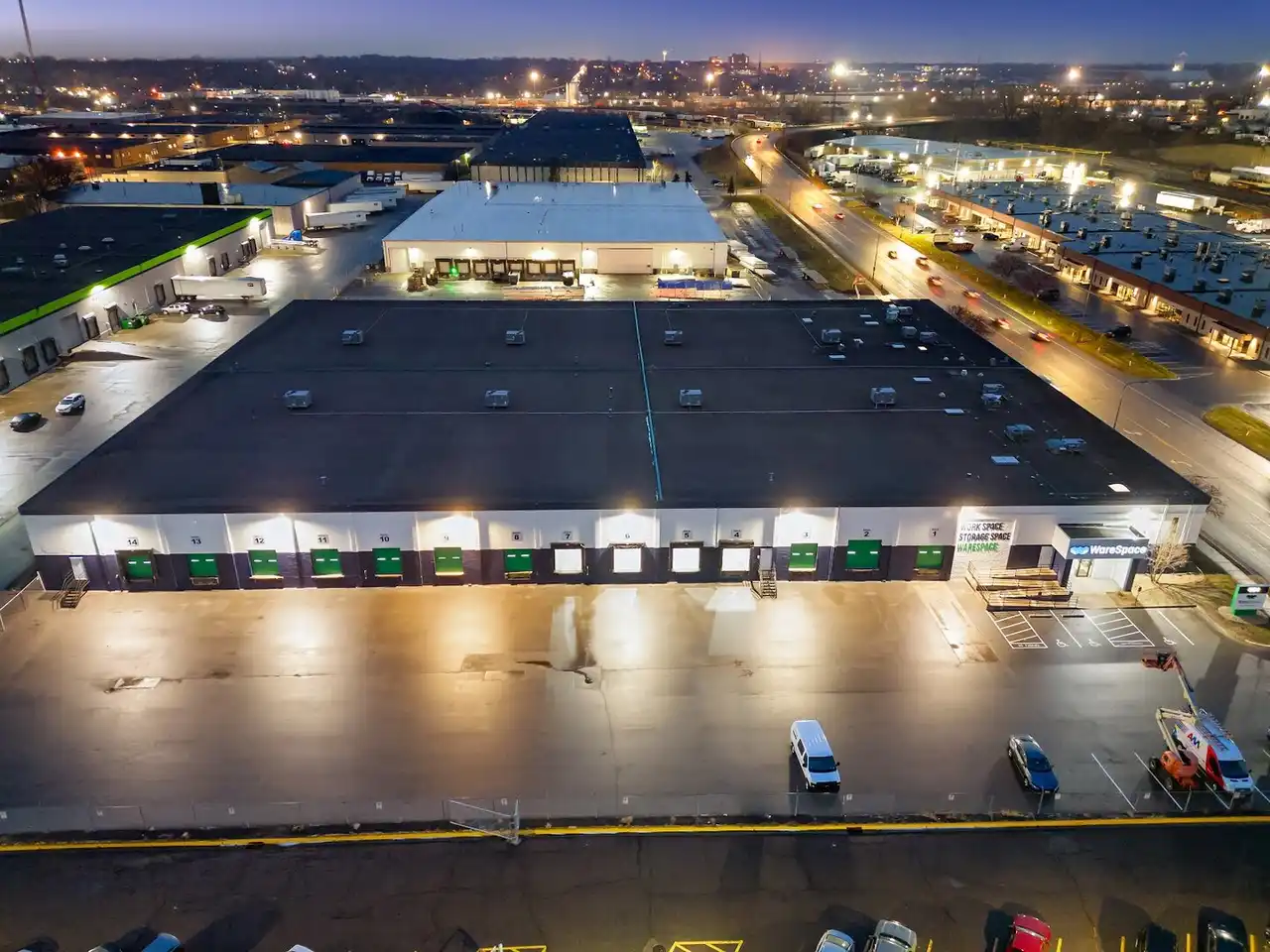
Giovanni Romero started with one unit at WareSpace Houston for his furniture receiving and delivery business. As demand grew, he added units, eventually reaching four, each expansion happening within the same building without relocating operations.
Loading Dock Access, Climate Control, and 24/7 Access
If you are receiving pallet shipments or sending freight, dock-high loading changes your operation; hand-carrying cases works for small volumes and breaks at scale. Houston’s 75% average humidity and 99 days above 90 degrees degrade electronics, supplements, cosmetics, and anything with adhesives, so temperature-sensitive products need climate-controlled space. And because eCommerce does not run nine to five, 24/7 access lets you pack when orders and carrier cutoffs demand it.
Why Houston Works for eCommerce Shipping
Houston sits at the intersection of I-10 (east-west) and I-45 (north-south), and Port Houston handles 4.03 million TEUs annually, fifth largest container port in the US. For sellers that geography means real advantages:
- Carrier hub density: Northwest Houston concentrates more fulfillment infrastructure than any other submarket. Amazon operates multiple facilities including the 800,000 Sq Ft HOU9 sortation center in Katy, FedEx Ground’s Houston hub in Cypress is the largest in Texas, and UPS Willowbrook runs hundreds of trucks with three-day ground reach to the continental US.
- Later pickup cutoffs: proximity to sorting facilities means orders placed later still ship same-day.
- Lower shipping costs: central US positioning reduces average zone distance for ground shipping versus coastal locations.
- Labor availability: the Houston metro has 7.9 million people, so pickers and packers exist if you hire.
Houston Neighborhoods for eCommerce Warehouse Space
Best for shipping speed is Northwest Houston along the Beltway 8 / I-10 / US-290 corridor, within 15 miles of Amazon, FedEx Ground, and UPS Willowbrook. WareSpace Houston at 10795 Hammerly Boulevard sits in this corridor. Southwest Houston suits sellers serving West Houston suburbs but carries higher rents. North Houston near IAH helps with air freight. Southeast Houston near the port has the lowest rents but longer drives to the carrier hubs.
What eCommerce Warehouse Space Costs in Houston
A traditional 500 Sq Ft lease runs base rent around $417/mo plus NNN/CAM of $100 to $167, utilities of $100 to $200 for climate control, $2,000 to $4,000 in upfront equipment, and a one to two month deposit, on a 3 to 5 year term.
Co-warehousing at WareSpace Houston bundles everything into one all-inclusive rate with a one-month deposit and equipment availability confirmed by building:
- 200 to 400 Sq Ft: starting at $1,000/mo all-inclusive
- 500 to 800 Sq Ft: from $1,400/mo all-inclusive
- 900 to 1,400 Sq Ft: from $1,900/mo all-inclusive
- 1,500 to 2,000 Sq Ft: from $2,400/mo all-inclusive
Terms run a flexible six months instead of a multi-year commitment. For the full breakdown, see our Houston warehouse cost guide or pricing page.
Setting Up Your Houston eCommerce Warehouse
Build a real workflow instead of daily setup and teardown. Put a receiving zone near loading access for inspection and inventory intake. Organize storage for picking efficiency, with fast-moving SKUs at waist-to-shoulder height and labels matching your system. Build a permanent packing station with a comfortable work surface, supplies within arm’s reach, a scale, and a label printer. Keep outbound staging separated by carrier and service level, with a dedicated returns area.
Co-Warehousing vs. Traditional Lease vs. 3PL for Houston eCommerce
Use your own warehouse space if you process 100 to 1,000+ orders weekly, your products need special handling, and you want control over packing quality. Use a 3PL if you ship under 50 orders weekly, do not want to touch operations, and your products are standard. Use a traditional lease if you are confident about 2,000+ Sq Ft needs for 3+ years and have capital for buildout. Use co-warehousing if you need 200 to 2,000 Sq Ft with room to scale, predictable all-inclusive costs, and want to be operational in days rather than months.
Houston eCommerce Warehouse FAQs
How much warehouse space do I need for my eCommerce business? Rough guide: under 100 orders and under 50 SKUs needs 200 to 400 Sq Ft; 100 to 300 orders needs 400 to 800 Sq Ft; 300 to 500 orders needs 800 to 1,400 Sq Ft; 500+ orders needs 1,500 to 2,000 Sq Ft. Bulky items need more space per SKU.
What is the minimum lease term for eCommerce warehouse space in Houston? Traditional commercial leases want 3 to 5 years. Co-warehousing like WareSpace offers six-month terms with flexibility to scale up or down.
How close should my warehouse be to FedEx and UPS hubs? Closer means later pickup cutoffs. Northwest Houston puts you within 15 miles of FedEx Ground’s hub, UPS Willowbrook, and Amazon’s sortation centers, and most co-warehousing facilities arrange daily on-site pickups.
Do I need climate control for eCommerce inventory in Houston? If you store electronics, supplements, cosmetics, food products, or anything temperature-sensitive, yes. Houston’s 75% humidity and 99 days above 90 degrees degrade products faster than you would expect.
What is included in all-inclusive warehouse pricing? At WareSpace: rent, property taxes, insurance, CAM, utilities, climate control, WiFi, loading docks, racking, shared equipment, conference rooms, kitchen, 24/7 access, security, and on-site management, all in one monthly payment.
WareSpace Houston has climate-controlled warehouse space from 200 to 2,000 Sq Ft at 10795 Hammerly Boulevard, all-inclusive starting at $1,000/mo, within 15 miles of major carrier hubs. Get an instant quote or book a tour to see available units.


