
Your truck is full of equipment that should be organized in a shop. Your garage has turned into an unofficial warehouse that is straining your marriage. Your storage units scattered across town cost you hours every time you need to grab something, and one of them already got broken into.
You need actual warehouse space, but everything you find is either too big (5,000+ square feet you do not need) or too limited (storage units with no power, no loading access, and rules that make running a business impossible).
Houston has options for small businesses that need real warehouse space between 200 and 2,000 square feet. Here is how to find it, what it costs, and whether it makes sense for your business.
Houston small warehouse at a glance
- WareSpace location
- Northwest Houston, 10795 Hammerly Blvd
- Unit sizes
- 200–2,000 Sq Ft
- Lease terms
- Short-term, 6 to 12 months
- All-inclusive rate
- Starting at $1,000/mo
- Included
- Loading docks, HVAC, racking, WiFi
Who Actually Uses Small Warehouse Space in Houston
Small warehouse space works for any business that needs more than a garage but less than an entire industrial building.
Contractors and Trades
Electricians, plumbers, HVAC techs, general contractors, and specialty trades need space for tools, equipment, materials, and vehicle parking.
Eduardo Ramos ran a marble restoration business out of four storage units scattered across the same facility. One held grinders, one held chemicals, one held polishers. He was paying for four separate spaces, driving between them daily, and still got robbed, losing several thousand dollars in equipment to a facility with minimal security.
What you need: climate control for sensitive materials (Houston’s 75% humidity destroys chemicals and corrodes tools), loading dock access for equipment and material deliveries, parking for work vehicles, and secure storage for expensive equipment. Typical space: 200 to 800 Sq Ft for solo operations, 900 to 1,500 Sq Ft for crews of three to five people. See our Houston contractor shop space guide for the full breakdown.
eCommerce and Online Sellers
Shopify stores, Amazon sellers, and DTC brands shipping orders from inventory they control. Texas hosts approximately 133,000 Amazon sellers, about 7% of the US total, and roughly 34% use Fulfillment by Merchant, meaning they ship orders themselves. The spare bedroom worked at 10 orders a week. It breaks at 100.
What you need: climate control for product protection, racking and shelving for inventory, a dedicated packing station, WiFi for inventory systems, and proximity to carrier hubs for later pickup cutoffs. Typical space: 200 to 400 Sq Ft under 100 weekly orders, 500 to 800 Sq Ft for 100 to 300 orders, 900 to 1,500 Sq Ft for 300 to 500 orders. Our Houston eCommerce fulfillment guide covers sizing and carrier proximity in depth.
Service Businesses with Equipment
Mobile service businesses, event companies, equipment rental, landscaping, and cleaning services that operate in the field but need a base for equipment, supplies, and admin work.
Chaka Howard ran an events marketing company with 200+ brand ambassadors out of her living room, with promotional materials in three storage units and ambassadors picking up equipment from her driveway. “I shouldn’t have so many people coming into my home,” she realized. A real space gave her a secure base and somewhere to meet clients that was not her dining room.
Creative and Production Studios
Photography studios, video production, content creation, podcasting, and maker spaces. John Kelly ran JKM Photography out of his living room, rearranging furniture for every shoot. A dedicated studio meant a permanent setup, more services, and his home back. He has since been hired by several companies in his building through hallway conversations. Typical space: 400 to 1,000 Sq Ft depending on production type.
What You Want Included in Houston Warehouse Space
Size Flexibility
Your space needs to change as your business grows. Giovanni Romero started with one unit for his furniture delivery business serving Houston’s interior design community. As his clients kept asking when he could handle receiving and storage, he found co-warehousing with racks already installed, announced it on Instagram, and word spread. The single unit filled. He added a second, third, and fourth. Three years later, furniture from high-end clients arrives on 18-wheelers at his private dock. Look for terms that let you size up or down with 30 to 60 days’ notice without penalties.
Loading Dock Access
If you are receiving pallets or moving heavy equipment, loading dock access is non-negotiable. Hand-carrying materials through parking lots wastes hours and increases injury risk. Standard docks handle semi-trucks, box trucks, and everything in between.
Climate Control
Houston hits 90°F+ for 99 days per year on average and averages 75% humidity year-round. Standard warehouses without climate control become saunas from May through September. If you store anything temperature-sensitive (electronics, chemicals, products for resale, wood furniture), climate-controlled space is mandatory. See our Houston climate control guide for what needs it and what it costs.
Power, Security, and Parking
Verify electrical capacity before signing if you run 220V equipment. For security, look for 24/7 access control, cameras in common areas, individual unit locks, well-lit parking, and on-site management. And if you run work vehicles or trailers, confirm parking counts and truck access up front.
Houston Neighborhoods for Small Warehouse Space
Northwest Houston (Beltway 8 / I-10 / US-290 Corridor)
Best for businesses shipping products or serving customers across the metro. This corridor holds the densest concentration of fulfillment infrastructure in Houston: Amazon operates multiple facilities within 15 miles, FedEx Ground’s Houston hub in Cypress is the largest in Texas, and UPS Willowbrook runs hundreds of trucks with three-day ground reach to the continental US. From Hammerly Boulevard, Downtown is 20 to 25 minutes and IAH Airport is 25 to 30 minutes. WareSpace Houston sits at the center of this corridor.
Southwest Houston
Best for businesses serving residential customers in West Houston, the Galleria, Sugar Land, and Memorial. Population growth in Sugar Land and Missouri City drives demand, while limited land constrains supply, so this is the priciest submarket. Contractors pay the premium because reduced drive time across service calls outweighs higher rent.
North Houston (IAH Airport Area)
Best for businesses with air-freight needs or serving The Woodlands and Conroe. Older building stock provides lower-cost options, though modern small-bay inventory is limited.
Southeast Houston (Port Area)
Best for import/export and cost-conscious operations. Port Houston handled 4.03 million TEUs in 2024, the fifth-largest container port in the US. Building stock runs older and drive times to other metro areas are longer, but rents are the lowest in Houston.
What Small Warehouse Space Costs in Houston
WareSpace Houston uses all-inclusive pricing, one flat monthly rate that covers rent, taxes, insurance, CAM, utilities, climate control, loading dock access, racking, WiFi, and shared amenities:
- 200 to 400 Sq Ft: starting at $1,000/mo all-inclusive
- 500 to 800 Sq Ft: from $1,400/mo all-inclusive
- 900 to 1,400 Sq Ft: from $1,900/mo all-inclusive
- 1,500 to 2,000 Sq Ft: from $2,400/mo all-inclusive
Traditional leases can look cheaper on the base rate, but you add 30 to 50% for NNN/CAM charges, utilities that spike in summer (Houston HVAC runs $200 to $400/mo for climate-controlled space), upfront equipment ($2,000 to $5,000), and 3 to 5 year commitments with personal guarantees. For the full breakdown, see our Houston warehouse cost guide, or compare options on our pricing page.
Traditional Lease vs. Co-Warehousing in Houston
Go with a traditional warehouse lease if you are confident about your space needs for 3+ years, operating on minimal margin, comfortable managing facilities yourself, and already own your equipment.
Go with co-warehousing if you are growing and your space needs are changing, seasonal, avoiding upfront capital costs, leasing commercial space for the first time, or you need a professional setup (conference rooms, kitchen, shared equipment) ready the day you move in.
Finding Small Warehouse Space for Rent in Houston
Traditional brokers focus on spaces over 5,000 square feet. For 200 to 2,000 Sq Ft, target co-warehousing and flex-space providers, small-bay industrial buildings (often owner-managed, listed on LoopNet or Crexi), and direct owner listings on Craigslist or Facebook Marketplace. Many small spaces never get listed online, so it pays to drive the industrial areas along Beltway 8 and near the port.
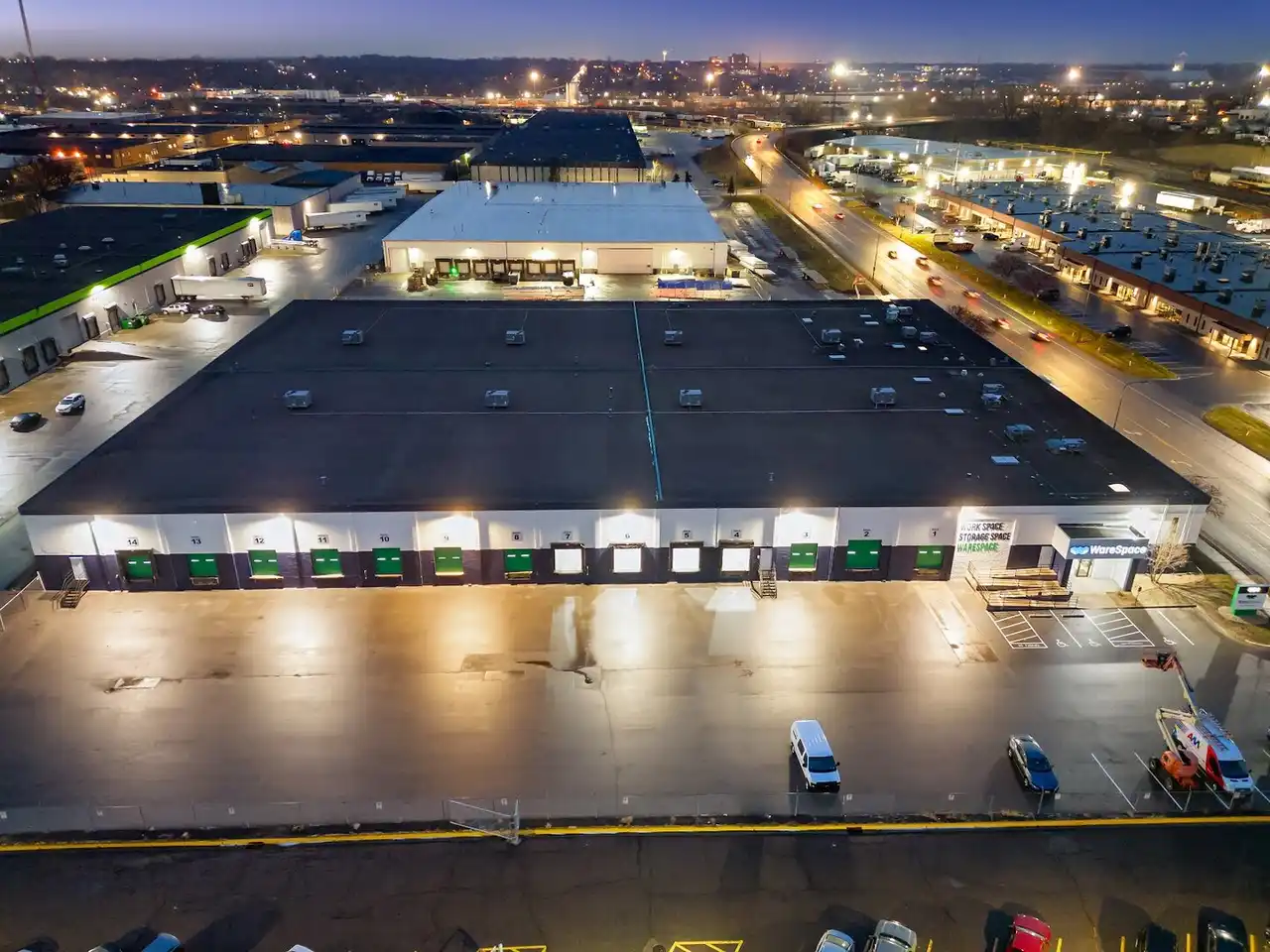
WareSpace Houston at 10795 Hammerly Boulevard offers 200 to 2,000 Sq Ft climate-controlled units with all-inclusive pricing and flexible 6-month leases. Shared loading docks, WiFi, conference rooms, kitchen, and 24/7 access are included. Book a tour to see what fits.
Small Warehouse Space FAQs for Houston
What is the smallest warehouse space I can rent in Houston? Most traditional warehouse spaces start at a 3,000 to 5,000 Sq Ft minimum. Co-warehousing facilities like WareSpace offer units as small as 200 Sq Ft for solo contractors, small eCommerce operations, or businesses moving out of a home.
Can I run a business from a Houston storage unit? No. Self-storage facilities prohibit business operations under their lease terms and Texas Property Code Chapter 59. You cannot work on-site, receive business deliveries, or meet clients.
Can I meet clients at my Houston warehouse space? At co-warehousing facilities, often yes. WareSpace includes conference rooms for client meetings, which tenants like Chaka use instead of inviting clients home.
What is included in Houston warehouse rent? Traditional leases usually cover just the space; you pay separately for utilities, NNN, CAM, internet, and equipment. All-inclusive co-warehousing bundles climate control, utilities, WiFi, loading docks, equipment, shared amenities, and maintenance into one rate.
What happens if I outgrow my Houston warehouse space? With a traditional lease you are locked in for the term, and breaking early usually costs 3 to 6 months’ rent. With co-warehousing you size up to a larger unit in the same facility with 30 to 60 days’ notice, the way Giovanni went from one unit to four.
Ready to get out of the garage? Get an instant quote or book a tour of WareSpace Houston.


