WareSpace vs self-storage: 2026 comparison
Compare a working small-bay warehouse with a business storage unit. See how each handles price, access, and permitted daily activity.
- Starting at $1,000/mo, all-inclusive
- Loading docks + racking included
- Run your business on site
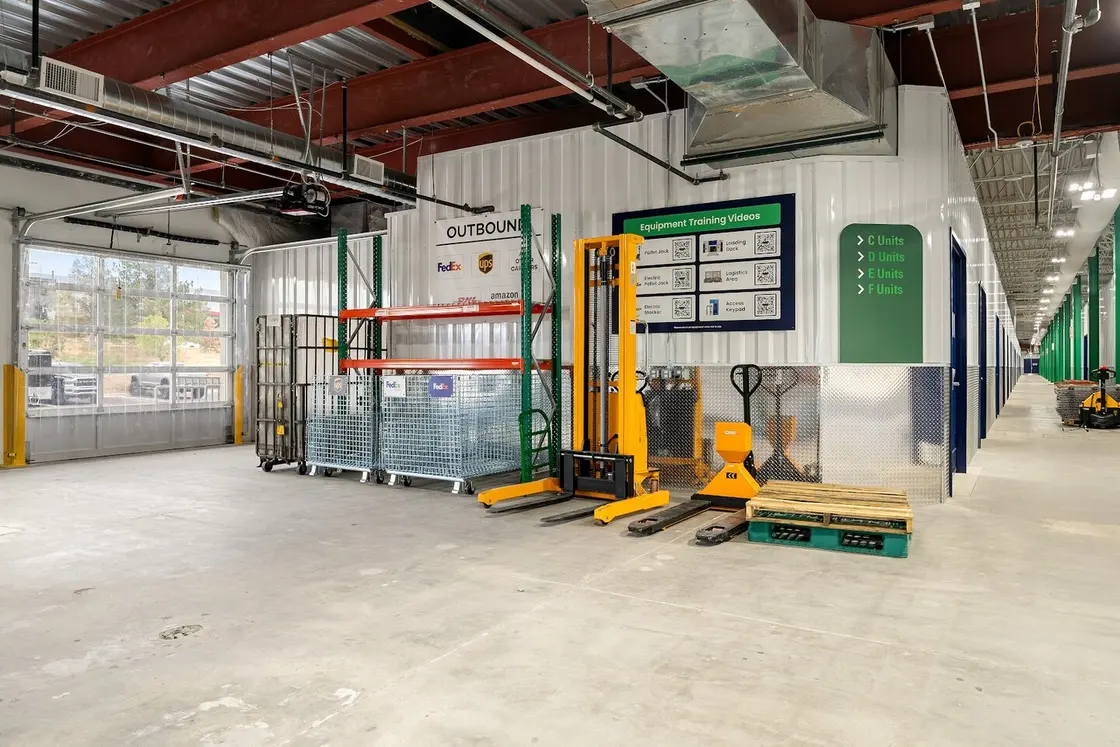
Loading docks + HVAC
included in every building
Self-storage serves passive inventory that needs occasional access and no on-site work. WareSpace supports daily business operations in a private small-bay unit. Shared loading infrastructure and included racking support receiving and shipping.
WareSpace vs. self-storage
Here's how small-bay warehouse space compares to a business storage unit across price, access, and amenities.
Swipe the table to compare →
| Comparison criteria | WareSpaceRecommended | Self-storage |
|---|---|---|
| Example providers | WareSpace small-bay units | Public Storage, Extra Space, CubeSmart, U-Haul |
| Pricing model | One flat all-inclusive fee | Per unit, add-ons separate |
| Pricing | Starting at $1,000/mo; unit availability varies | Usually lower for passive storage; varies by market and unit |
| Unit size range | 200-2,000+ Sq Ft | ~25-300 Sq Ft |
| Lease term | 6-12 months | Month-to-month |
| Shared loading docks | – | |
| Industrial racking & equipment | – | |
| Utilities, WiFi & HVAC | Varies / extra | |
| 24/7 access to work on site | Access yes, work no | |
| On-site general manager | Front desk only | |
| Run a business inside the unit | – | |
| Locations | Multi-city US network | Nationwide |
Best-fit use cases
What's your priority?
When to choose self-storage
Choose self-storage when you only need to park inventory, records, or seasonal equipment under ~300 square feet, no one needs to work on site, and the lowest possible monthly price is the priority.
When to choose WareSpace
Choose WareSpace when your business has outgrown a storage unit or garage and needs to ship, receive, assemble, or fulfill, with loading docks, racking, and a professional space included in one flat monthly fee.
Self-storage key strengths
- Lowest entry price: Brands like Public Storage, Extra Space, and CubeSmart are cheapest for small volumes of passive inventory or documents.
- Largest footprint: Public Storage, Extra Space, U-Haul, and Life Storage have units in nearly every town for short-notice, drive-up storage.
- No operational overhead: Ideal when nothing needs to happen inside the unit.
WareSpace key strengths
Best for most- Built for daily work: Shared loading infrastructure and included racking support shipping and fulfillment.
- All-inclusive pricing: Utilities, WiFi, HVAC, racking, and security in one monthly fee, no add-ons.
- Built for approved operations: Run approved warehouse operations in the unit; self-storage prohibits working from the space.
- Professional amenities: 24/7 access, conference rooms, kitchen, and an on-site general manager.
- Room to scale: Size up or down across 200-2,000+ Sq Ft without changing facilities.
WareSpace vs self-storage: common questions
The questions small businesses ask when deciding between a storage unit and a small warehouse.
Is WareSpace better than self-storage?
WareSpace supports daily business operations with industrial racking and building-specific loading access. Self-storage serves low-cost passive inventory with occasional access.
What is the difference between WareSpace and self-storage?
Self-storage rents enclosed units for passive item storage with restrictions on commercial activity. WareSpace rents small-bay warehouse units (200-2,000+ Sq Ft) built for shipping, assembly, and fulfillment, with shared docks and industrial racking and material-handling equipment included.
Is WareSpace cheaper than self-storage?
Self-storage usually carries a lower price for passive storage in a small unit. WareSpace starts at $1,000/mo as working warehouse space with included racking and shared infrastructure. Choose based on the daily activity the property must support.
Can WareSpace replace self-storage?
Yes. WareSpace can replace self-storage for businesses that need working warehouse space with loading access and permission to run daily operations on site.
When does self-storage fit best?
Self-storage fits small volumes of inventory or documents that need occasional access. Public Storage, Extra Space, and CubeSmart publish location-specific monthly rates.
Is WareSpace better than Public Storage or Extra Space for a business?
WareSpace supports on-site shipping and assembly with industrial racking, HVAC, shared loading infrastructure, and material-handling equipment. Public Storage and Extra Space serve passive inventory at location-specific rates.
Can WareSpace replace a CubeSmart or U-Haul business storage unit?
Yes. WareSpace can replace a CubeSmart or U-Haul unit when the business needs working warehouse space. Industrial racking, HVAC, shared loading infrastructure, and material-handling equipment support daily operations.
Current information behind this comparison
Features, terms, and availability can change by location. These are the primary sources used for the material differences on this page.


See your space. Move in the same day.
Book a tour, meet the General Manager, and walk your unit. No personal guarantee, no long-term contract, no pressure.
Available units starting at $1,000/mo, all-inclusive