
Shipping and packaging automation sounds like robotic arms and delivery drones, but for most small businesses it starts with something far simpler: software that prints labels, picks carriers, and tracks shipments automatically. It is already one of the biggest trends in logistics, and it is no longer just for large corporations. Here is what it does, how to implement it, and where it is headed.
What Is Shipping Automation?
Shipping automation uses technology to handle tasks across the shipping process, from order fulfillment to delivery. It spans software, like label printing, carrier selection, and tracking systems, and hardware, like automated sorting machines and conveyors. By reducing manual labor and errors, it delivers faster processing, lower costs, and more accurate tracking.
The Benefits, by Category
| Area | What automation delivers |
|---|---|
| Time and cost | Faster fulfillment, lower labor costs, fewer errors |
| Accuracy and efficiency | Real-time tracking, fewer mistakes, data-driven decisions |
| Inventory management | Continuous stock tracking, fewer stockouts and overstocks |
| Tracking and documentation | Live shipment updates, compliant paperwork, less admin |
Time and Cost Savings
Manual sorting and packing are slow and error-prone. Automated sorting, picking, and packing systems, paired with a solid warehouse management system (WMS), dramatically cut processing time and shipping costs, and free your team for higher-value work.
Improved Accuracy and Efficiency
Automated tracking reduces shipping errors and returns through continuous monitoring and real-time updates, while data and analytics enable better decisions and consistent packaging quality.
Inventory Management
Automated systems track stock in real time, reducing the chance of overstocking or stockouts and improving your ability to fulfill orders promptly.
Shipment Tracking and Documentation
Automation provides continuous shipment updates and accurately generates invoices, customs forms, and compliance documents, cutting admin work and reducing the risk of fines and delays.
Automation in Logistics
Beyond software, logistics automation includes robotic picking and packing for precision and speed, automated guided vehicles (AGVs) that move goods through a warehouse without manual handling, and drones for inventory scanning and last-mile delivery. Together they streamline operations and free people for more strategic work, while improving inventory accuracy, efficiency, cost, and scalability across the supply chain.
Packaging Automation
Automated packaging is faster and more consistent than manual methods, helping meet demand and cut lead times. It uses materials efficiently to reduce waste and cost, improves worker safety by removing repetitive or hazardous tasks, scales with production needs, and produces consistent, high-quality packaging that means fewer damaged goods and returns.
How to Implement Automation
- Assess current processes to find the biggest bottlenecks.
- Choose the right tools that fit your business size and needs.
- Train staff so the new systems are used effectively.
- Integrate tools with your existing systems for smooth operation.
Then keep it healthy with ongoing training, regular maintenance, and continuous monitoring and adjustment.
Automation needs a home: a WMS, label printer, and organized picking flow all assume you have a dedicated, properly laid-out space to run them in. The space comes first; the automation makes it hum.
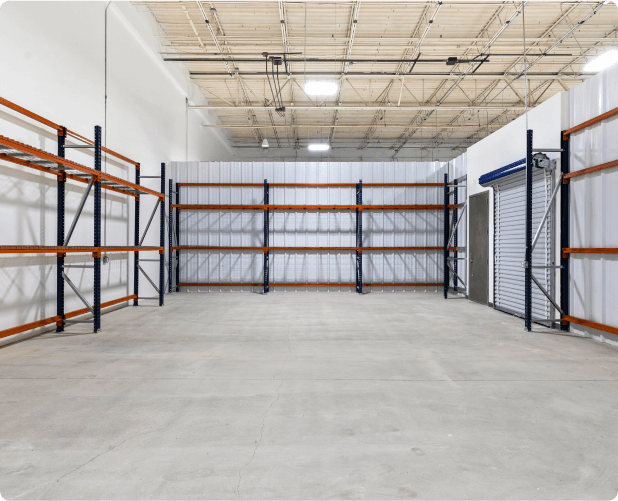
Automation starts with a space organized enough to run it. A small warehouse with racking and dock access gives you the layout to set up a WMS, a packing station, and an efficient picking flow, and positioning that space closer to your customers compounds the savings on every shipment.
The space automation runs on
A warehouse built for efficient fulfillment
WareSpace gives small businesses a private warehouse unit with loading docks, HVAC, racking, and 24/7 access starting at $1,000/mo, the organized foundation that makes a WMS, packing station, and faster shipping possible.
Future Trends
AI, machine learning, and the Internet of Things are pushing automation toward real-time monitoring, predictive analytics, and smarter decisions. Importantly, these tools are no longer only for big companies. Small and medium-sized businesses that adopt automation early gain efficiency, lower costs, and a real competitive edge.
Shipping Automation FAQ
Is shipping automation only for large companies?
No. Small and medium-sized businesses benefit too, often starting with software like a WMS or shipping platform that automates label printing, carrier selection, and tracking before adding any hardware.
What is the easiest place to start with automation?
A warehouse management system and automated label and tracking tools deliver fast wins with low complexity, cutting processing time and errors right away.
What do I need before automating?
An organized, well-laid-out space. A WMS, packing station, and efficient picking flow all assume a dedicated warehouse to run them in, which is why space comes first.
Set Up a Space Built for Efficiency
Automation pays off fastest in an organized warehouse. WareSpace offers flexible 200 to 2,000 Sq Ft units nationwide, with all-inclusive pricing starting at $1,000/mo, loading docks, racking, and short-term leases. Book a tour or get an instant price estimate.


