
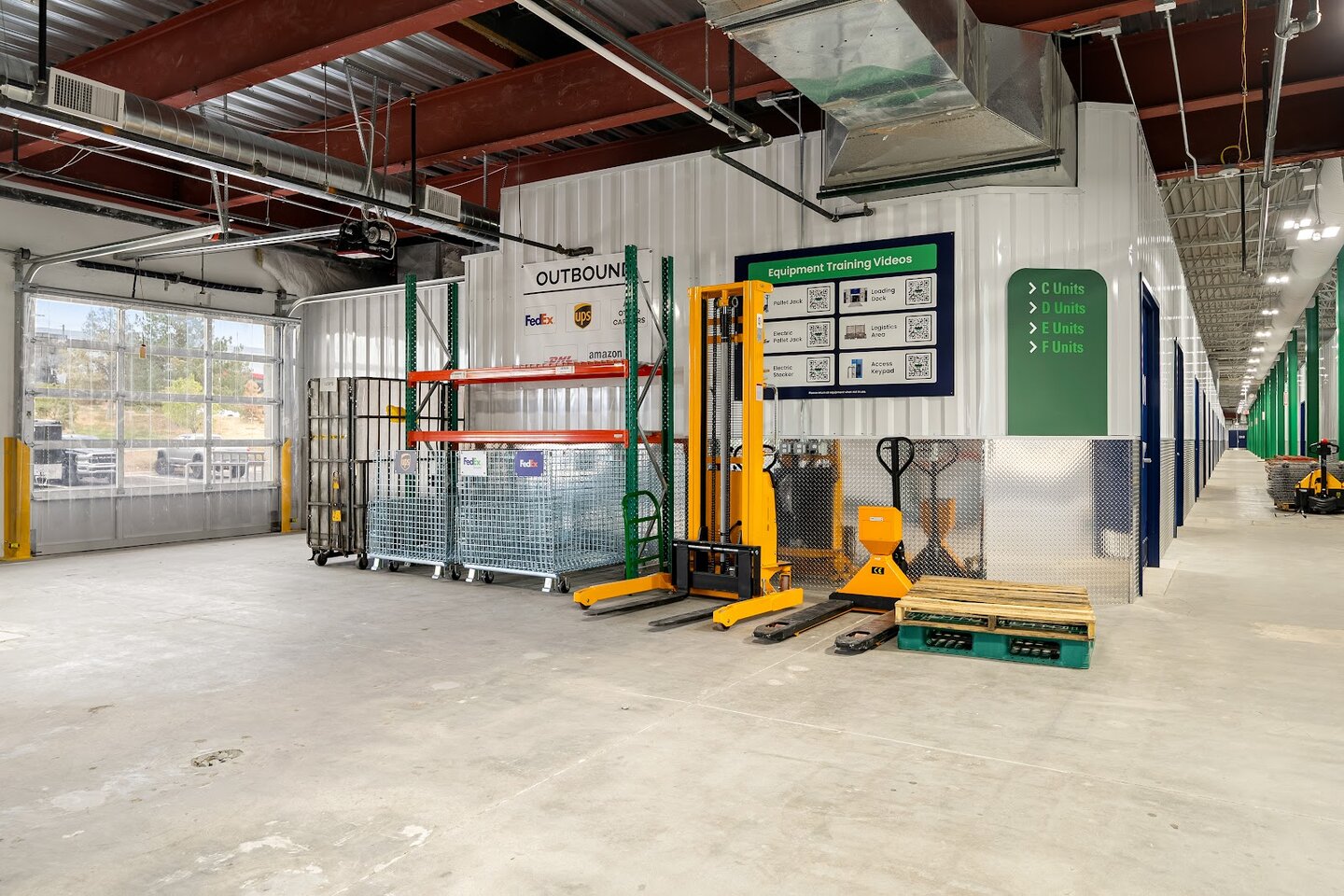
Track a package and you will almost always see it pause at a carrier facility. It is one of the most common tracking updates, and one of the most misunderstood. Here is what a carrier facility actually is, how it works, why your package sits there, and how the businesses with the fastest delivery quietly cut that journey short.
What Is a Carrier Facility?
A carrier facility is a hub in the supply chain where goods are received, stored, processed, and sent on toward their final destination. It is the connective tissue that keeps products moving from manufacturers to customers, and it comes in a few forms:
- Warehouses: large spaces built primarily for storage.
- Distribution centers: facilities focused on moving goods quickly.
- Fulfillment centers: centers geared toward order processing and shipment.
Each type plays a slightly different role, but they share the same job: keep the flow of goods efficient and unbroken.
What a Carrier Facility Does
Carrier facilities handle four core functions that together keep the supply chain responsive.
| Function | What happens | Why it matters |
|---|---|---|
| Storage | Goods are held until needed, in conditions that preserve quality | Buffers supply against demand |
| Handling | Items are unloaded, loaded, and sometimes repackaged | Keeps goods moving and protected |
| Distribution | Products are routed toward their destinations | Connects suppliers to customers |
| Inventory management | Stock levels, movement, and reorders are tracked | Prevents stockouts and delays |
These functions are interconnected. Good inventory management leads to better handling and distribution, which leads to timely, accurate deliveries.
How a Carrier Facility Operates
Inside, the work follows a predictable sequence:
- Receiving goods. Incoming products are checked for condition and quantity, then logged into the inventory system.
- Sorting and storing. Items are sorted by destination, type, or size, then placed in storage that balances space efficiency with easy retrieval. Fast-moving goods sit within easy reach.
- Order fulfillment. When an order comes in, items are picked, packed securely, and labeled for shipment.
- Transportation coordination. The facility schedules carrier pickups, creates shipping labels, plans routes, and tracks shipments toward their destination.
Every stage is built to handle goods with precision so the supply chain stays reliable.
How Long Do Packages Stay at a Carrier Facility?
Usually a few hours to a couple of days. Express or priority shipments often move through in hours, while several factors can extend the stay:
- Destination: international shipments may wait on customs clearance.
- Facility efficiency: highly automated hubs process volume fast; manual or high-traffic sites take longer.
- Unforeseen delays: weather, mechanical issues, or operational disruptions can hold packages.
- Peak seasons: holiday volume slows processing across the board.
So while packages generally move quickly, the exact duration depends on these moving parts.
The Part You Control: Distance
Here is what most small businesses miss. You cannot control a carrier’s sort times, the weather, or holiday backlogs. You can control how far your package has to travel in the first place. Fewer shipping zones crossed means fewer facilities touched, less time in transit, and lower cost, on the same carrier and the same service level.
That is the case for distributed inventory: hold stock closer to your customers so most orders ship one or two zones instead of five or six. For the full mechanics, see our shipping zones guide and our breakdown of mail delivery time from ZIP to ZIP.
Ship closer, move faster
Cut transit time by shipping from near your customers
A small WareSpace warehouse in the right metro positions your inventory one or two zones from your buyers, so packages touch fewer facilities and arrive sooner. All-inclusive space starting at $1,000/mo, with loading docks, daily carrier pickups, and short-term leases.
Getting Started With a Carrier Facility
If you are weighing whether to use one, start here:
- Assess your needs. Look at the volume of goods you handle, your storage requirements, and your distribution channels.
- Find providers. Research options with a track record in your industry and ask for references or case studies.
- Set up. Finalize terms, integrate systems, and establish clear communication so handoffs stay smooth.
For many small businesses, renting a small warehouse near key markets delivers the same positioning advantage as a large carrier network, at a fraction of the cost.
Carrier Facility FAQ
Why does a package sit at a carrier facility?
Usually because of routine processing, high volume, or waiting on the next transportation leg. It is a normal step, not a sign something is wrong.
What does it mean when a package has arrived at a carrier facility?
Your package has reached a hub in the logistics chain and is being received, sorted, or staged before moving to the next stage of delivery.
What does it mean when a package has left the carrier facility?
It has been processed and is now en route to its next stop, either another facility or the final delivery point.
Can you pick up a package from a carrier facility?
Sometimes, depending on the carrier’s policies. Check directly with the carrier before heading over.
Faster Shipping for Your Small Business
Understanding carrier facilities is useful. Shortening the distance your packages travel is what actually moves the needle. WareSpace offers flexible small warehouse units from 200 to 2,000 Sq Ft in metros nationwide, with all-inclusive pricing starting at $1,000/mo, loading docks, daily carrier pickups, and short-term leases. Position stock near demand and your packages spend less time in transit. Book a tour or get an instant price estimate.


