
Most small businesses no longer choose between selling online or in person. The growth is in doing both well. Online reaches a wide audience at low cost; offline builds personal trust and immediate access. Here is how to balance the two and stitch them into one consistent brand experience.
Online vs. Offline: The Trade-Offs
Online sales happen over the internet, through platforms like Shopify or marketplaces like Amazon and eBay. Offline sales happen in person, through a storefront or face-to-face. Each has distinct strengths.
| Online sales | Offline sales | |
|---|---|---|
| Reach | Global, no geographic limits | Local foot traffic |
| Convenience | Shop anytime, anywhere | Immediate product access |
| Relationship | Reviews and testimonials build trust | Personal, face-to-face service |
| Data | Rich analytics and attribution | Community engagement and loyalty |
| Cost | Lower overhead | Higher fixed costs, but immersive |
Developing Your Online Marketing
To drive customers to your store and keep them coming back, lean on three pillars:
- SEO. Improve visibility in search results to attract organic traffic.
- Social media. Engage through organic content and targeted paid ads.
- Email. Tools like Klaviyo and Mailchimp make it easy to nurture relationships and promote products.
Wrap all of it in data. Understanding who buys lets you refine targeting, streamline the user journey, and serve personalized recommendations that lift conversion.
Leveraging Offline Tactics
Offline marketing still works, especially locally:
- Host events. Product launches and appreciation days draw people in and create experiences.
- Print advertising. Newspapers, magazines, and flyers reach specific local demographics.
- Direct mail. Personalized offers and exclusive deals land directly in mailboxes.
The cornerstone of offline is personal connection, which paired with great service builds trust and loyalty.
Integrating Online and Offline
The magic is in combining them into one seamless experience:
- Click-and-collect: buy online, pick up in person.
- Cross-channel promotions: promote in-store events on social, or offer online customers an in-store discount.
- In-store email signups: link an offline purchase to ongoing online engagement.
Throughout, keep the brand consistent. Same logo, colors, fonts, and voice across every touchpoint so customers experience one unified business. To go deeper on that, see our guide to building a strong brand.
Measure and Adapt
Set KPIs for both channels, like conversion rate, average order value, and customer acquisition cost. If online traffic is high but conversion is low, your site or calls to action may need work. Review the data and customer feedback regularly and stay flexible as preferences shift.
The fulfillment link: selling on two channels means filling orders for both. A single, well-located inventory hub lets you ship online orders and restock a storefront from the same place, without doubling your costs.
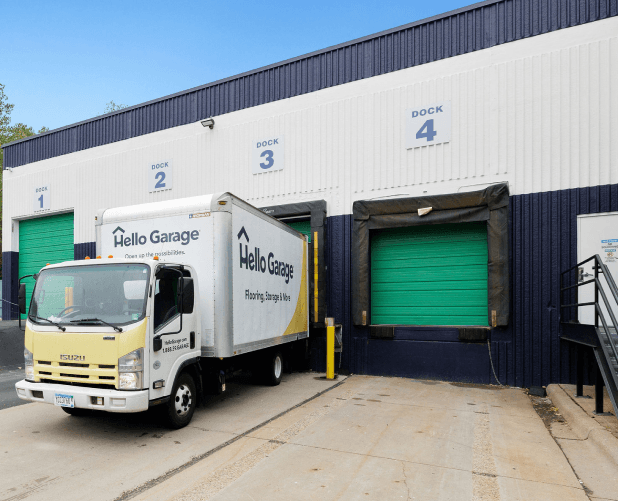
Running both channels puts more pressure on inventory and fulfillment. A small warehouse gives you one organized hub to ship ecommerce orders and replenish in-store stock, and holding it closer to customers lowers shipping cost and time.
One hub for every channel
Fulfill online and offline from one space
WareSpace gives small businesses a flexible warehouse unit with loading docks, HVAC, racking, and 24/7 access starting at $1,000/mo, so you can ship online orders and restock your store from a single, well-located hub.
Online vs. Offline Sales FAQ
Should a small business sell online, offline, or both?
For most, both. Online expands reach and lowers overhead; offline builds personal trust and immediate access. The strongest results come from integrating the two into one consistent experience.
How do I keep my brand consistent across channels?
Use the same logo, colors, fonts, and voice everywhere, online and in person, and connect the channels with tactics like click-and-collect and cross-channel promotions.
How does fulfillment change when I sell on both channels?
You need inventory that can serve both. A single well-located warehouse lets you ship ecommerce orders and restock a storefront from one place, which keeps costs down and stock accurate.
Build a Foundation for Both Channels
Selling everywhere is easier with one solid inventory hub behind it. WareSpace offers flexible 200 to 2,000 Sq Ft warehouse units nationwide, with all-inclusive pricing starting at $1,000/mo, loading docks, racking, and short-term leases. Book a tour or get an instant price estimate.


