
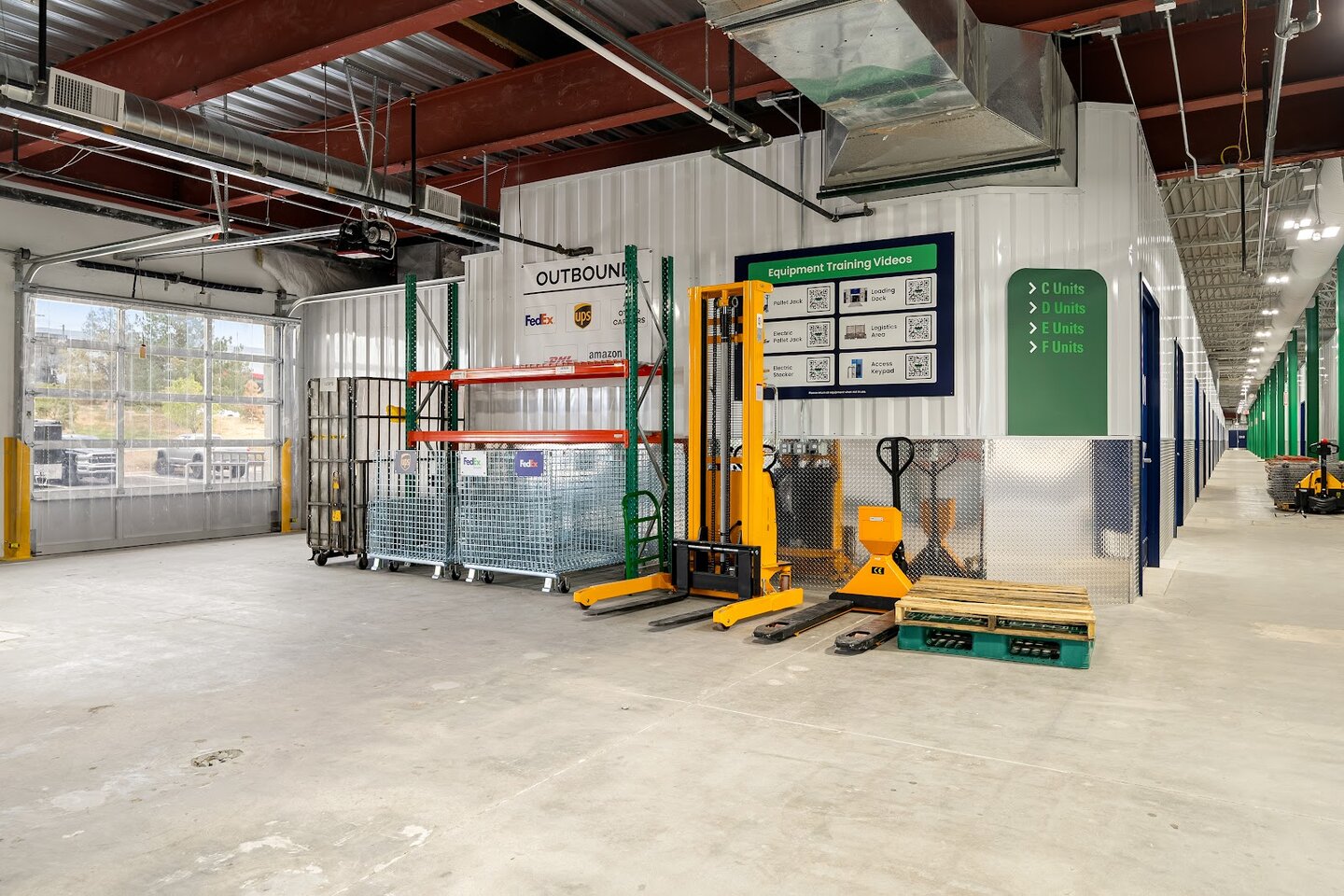
Fulfillment centers are key players in modern supply chains, especially for ecommerce businesses looking to streamline order fulfillment and shipping. These facilities handle everything from receiving and storing products to packing and shipping them directly to customers. But how do they differ from traditional warehouses, and which solution is best for your business?
In this guide you will learn what a fulfillment center is, why it matters, how it compares to warehousing, and why a small warehouse space is often the smartest middle path for small and medium-sized enterprises (SMEs).
What Is a Fulfillment Center and How Does It Work?
A fulfillment center is a third-party logistics (3PL) facility that handles order processing, picking, packing, and shipping for businesses. Unlike a warehouse built mainly for storage, a fulfillment center is designed to move inventory quickly through the order cycle.
Operations follow a structured workflow:
- Receiving: products arrive, are inspected, and are stored.
- Storage: items are organized in the center’s inventory system, ready for picking.
- Order processing: when a customer orders, the item is picked, packed, and labeled.
- Shipping: packages ship directly to the customer using carriers like UPS, USPS, or FedEx.
Automation and technology drive efficiency, with real-time inventory management, barcode scanning, and automated picking for speed and accuracy.
Who Uses Fulfillment Centers?
Fulfillment centers are commonly used by ecommerce businesses, retailers, and subscription box services. SMEs can benefit because they provide scalable solutions without investing in internal infrastructure or staff, which helps manage fluctuating order volumes without heavy upfront cost.
Warehousing vs. Fulfillment Centers: The Core Difference
A warehouse primarily stores inventory; a fulfillment center manages the entire order lifecycle, from receiving to shipping. Warehouses suit long-term storage, while fulfillment centers focus on moving products to the customer’s doorstep quickly.
| Warehousing | Fulfillment center | |
|---|---|---|
| Main purpose | Storage and inventory management | Fast order processing and shipping |
| Storage horizon | Long-term | Short-term, high turnover |
| Cost structure | Fixed (rent, staff, maintenance) | Per-unit fees that scale with volume |
| Control | High, you run operations | Lower, the 3PL runs operations |
| Best for | Slower turnover, larger inventories | High-volume, frequent shipping |
Owning or leasing a warehouse gives you more control but comes with fixed costs and responsibilities like staffing and maintenance. A fulfillment center offers flexibility and scalability without a long-term commitment, but can carry higher per-unit costs.
Are Fulfillment Centers or Warehousing Better?
It depends on how you operate.
- Operations: fulfillment centers streamline fast order fulfillment and high turnover, common in ecommerce. Warehouses suit businesses that prioritize storage and inventory management.
- Storage horizon: warehouses are cost-efficient for slow turnover (think furniture or appliances). Fulfillment centers fit fast-moving products like cosmetics or perishables.
- Pickup frequency: fulfillment centers handle frequent, even multiple-times-daily pickups; warehouses suit less frequent movement.
How Small Warehouse Space Is the Perfect Answer for SMEs
What if you need the cost-effective storage of warehousing without the often costly full service of a fulfillment center? A small warehouse space is frequently the best of both.
Small warehouse spaces give SMEs an affordable way to store inventory while keeping control over order processing and distribution. They offer flexibility in both storage and fulfillment, and a strategically placed unit keeps inventory closer to customers, improving shipping times and lowering costs. To see how shared space sharpens fulfillment, read our overview of ecommerce warehousing or how shared warehouse space works.
The middle path: with WareSpace, you get dock-equipped, climate-controlled storage and the ability to run your own picking, packing, and carrier pickups, all-inclusive starting at $1,000/mo, instead of paying per-unit fulfillment fees on every order.
Storage and control in one space
Run fulfillment from your own small warehouse
WareSpace units include loading docks, HVAC, racking, package receiving, and 24/7 access, all-inclusive starting at $1,000/mo on short-term leases, so you keep control without a long-term commitment.
FAQ
What is the difference between a fulfillment center and a warehouse?
A warehouse is built mainly to store inventory, often long-term. A fulfillment center is a 3PL facility that manages the full order cycle, picking, packing, and shipping orders directly to customers, with a focus on speed.
Is a fulfillment center cheaper than running my own warehouse?
It depends on volume. Fulfillment centers charge per-unit fees that scale with orders, which can exceed the fixed cost of a small warehouse once volume grows. A small all-inclusive warehouse keeps costs predictable and operations in-house.
Can a small business run fulfillment without a 3PL?
Yes. A dock-equipped small warehouse lets you store inventory and run your own picking, packing, and carrier pickups, giving you control and avoiding per-unit fees.
Find the Right Space for Your Operation
Both fulfillment centers and warehousing have a role, but many SMEs land on a small warehouse for the balance of cost, control, and flexibility. Book a tour or find a WareSpace location to see how it fits your fulfillment.


