
Most creative businesses do not outgrow their talent. They outgrow the room. The backdrop rolls live behind the couch, the light stands crowd the hallway, and the set you built for last month’s shoot is now leaning against the garage wall.
If you work near the Heights or the Washington Avenue corridor, you have real options. You also have plenty of ways to pick the wrong one. This guide compares the three common types of creative space, what each one suits, and the questions to ask before you sign anything.
Why creative space near the Heights is a real decision
Houston has no comprehensive zoning ordinance, according to the City of Houston new business guide (accessed November 2026). That does not mean anything goes. The same guide tells home businesses to check deed restrictions with their homeowners association or civic club, and neighborhoods around the Heights take those rules seriously. The Houston Properties Timbergrove and Lazybrook guide (accessed November 2026) describes the area as deed-restricted with active civic associations.
So a garage studio that works fine for editing can become a problem once clients, deliveries, or power tools show up. Our guide to Houston Heights deed restrictions for home businesses covers that side in more detail.
Demand for small, flexible space is also high across the region. TenantBase reported in its Houston Q3 2026 market report (accessed November 2026) that flex space was the top category on its platform, at 41.6% of Houston tenant searches.
The three types of creative space
Shared studios
Shared studios give you a desk, a wall, or a corner inside a larger creative building. Sawyer Yards, in the historic First Ward and Arts District Houston, is one nearby example. According to the Sawyer Yards website (accessed November 2026), its former warehouse and industrial spaces now house hundreds of working artists, galleries, loft offices, and creative businesses. Sawyer Yards is about 3 miles in a straight line from 1215 Seamist Dr.
Shared studios are great for community, foot traffic, and open-studio events. They are usually less suited to bulky gear, big set pieces, or work that runs late.
Hourly rental studios
Hourly studios are rented by the shoot. You get a cyc wall, lighting, and a clean space for a few hours, then you pack everything out. They are ideal when you shoot occasionally and own little gear. They get expensive and tiring when you shoot every week and haul the same cases in and out each time.
Private warehouse units
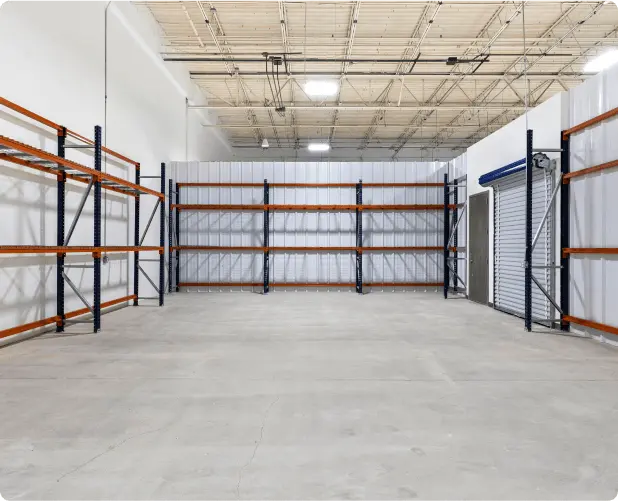
A private unit is a lockable space that is yours for the term of the lease. You can leave a set standing, keep racking full of props, and build at your own pace. This is the option most creatives move to once storage, not shoot time, becomes the bottleneck.
Which option fits which kind of work
| Shared studio | Hourly rental studio | Private warehouse unit | |
|---|---|---|---|
| Best for | Painters, illustrators, small makers who value community | Occasional shoots with little owned gear | Teams with gear, props, and builds to keep on site |
| Gear storage | Limited, often shared | None between bookings | Your own racking and floor space |
| Set builds | Usually small and temporary | Must strike after each booking | Can stay standing between shoots |
| Light assembly or packing | Depends on the building | Rarely allowed | Common, within the operator’s use policy |
| Access | Set by the building | Only during your booking | Depends on the operator; check the hours |
| Commitment | Varies by building | Per booking | Lease term set by the operator |
A useful test: count how many hours a month you spend loading and unloading gear. If the answer keeps rising, a private unit is worth pricing out against the time you lose.
What to check before you sign
The City of Houston “Plan a Business” location guide (accessed November 2026) warns that many spaces are not “business-ready” and that renovation and IT upgrades are hidden costs. For creative work, these are the checks that matter most.
Power
Lighting rigs, kilns, sewing machines, and charging stations all draw power. Ask what outlets are in the unit, whether circuits are shared, and whether any equipment needs approval first.
Access hours
Shoots run early and builds run late. Confirm whether access is 24/7 or limited to staffed hours, and how guests and crew get in.
Loading
Set pieces, flats, and crated work need a way in. Ask about shared loading access, the size of doors, and where a van or box truck can park while you unload.
Climate
Canvas, film stock, fabric, wood, and electronics all react to Houston heat and humidity. Year-round HVAC matters more than most creatives expect. Our Houston climate-controlled warehouse guide explains why.
Noise and acceptable use
Every operator has rules about noise, fumes, and what you can do inside a unit. Read them before you commit, not after your first complaint.
Know the use policy first: the WareSpace Acceptable Use Policy lists creative studios, photography, small-batch production, and light assembly as acceptable uses. Welding, sanding, and spray painting are not permitted, and operations must stay within posted noise limits (generally up to 80 dB) without excessive heat or odor. If your process is borderline, ask before you lease.
Common mistakes creatives make with space
- Paying for shoot time when you need storage. If most of your hours are spent moving gear, an hourly studio is solving the wrong problem.
- Ignoring humidity. A space without year-round climate control can damage prints, fabric, and wood faster than you think.
- Skipping the use policy. Finishing work with sprays or heavy sanding is often restricted. Find out before you plan a build around it.
- Underestimating loading. A great room up a narrow stairwell is a poor fit for set builds.
- Signing a long lease too early. If your work is project-based, a shorter term keeps you flexible while you learn what you need.
WareSpace Houston Heights, coming soon
WareSpace Houston Heights is coming soon to 1215 Seamist Dr, Houston, TX 77008, in the Timbergrove and Lazybrook area inside Loop 610, just west of the Houston Heights. There is no public opening date yet, and the next step is the Founders List, not a tour.
The location sits less than 1 mile from the I-610 North Loop and about 1 mile from US-290 and the METRO Northwest Transit Center. I-10 is about 2 miles away and Downtown Houston about 7 miles.
Final unit mix, pricing, and building features for Houston Heights will be confirmed before leasing. The WareSpace model generally includes:
- Private, lockable units with racking
- Shared loading access
- Year-round HVAC
- WiFi and utilities in one all-inclusive Monthly License Fee, from $1,000/mo
- 24/7 access and on-site support
- Lease terms of 6 to 12 months
To hear first when details are confirmed, join the Houston Heights waitlist. If you need space sooner, WareSpace Northwest at 10795 Hammerly Boulevard is leasing now.
Creative workspace FAQs
Can I run a photography studio from a small warehouse unit? Photography and creative studios are listed as acceptable uses in the WareSpace Acceptable Use Policy. Confirm your specific setup, including lighting power needs, before you lease.
Can clients visit a private unit? That depends on the building and the operator’s guest rules. Ask how visitors check in and whether there is space to meet.
Is Sawyer Yards close to WareSpace Houston Heights? Sawyer Yards is about 3 miles in a straight line from 1215 Seamist Dr. Many creatives use a shared studio for community and a private unit for gear and builds.
When will WareSpace Houston Heights open? There is no public opening date yet. Joining the Founders List is the best way to get updates.


