
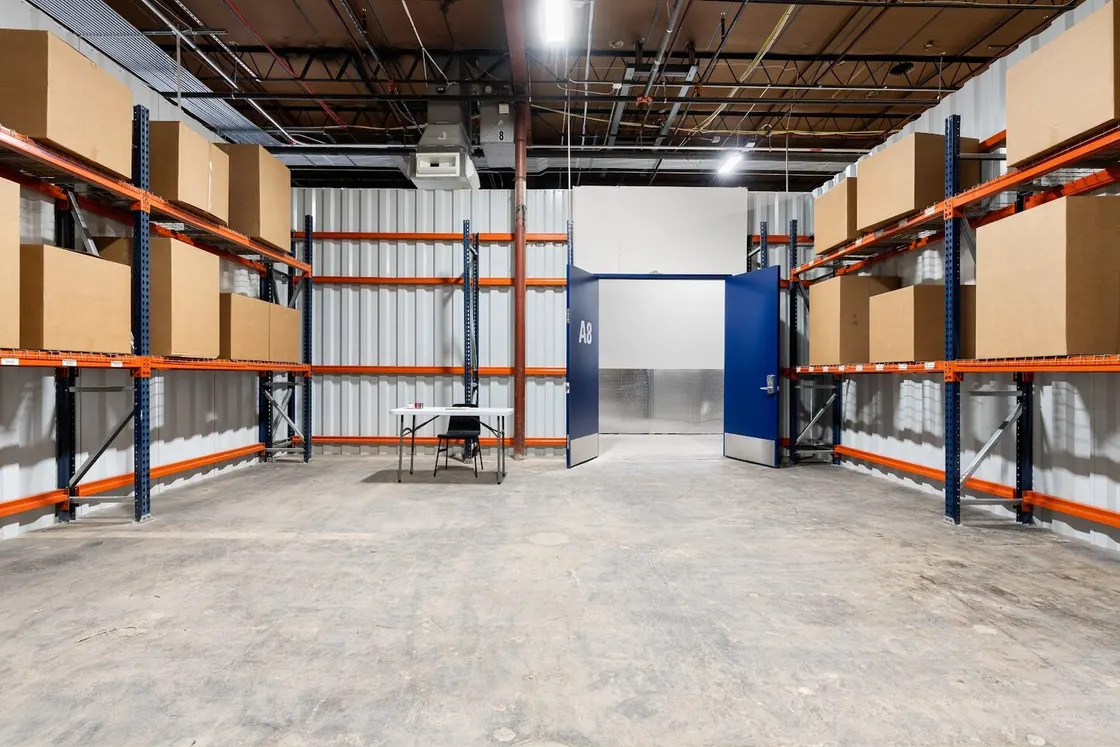
Start with what you do inside the unit, not a square-footage target. A crew loading vans each morning needs a different layout from an online seller picking and packing orders, even if both store the same amount of inventory.
List the Work That Happens There
Write down the work you need to do inside the space:
- Receiving and inspection
- Reserve storage
- Fast-pick storage
- Packing, kitting, or approved light assembly
- Outbound staging
- Returns or repair
- Tools and equipment
- Administrative work
- Safe circulation
Note when these activities overlap. If a delivery arrives while orders are being packed, neither task should block the other or the main aisle.
Draw a Day in the Unit
Sketch the route from the door to storage, your work area, outbound staging, and back out. Leave the door swing and walking paths clear. Mark the space your largest normal delivery will occupy while someone is unpacking it.
If two activities need the same floor at the same time, your drawing will show the pinch point. A packing table beside the only loading path, for example, can slow both receiving and shipping even when the unit has empty shelves.
Check Height, Racking, and Door Access
Floor area is only part of the fit. Record the height and shape of what you store, how often you retrieve it, and whether it can go on racking. Industrial racking is included in every WareSpace unit, but its placement varies. During a tour, check door width, turning room, reachable shelf space, and any restrictions on your equipment or materials.
Plan for Your Busiest Normal Week
Use your peak order volume or largest routine job, not an unusually quiet week. Count the cartons, tools, packaging, returns, and staff that must fit at the same time. If you expect to add a workstation, draw it now. Do not pay for several years of hypothetical growth without knowing how you would use the extra space.
Bring this sketch and your inventory dimensions to a space-fit conversation. The team can show you available units and check whether your receiving and work areas fit safely. South San Francisco’s final unit mix and availability have not been published.
Compare the Full Cost
A larger traditional lease may also require equipment, utilities, and move-in work. Use the South San Francisco warehouse cost guide to compare the full commitment, not just the listed area.
If you dispatch crews, see the San Francisco contractor warehouse guide. If you ship orders, the Bay Area e-commerce guide shows where picking, packing, and returns compete for floor space.
WareSpace generally offers private small warehouse space with 6–12 month terms. WareSpace South San Francisco is coming soon. Join the Founders List for confirmed opening and unit details.


