
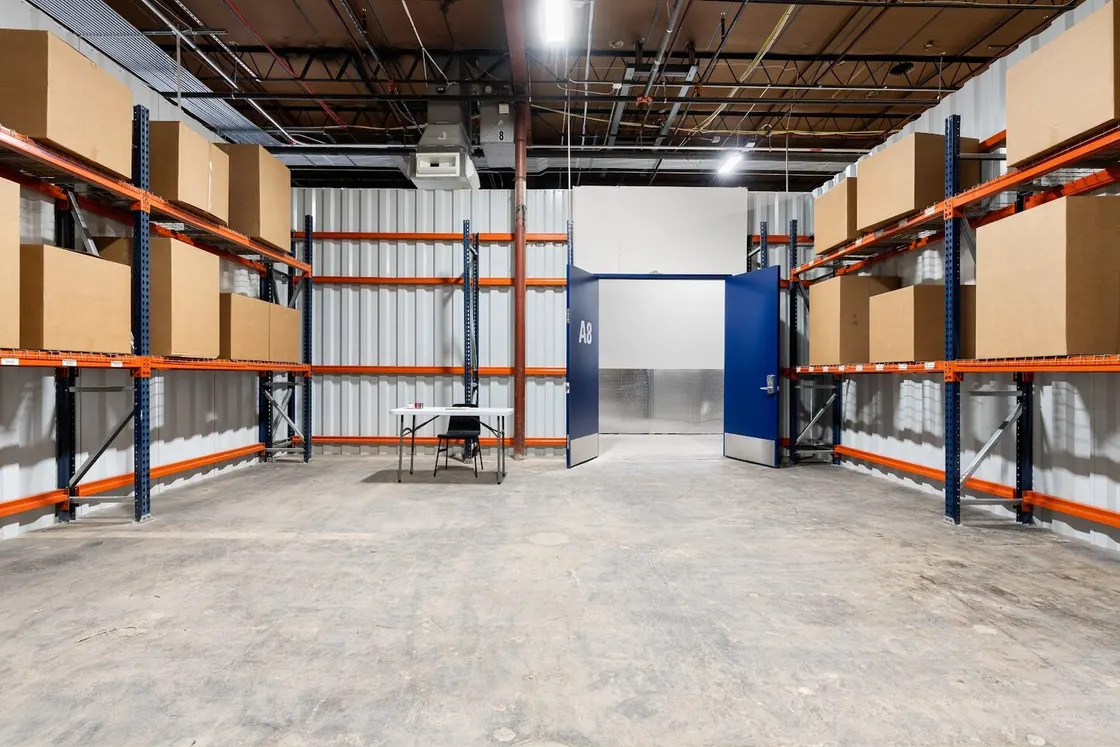
If a new delivery blocks your packing table, a unit can feel too small before its shelves are full. Draw the path an order takes through receiving, storage, picking, packing, and pickup. Then look for a unit where those jobs can happen without getting in each other’s way.
Follow an Order Through the Space
- Receive and inspect inbound goods
- Move reserve inventory into storage
- Replenish fast-pick locations
- Pick and pack orders
- Stage completed shipments
- Process returns and exceptions
- Store packaging and supplies
- Handle administrative work
Mark where people and cartons would cross paths. If returns land in the packing area or a delivery blocks the outgoing parcels, the layout needs more room or a different arrangement.
Protect Receiving and Outbound Staging
Inbound goods arrive in batches. Outbound orders leave throughout the day. Assign both flows a defined area so a new delivery does not block packed orders or the main aisle.
Plan for the largest normal inbound shipment, not the average one. If stock arrives in cases or on pallets, verify the building’s receiving, loading, and equipment procedures before signing.
Match Storage to SKU Behavior
Place fast-moving products close to the packing area. Slower reserve stock can use higher or deeper storage when the rack and load allow it. Keep heavy goods low, separate fragile items, and leave a clear replenishment path.
Count the packaging, returns, and seasonal stock too. A hundred SKUs need more pick locations than ten, even if both businesses keep the same number of cartons.
Build the Packing Area Around Labor
A packing station needs room for the item, shipping container, protective material, labels, and completed orders. If several people pack at once, plan separate work positions before adding more shelving. Two people need room to work at once without passing boxes over each other.
Confirm the Pickup at This Address
Ask your carriers when they can collect parcels from the property, where a driver will stop, and who handles packages if your team is away. If you receive freight near SFO, confirm where it is released and how it gets to your loading area. Airport proximity does not guarantee a pickup window.
On a tour, check the shared loading rules, secure access, included HVAC and power, aisle requirements, and whether your planned work is allowed. Ask for the total monthly price and lease terms, not just a quoted base rent.
For airport freight, see the warehouse near SFO guide. Bring the San Francisco size guide to a space-fit conversation instead of relying on a generic square-footage estimate.
WareSpace South San Francisco is coming soon. The final unit mix and availability have not been published. Join the Founders List for confirmed updates.


