
Warehouse space near Miami International Airport serves one of the most active cargo systems in the world. Miami-Dade County identifies MIA as the busiest United States airport for international freight. A 2026 county release reported that freight shipments reached nearly 3.5 million tons in 2025.
That scale supports importers, exporters, ecommerce companies, spare-parts distributors, perishables businesses, and service providers. It also creates competition for well-located industrial space.
What Airport Proximity Actually Changes
Being near MIA can reduce the time and coordination required to move goods between a cargo terminal, freight forwarder, warehouse, carrier, and customer. The benefit is strongest when your operation handles:
- International air cargo
- Time-sensitive replacement parts
- Flowers, produce, seafood, or other perishables
- High-value inventory
- Latin America and Caribbean trade
- Ecommerce products that move through freight forwarders
Airport proximity alone does not make a warehouse useful. A small business still needs the right loading setup, working environment, security, and lease structure.
Compare the Main Industrial Areas
Doral and Airport West
Doral and Airport West contain a dense concentration of logistics businesses, customs brokers, and freight forwarders. The area is well suited to air-cargo operations, but the best-known locations face strong demand. Traditional spaces may also be much larger than a growing business needs.
Medley
Medley is an industrial municipality northwest of MIA. The Town of Medley highlights its access to expressways, airports, rail, and freight infrastructure. It can work well for distribution, inventory, contractor operations, and businesses that need an industrial setting without making an airport address the center of the decision.
Airport East
Airport East provides close access to MIA and central Miami, but availability and pricing vary widely by building quality and unit format. Confirm truck access and operating restrictions before signing.
Hialeah
Hialeah offers a broad base of industrial and service businesses. It may fit companies serving northern and central Miami-Dade, but the exact operating radius matters more than the city boundary.
Warehouse Checklist Near MIA
Before comparing quotes, verify:
- Loading access. Can the building handle the box trucks, vans, pallets, and freight deliveries you actually receive?
- HVAC. Miami heat and humidity can damage packaging, electronics, cosmetics, textiles, and metal parts.
- 24/7 access. Cargo schedules do not always fit standard business hours.
- Security. Confirm controlled entry, cameras, lighting, and individual-unit security.
- Power and connectivity. Packing, inventory, and shipping operations need reliable outlets and WiFi.
- Permitted use. Storage and fulfillment are different from food production, automotive work, or hazardous-material handling.
- Total cost. Compare base rent, NNN charges, utilities, insurance, equipment, and installation.
Right-Size the Operation
A small ecommerce or distribution business may need 200 to 800 square feet for inventory and packing. A growing operation with separate receiving, storage, packing, and outbound staging may need 800 to 2,000+ square feet.
Do not lease thousands of extra square feet just to secure an airport-adjacent address. Start with the workflow: receiving, reserve inventory, picking, packing, returns, and outbound staging. Then add a realistic growth buffer.
Connect Airport and Seaport Operations
MIA is only one part of Miami’s logistics system. PortMiami reports trade with 149 nations and extensive highway and rail connectivity. Businesses using both air and ocean freight should map the full path from port or airport to warehouse, customer, and carrier.
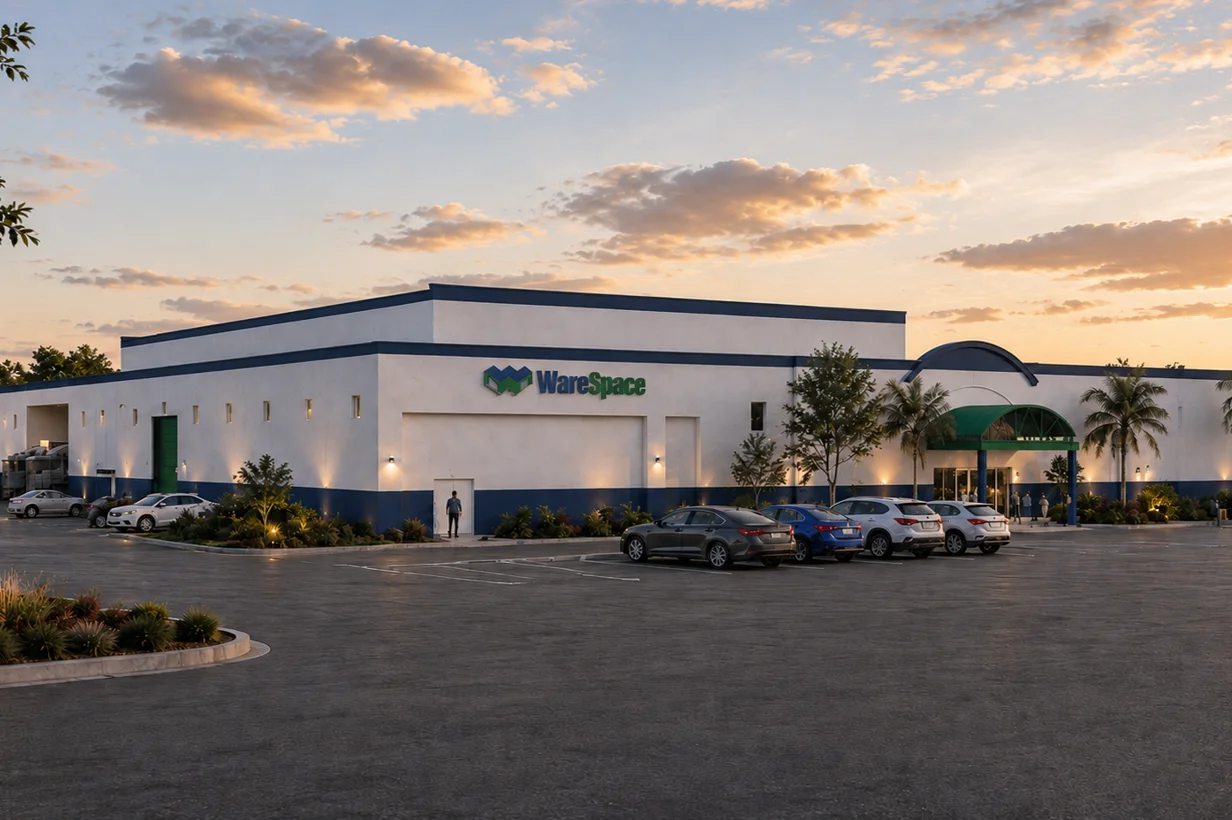
WareSpace has two planned options in the Miami market. WareSpace Medley is positioned near the airport and western freight network. WareSpace Miami Gardens is planned for 4900 NW 167th Street with direct Palmetto Expressway access and connections to I-95. Compare both on the Miami small warehouse hub, then review the Q2 2026 Miami-Dade industrial market report.


