
Shipping is one of the largest controllable costs in any product business, often running 10 to 15 percent of order value, according to ShippyPro. Yet most small businesses accept the rate they are quoted and never revisit it. That is money left on the table every single order.
This guide breaks shipping-cost optimization into seven levers you can actually pull, ending with the structural one most businesses overlook: where you store your inventory.
The 7 Levers at a Glance
| Lever | What it controls | Typical impact |
|---|---|---|
| 1. Dimensional weight | Billable weight on bulky-but-light boxes | Right-sizing can cut billable weight 20 to 40% |
| 2. Shipping zones | Cost driven by distance traveled | Zone 1 to Zone 7 more than doubles the rate |
| 3. Carrier mix | Cheapest carrier per package type | $2 to $10 saved per shipment |
| 4. Rate negotiation | Discount off the published tariff | Every line item is negotiable |
| 5. Shipping software | Commercial rates plus automation | Up to 89% off retail labels |
| 6. Packaging | DIM weight plus surcharge avoidance | Avoid handling and oversize fees |
| 7. Inventory location | Lowers your average zone at the source | $1.50 to $3+ saved per order |
Lever 1: Understand Dimensional Weight
Carriers bill the greater of your package’s actual weight and its dimensional (DIM) weight. DIM weight is the box volume divided by a carrier divisor, rounded up. A large, light box gets charged for the space it occupies, not what it weighs.
| Carrier | Commercial DIM divisor | Notes |
|---|---|---|
| FedEx | 139 | Same divisor for Ground and Express |
| UPS | 139 (166 retail) | 166 applies to retail or sub-1 cubic foot |
| USPS | 166, dropping to 139 (proposed July 2026) | Flat-rate boxes are exempt |
| DHL Express | 139 | US domestic |
Two recent shifts matter. Since August 2025, FedEx and UPS round fractional inches up before calculating, so an 11.1 inch side becomes 12 inches (Sizelabs). And USPS is moving to a 139 divisor in July 2026, erasing the favorable rate it long offered on bulky, lightweight parcels (GoBolt). The fix is the same as always: use the smallest box that fits, switch non-fragile soft goods to poly mailers, and cut the empty space inside. Our guide to reducing packaging costs goes deeper.
Lever 2: Master Shipping Zones
Zones measure how far a package travels from your origin to the customer, running from Zone 1 (local) out to Zone 8. The more zones a package crosses, the more you pay. A 2 lb parcel that costs about $7.80 in Zone 1 costs $16.40 or more in Zone 7, before fuel and residential surcharges pile on (Ecommerce Times).
Run a zone-distribution report on your last 90 days of orders. Most single-location shippers discover 40 to 60 percent of volume is heading to Zones 5 through 8, which is an inventory-positioning problem more than a rate problem (see Lever 7). Our shipping zones guide walks through how zones are calculated.
Lever 3: Match the Carrier to the Package
No single carrier wins across the board. Match each shipment to the carrier that is cheapest for that weight, zone, and destination.
| Package type | Cheapest carrier |
|---|---|
| Under 1 lb | USPS |
| 1 to 10 lbs, residential | USPS |
| 10 to 30 lbs, commercial | UPS or FedEx (commercial rates) |
| 30 to 150 lbs | UPS or FedEx |
| Rural or PO box | USPS |
| Overnight or time-critical | FedEx or UPS (guaranteed) |
USPS has no residential surcharge, worth $6 or more per package versus UPS and FedEx retail. UPS and FedEx pull ahead on heavier parcels once you have commercial rates. For a full breakdown, see our UPS vs. USPS vs. FedEx comparison.
Lever 4: Negotiate Every Line Item
A carrier “discount” is a percentage off the published tariff, and carriers raise that tariff with a general rate increase of roughly 5.9 percent every year (ShippyPro). If your contract does not cap that exposure, your effective rate climbs even when your discount looks unchanged.
Negotiate beyond the base rate:
- Fuel surcharges, which reached roughly 21.75 percent on UPS Ground in early 2026. Push to cap or index them.
- Accessorials like residential delivery ($6.45 to $6.95), address correction, and Saturday delivery.
- DIM divisor and thresholds, where a better divisor saves real money on light, bulky goods.
Come armed with 12 to 24 months of volume, weight, zone, and surcharge data. Carriers negotiate on data, and volume is not your only leverage. Credible growth projections and a multi-carrier commitment both strengthen your position.
Lever 5: Use Multi-Carrier Shipping Software
Shipping platforms pool volume to unlock commercial rates up to 89 percent off retail, even for businesses shipping one package a day, plus rate-shopping and label automation (Ecommerce Paradise).
| Platform | Pricing | Best for |
|---|---|---|
| Pirate Ship | 100% free | Small USPS and UPS domestic sellers |
| Shippo | $0 plus $0.05/label, or ~$19/mo Pro | Most growing multi-carrier stores |
| ShipStation | ~$10 to $230/mo by volume | Established multi-channel sellers at scale |
Smaller shippers (under about 1,000 per month) usually win on Shippo or Pirate Ship. At 2,000 or more per month, ShipStation’s flat subscription tends to beat per-label pricing (Ecommerce Times).
Lever 6: Engineer Your Packaging
Beyond DIM weight, packaging triggers expensive surcharges. Additional Handling kicks in over 50 lbs or 48 inches on the longest side, adding roughly $28 to $55, and Large Package surcharges add about $110 with a 90 lb minimum billable weight (Sizelabs). Keep a range of box sizes, palletize correctly, and audit your invoices monthly to spot the surcharges hitting your account hardest.

Lever 7: Store Inventory Closer to Your Customers
This is the lever most small businesses overlook, and it attacks shipping cost at the source. Every other lever optimizes the rate. Inventory location lowers your average zone before the rate is ever calculated.
Brands that split inventory across two or three regional nodes report saving $1.50 to $3.12 per shipment as their zone distribution improves, with average transit dropping under 2.8 days (Ecommerce Times). Faster delivery promises also convert 18 to 22 percent higher at checkout. A common two-node setup, one facility in the East or Central US plus one on the West Coast, covers roughly 96 percent of the continental US in 2 to 3 days by ground.
You no longer need $50M in revenue to do this. A small, flexible warehouse near a second metro lets you hold regional inventory, cut zones, and ship faster, without locking into a triple-net lease or an oversized footprint.
Fewer zones, lower cost
Cut your zones with warehouse space that is exactly your size
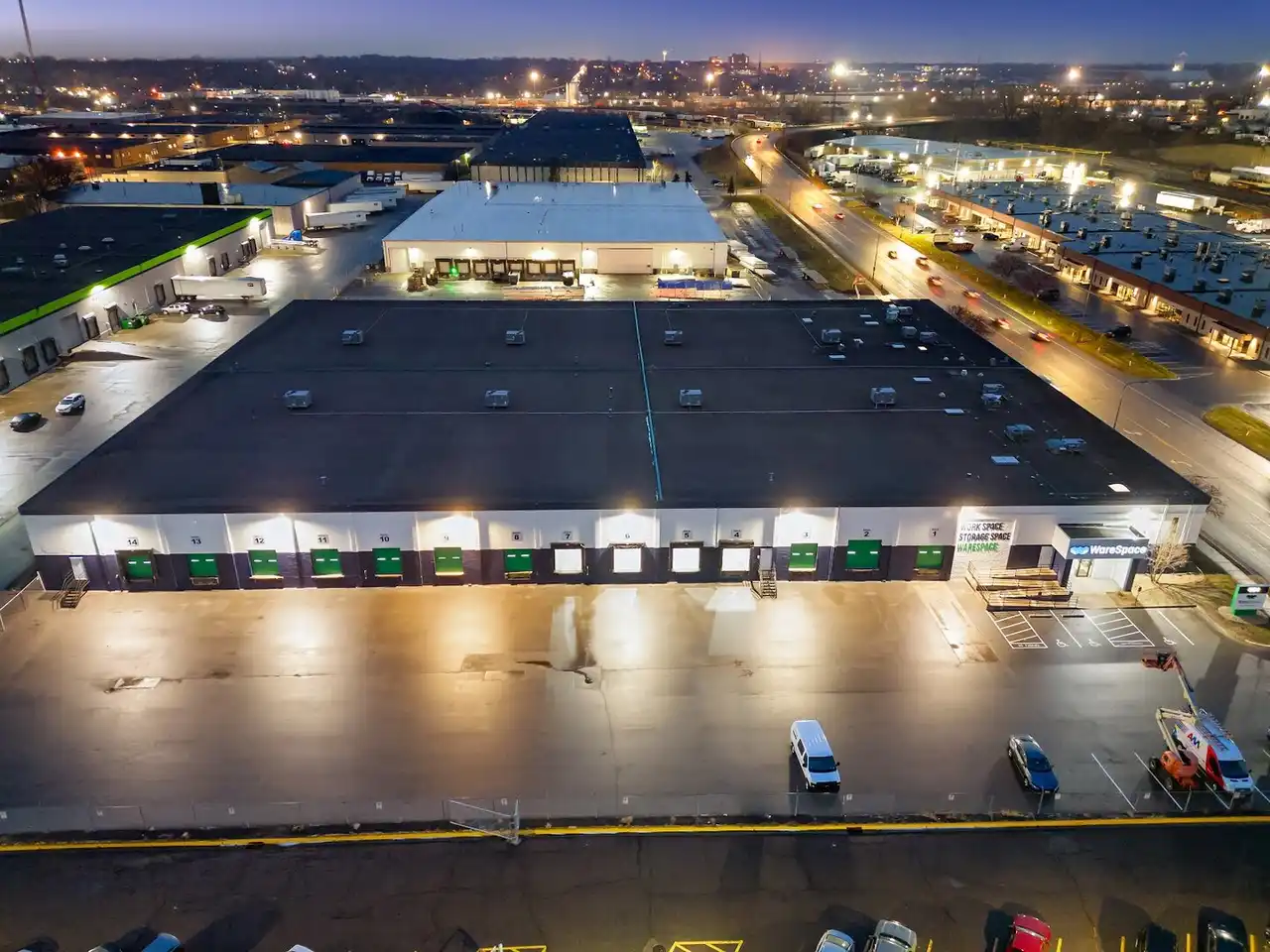
A small WareSpace warehouse in the right metro can drop your average shipment from Zone 5 to Zone 2. All-inclusive space starting at $1,000/mo, short-term leases, loading docks, and daily UPS, USPS, FedEx, and Amazon pickups on site, with locations across the country.
FAQ
What is the single biggest way to reduce shipping costs?
Shorten the distance your packages travel. Storing inventory closer to your customers lowers the shipping zone on most orders, which cuts both cost and transit time at the same time, no matter which carrier you use.
What is dimensional weight and why does it matter?
Dimensional weight is a billing method where carriers charge for the space a package occupies, not just its actual weight. A large, lightweight box is often billed on its size, so right-sizing your packaging directly lowers cost.
Do small businesses really get commercial shipping rates?
Yes. Multi-carrier platforms like Pirate Ship, Shippo, and ShipStation pool volume to give even one-package-a-day sellers commercial rates that can run up to 89 percent off retail.
How often should I renegotiate carrier contracts?
Treat contracts as living documents. Audit invoices regularly and renegotiate whenever your shipping profile changes, since carriers raise published rates around 5.9 percent every year.
Put It All Together
The fastest structural win on shipping cost is getting inventory closer to your customers, then layering the rate-level levers on top. WareSpace offers flexible small warehouse units from 200 to 2,000 sq ft in metros nationwide, with all-inclusive pricing starting at $1,000/mo, loading docks, daily carrier pickups, and short-term leases. Position stock near demand and watch your shipping costs fall. Book a tour or get an instant price estimate.
Sources
- Shopify, What Is Dimensional Weight?
- Sizelabs, Carrier DIM Weight Policies
- GoBolt, USPS vs UPS vs FedEx 2026
- Fit Small Business, FedEx vs UPS vs USPS
- atoship, Which Is Cheapest 2026
- ShippyPro, How to Negotiate Shipping Rates 2026
- Ecommerce Paradise, Shippo vs Pirate Ship vs ShipStation 2026
- Ecommerce Times, Multi-Node Inventory Strategy


