
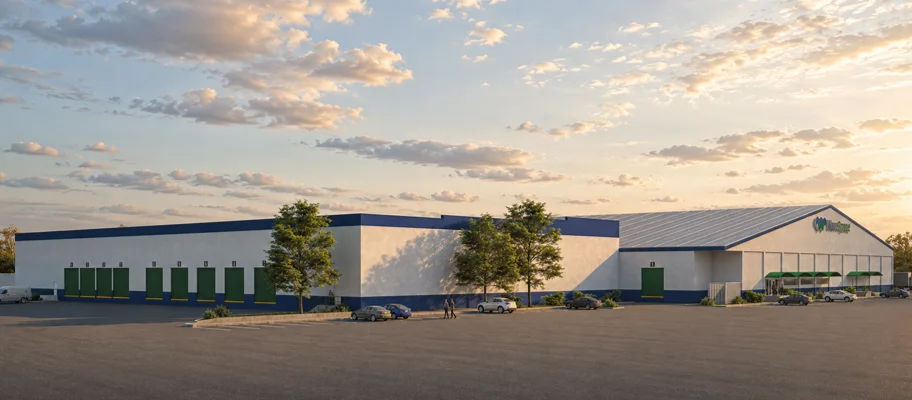
Austin heat makes HVAC more than an amenity. It affects the people working in a warehouse and the products, packaging, tools, and electronics stored there.
The National Weather Service describes Austin’s summers as long and hot. Official Austin-Bergstrom normals show 123.5 days per year with maximum temperatures at or above 90°F. Normal highs reach the upper 90s in July and August.
What Standard Warehouse HVAC Can Help Protect
A moderated working environment can reduce heat exposure for people and lower risk for many common business goods, including:
- Cardboard packaging and labels
- Electronics and accessories
- Textiles and finished consumer products
- Tools and approved equipment
- Wood products and furniture
- Printed materials and marketing inventory
- Retail-packaged auto parts, oils, and fluids stored within the Acceptable Use Policy
The exact requirements depend on the product. Review manufacturer guidance, insurance rules, and any regulatory obligations before choosing a space.
Climate Controlled Is Not Cold Storage
Standard HVAC does not mean:
- Refrigerated or frozen storage
- Pharmaceutical or medical validation
- Food manufacturing or commercial kitchen approval
- Product-specific humidity control
- Backup power for temperature-critical goods
- A guaranteed narrow temperature band
If a product must stay within a defined temperature or humidity range, request the building specification and confirm it in writing. Do not rely on the phrase “climate controlled” by itself.
Warehouse Space Versus Climate-Controlled Self-Storage
Search results for climate-controlled space in Austin are dominated by self-storage. That can be useful when you only need to store belongings or business goods, but storage-only units often restrict regular operations, staff work, receiving, customer activity, and on-site equipment.
A business warehouse must support both the goods and the approved workflow. Ask whether you can receive shipments, work inside the unit, use approved equipment, access shared loading, and run the day-to-day operation you described.
For the broader space comparison, read Small warehouse for rent in Austin.
What to Verify During a Tour
- Is HVAC included in the monthly fee?
- Which areas are conditioned: the unit, shared corridors, loading areas, or offices?
- Are there published operating ranges?
- What happens during after-hours access?
- Is backup power available? Do not assume it is.
- What power is available inside the unit?
- How are loading doors and long receiving periods handled?
- Are your products and business use permitted?
Austin Building Status
WareSpace’s standard model includes year-round HVAC. The Domain, Austin and South Austin are coming soon, so their final building specifications, opening dates, hours, unit mix, and availability are not yet verified.
South Austin is at 210 East St. Elmo Road. Use the Austin hub to compare both WareSpace buildings, or read the North Austin warehouse neighborhoods guide for the northern corridor.
Cost and Lease Structure
HVAC can be a separate utility and maintenance responsibility in a traditional industrial lease. Ask who pays for electricity, service, repairs, replacement, and after-hours operation.
WareSpace publishes an all-inclusive Monthly License Fee starting at $1,000/mo with short-term 6-12 month leases. Building-specific Austin pricing is not yet published. The Austin warehouse rental cost guide compares attributed market rents and the rest of the occupancy-cost stack.
Coming soon in South Austin
Get confirmed South Austin specifications
Join the waitlist for verified HVAC, unit, opening, and availability details as leasing approaches.


