
An ecommerce warehouse works when the inventory moves in one clear direction: receiving, inspection, reserve storage, forward picking, packing, outbound staging, and carrier handoff. Returns need their own path so damaged or unprocessed goods do not mix with sellable inventory.
Choose the workflow first. Then choose the square footage.
Map the Daily Flow
Before touring an Austin warehouse, sketch these zones:
- Receiving: where inbound cartons or pallets land
- Inspection: where counts and damage checks happen
- Reserve storage: deeper inventory that does not need daily access
- Forward pick: fast-moving products near the packing area
- Packing: tables, supplies, labels, scales, and devices
- Outbound staging: completed orders organized by carrier or pickup
- Returns: a separate place for inspection and disposition
A small unit can work efficiently when aisle widths, shelf depth, replenishment, and worktables are planned. A larger unit can still fail when every process overlaps.
Ecommerce warehouse checklist
- Receiving
- Loading access, delivery rules, staging
- Inventory
- Racking, aisle clearance, SKU organization
- Packing
- Power, WiFi, tables, labels, supplies
- Environment
- HVAC matched to people and product needs
- Access
- Secure entry and carrier procedures
Features That Support In-House Fulfillment
Loading access
Confirm the largest expected delivery, the carrier procedure, dock or grade-level access, and where goods can be staged. Do not assume a listing labeled warehouse has a practical process for your shipment size.
Racking and clear workflow
Measure usable storage, not just floor area. Keep pick locations reachable, heavy goods low, and reserve inventory separate from packing. The warehouse packing station guide provides a broader workflow framework.
Power and WiFi
Inventory systems, label printers, laptops, scanners, scales, and charging stations need dependable power and connectivity. Confirm the available service for every approved device.
HVAC
Austin’s long, hot summers make an uncontrolled warehouse a risk for staff and many products. Standard HVAC can moderate the working environment, but it is not refrigeration, freezer storage, pharmaceutical validation, or product-specific humidity control. Read the Austin climate-controlled warehouse guide before storing sensitive goods.
South Austin Location Strategy
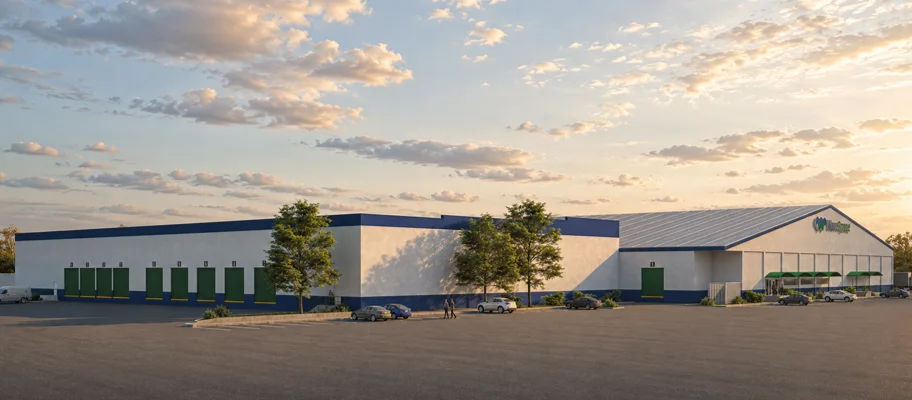
WareSpace South Austin is coming soon at 210 East St. Elmo Road. City records describe St. Elmo as a commercial and industrial district that is also experiencing land-use transition.
South Austin may fit a brand whose staff, suppliers, customers, or carrier workflow is oriented toward St. Elmo, East Congress, Sunset Valley, or the southern metro. It is not automatically the best choice for every seller. Compare actual inbound and outbound geography with The Domain, Austin, then use the Austin locations hub to compare both buildings.
The North Austin warehouse neighborhoods guide provides the northern counterpoint without inventing travel times.
In-House Warehouse or 3PL?
A private warehouse can fit a brand that wants direct control over inventory, packing quality, returns, presentation, and daily priorities. A third-party logistics provider can fit a brand that prefers outsourced labor, systems, and a multi-market network.
Ask:
- Is fulfillment part of the customer experience?
- Does your team need direct inventory access?
- Are order patterns predictable enough to staff?
- Do you have special packing or kitting work?
- Is a single Austin operating base sufficient?
- Which model produces the better total cost at your current order volume?
This is not a universal choice. Build the process and compare the numbers.
Right-Size the Space and Term
WareSpace’s standard model offers private units from 200 to 2,000+ Sq Ft with loading docks, HVAC, racking, WiFi, and on-site support. The final building-specific features, unit mix, opening date, and availability at South Austin are not yet confirmed.
WareSpace uses short-term 6-12 month leases and publishes an all-inclusive Monthly License Fee starting at $1,000/mo. For conventional lease costs and third-party market evidence, use the Austin warehouse rental cost guide.
Austin ecommerce space
Plan the workflow, then join the right waitlist
Compare The Domain in North Austin with South Austin and get verified building updates as leasing approaches.


