
If you distribute product across the Western US, geography is on your side in Salt Lake City. The valley sits at the meeting point of I-15 and I-80, within a day’s truck drive of a large share of the Western population, and the airport adds fast air-freight reach. That is why so much regional distribution runs through the Wasatch Front.
The catch: most distribution space is sized for big operators, with 5,000 sq ft minimums and multi-year NNN leases. Small-bay distribution space, 200 to 2,000 sq ft, lets a lean operation tap the same logistics position without the overhead. Here is how it works.
What “Small-Bay Distribution” Means
Small-bay distribution space is a compact unit set up to receive, hold, and ship product, sized for the operator who moves real volume but does not need a regional DC. Think of it as a forward stocking point: bulk comes in on pallets, gets racked, and goes back out as orders, transfers, or local deliveries. The defining features are dock or drive-in access, racking, and a location with fast freeway reach, not raw square footage.
For Salt Lake, that profile fits regional distributors, brands holding inventory closer to Western customers, last-mile and same-day operators, importers staging goods, and businesses splitting stock across multiple metros.
Why Salt Lake City for Distribution
- The Crossroads of the West. I-15 runs the full Wasatch Front and connects north to the Pacific Northwest and south toward Las Vegas and Southern California. I-80 runs east-west across the country. From one base you cover an enormous service area.
- Real reach numbers. Ground shipments from the valley reach roughly 63 million people within a half-day drive and around 80 million within 18 hours. Pair Salt Lake with an East Coast point and you cover about 96% of the US in two-day ground.
- Dense carrier infrastructure. Amazon runs more than a dozen facilities along the Wasatch Front, UPS operates a major regional hub, and FedEx Ground’s hub sits in North Salt Lake, all minutes from the airport and the I-15/I-80 corridor.
- A tight industrial market. Salt Lake’s industrial vacancy ran about 5.9 to 7.4% in Newmark’s Q4 2024 report, and small-bay space under 5,000 sq ft is tighter still, which is exactly why flexible 200 to 2,000 sq ft units are hard to find.
- Air freight at the airport. Salt Lake City International is minutes from the central industrial corridor, adding fast options for time-sensitive freight.
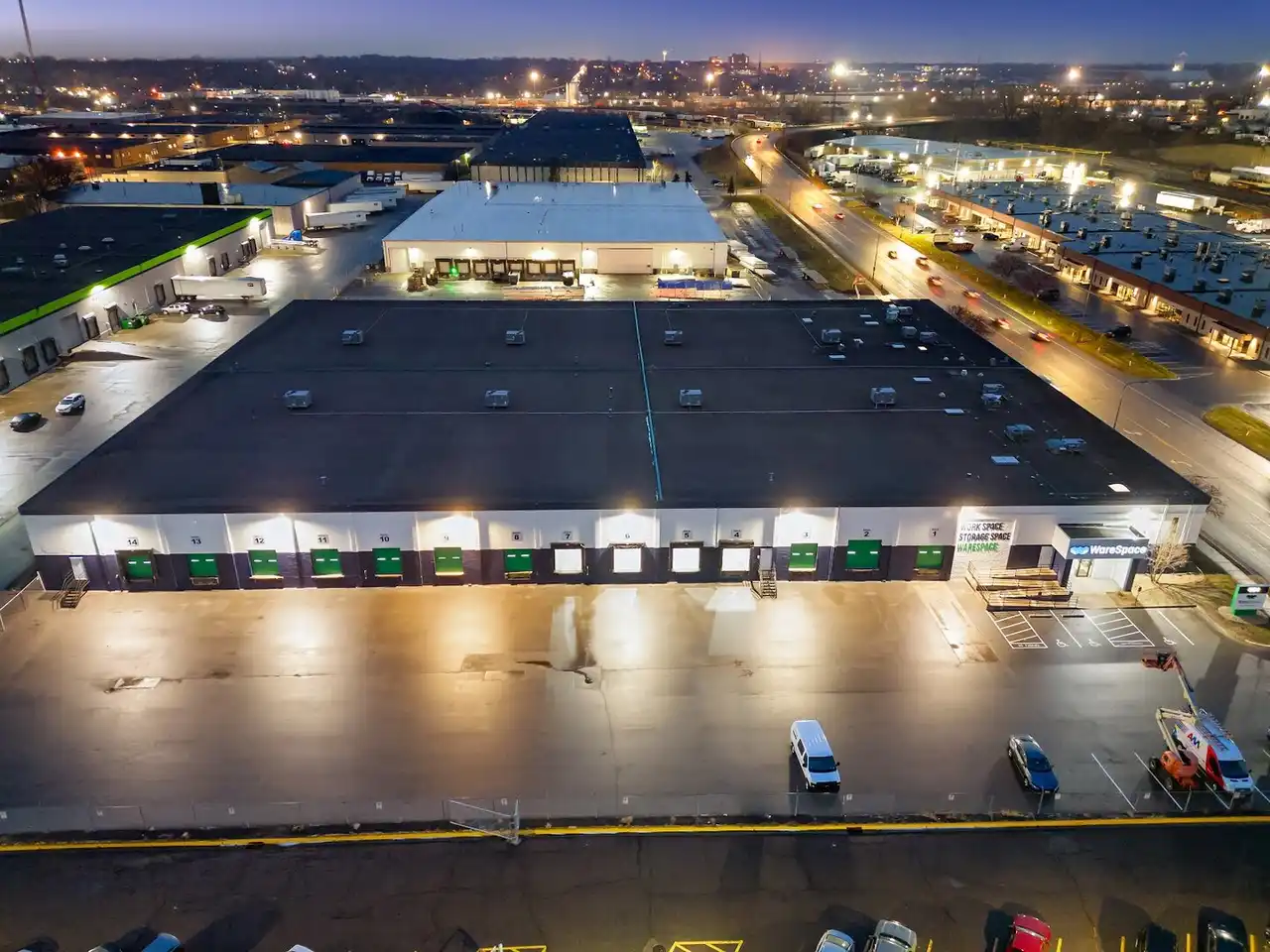
WareSpace Salt Lake City at 391 S Orange Street puts you minutes from I-15, I-80, and the airport, right in this distribution position.
How to Size Small-Bay Distribution Space
200 to 400 sq ft: forward stocking point
Enough to rack fast-moving SKUs and stage daily orders or transfers. Good for last-mile operators and brands holding a thin layer of Western inventory. Starting at $1,000/mo all-inclusive.
500 to 800 sq ft: regional hold-and-ship
Room for deeper inventory, pallet receiving, and a defined pick-and-stage flow. From $1,400/mo all-inclusive.
900 to 2,000 sq ft: lean regional hub
Bulk pallet storage, multiple SKUs, and staging for outbound trucks, without committing to a full DC lease. From $1,900 to $2,400/mo all-inclusive depending on size.
See the Salt Lake City warehouse cost guide for the full price breakdown.
What to Look For in Distribution Space
Dock and Drive-In Access
Pallet in, pallet out. Without dock or drive-in access you are breaking down freight by hand, which kills throughput. Confirm the dock and door setup matches how your freight arrives.
Racking and Throughput, Not Just Square Feet
A well-racked 400 sq ft unit moves more than a poorly laid-out 800. WareSpace units come with industrial racking installed, so you are running on day one instead of building out a shell.
Freeway Position and Carrier Access
Minutes saved on every inbound and outbound trip compound fast. A central location near I-15 and the airport widens your same-day radius and pushes back your shipping cutoffs.
Climate Stability and Security
Conditioned space protects freeze- and heat-sensitive freight through Utah’s seasonal swings, and 24/7 access control, cameras, and on-site management protect inventory you are responsible for.
Traditional Lease vs. Co-Warehousing for Distribution
A traditional DC lease makes sense at scale, but it locks you into 5,000+ sq ft, NNN charges, utilities, and a multi-year term. Co-warehousing lets you base a lean distribution operation in 200 to 2,000 sq ft with racking, docks, climate control, utilities, WiFi, and 24/7 access bundled into one flat rate, and lets you size up or down with 30 to 60 days’ notice as your Western volume shifts. For testing a market or holding regional inventory without overcommitting, that flexibility is the whole point.
Small-Bay Distribution FAQs for Salt Lake City
How far can I ship in one day from Salt Lake City? Ground freight from the valley reaches much of the Western US in one to two days, which is why so many brands hold Western inventory here.
Do WareSpace units have dock access for pallets? Yes. WareSpace Salt Lake City includes shared loading dock access suited to pallet receiving and outbound staging.
Can I use a small unit as a forward stocking point? Yes. Many tenants rack fast movers in a 200 to 400 sq ft unit and replenish from a larger base elsewhere, starting at $1,000/mo all-inclusive.
Can I scale to a larger unit as volume grows? With co-warehousing you move up within the same building on 30 to 60 days’ notice, instead of renegotiating a multi-year lease.
Ready to base distribution at the Crossroads of the West? Get an instant quote or book a tour of WareSpace Salt Lake City, and start with the small warehouse rental guide.


