
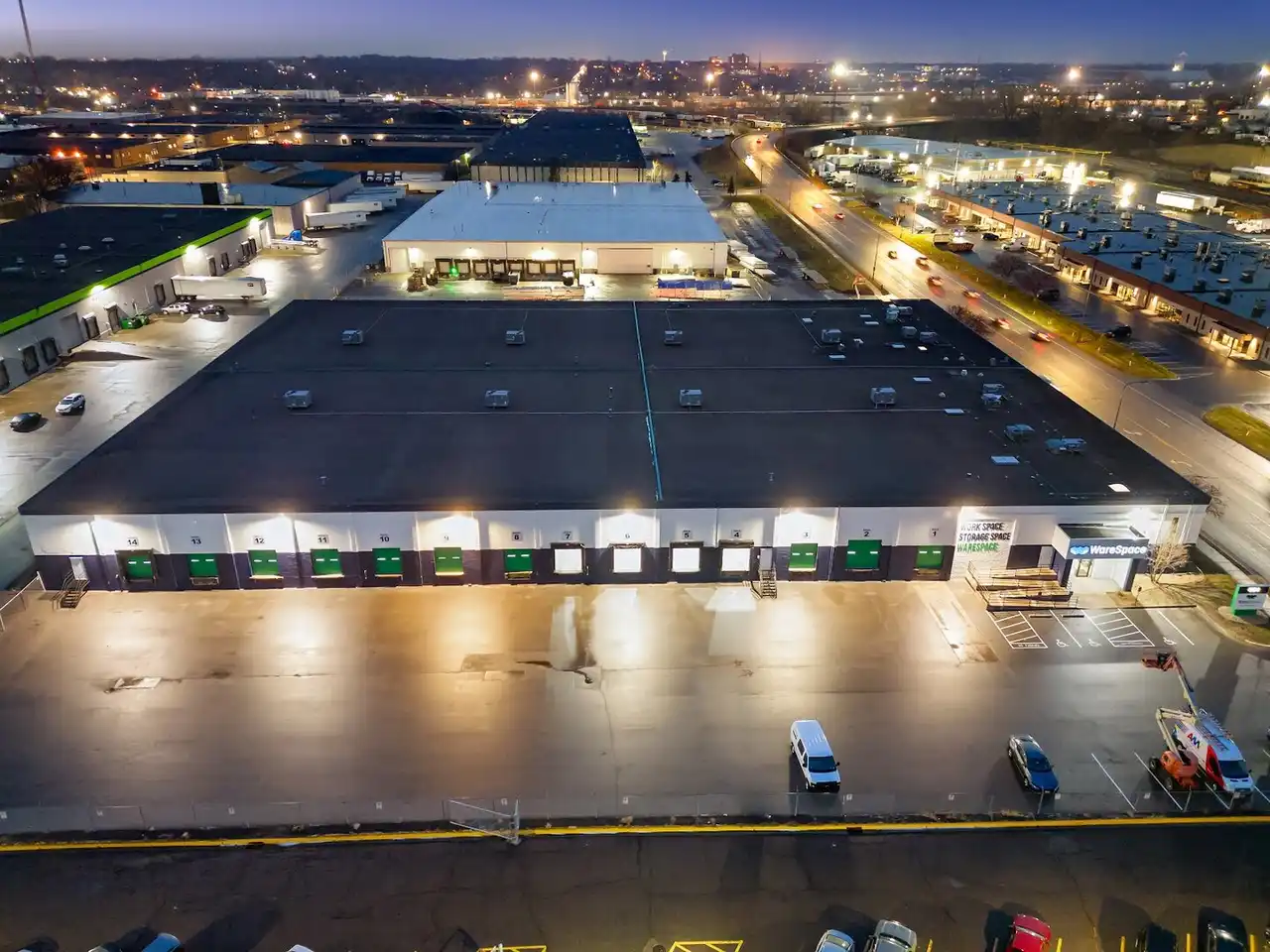
Houston sits where I-10 and I-45 cross, two of the most critical freight corridors in the country. I-10 runs coast to coast. I-45 connects Dallas to Galveston through the heart of Texas. Port Houston handles 4.03 million TEUs annually, making it the fifth largest container port in the US.
If you are running distribution operations, managing wholesale inventory, or coordinating logistics across the Southwest, Houston’s infrastructure creates advantages other metros do not match. The challenge: finding warehouse space that fits small to mid-sized distribution needs. Most available inventory targets 50,000+ Sq Ft tenants, so spaces under 2,000 Sq Ft with proper loading infrastructure require knowing where to look.
Why Houston Works for Distribution and Logistics
Highway intersection advantage. I-10 carries freight coast to coast, I-45 runs north-south from Dallas to Galveston, and Beltway 8 circles the metro connecting all major radial highways. From Northwest Houston you reach Austin in 2.5 hours, San Antonio in 3, Dallas-Fort Worth in 3.5 to 4, and New Orleans in 5. For regional distribution covering Texas and the Southwest, that positioning reduces average delivery distances.
Port Houston access. The port handled 4.03 million TEUs in 2024, the largest container port on the Gulf Coast. If you import from Asia, Latin America, or Europe, Houston offers direct access without routing through congested West Coast ports, and container-to-warehouse time drops when your warehouse sits within an hour of the port.
Carrier hub density. Houston concentrates fulfillment infrastructure: Amazon facilities including the 800,000 Sq Ft HOU9 sortation center in Katy, FedEx Ground’s largest Texas hub, UPS Willowbrook with hundreds of trucks and three-day continental ground reach, and major USPS regional distribution. For daily carrier pickups, proximity means later cutoffs and faster transit.
Labor pool. The Houston metro has 7.9 million people, so warehouse workers, pickers, and drivers exist if you hire.
What Houston Distribution Businesses Need in Warehouse Space
Loading Dock Configuration
The number, type, and positioning of loading docks directly impact efficiency. Dock-high doors allow direct truck-to-warehouse transfer without ramps, moving pallets from trailer to racking in minutes. Drive-in doors work for box trucks and sprinter vans but are less efficient for full pallet loads. Giovanni Romero receives furniture for interior design clients on 18-wheelers at WareSpace Houston, where dock access lets a pallet jack move pieces from trailer to storage efficiently.
Clear Height for Racking
Distribution efficiency depends on vertical storage. Standard 10 to 12 foot ceilings limit you to single-level pallet storage. Look for 14 to 16 foot minimum clear height to allow multi-level racking. WareSpace Houston units feature 16+ foot ceilings with industrial racking included.
Climate Control for Product Protection
Houston’s 75% average humidity and 99 days above 90 degrees affect inventory. Electronics, supplements, pharmaceuticals, non-refrigerated food, paper goods, and cosmetics need climate control. Hardware, non-fluid automotive parts, building materials, and non-perishable consumer goods are usually fine without it. For the full picture, see our Houston climate control guide.
Carrier Proximity and Space That Scales
Daily pickups from multiple carriers require reasonable proximity to their hubs; being 45+ minutes out means earlier cutoffs and potential surcharges. Northwest Houston puts you within 15 to 20 minutes of FedEx Ground, UPS Willowbrook, and Amazon’s sortation centers. Distribution needs also fluctuate with seasonal swings and customer growth, and traditional 3 to 5 year leases lock you into fixed square footage, while flexible terms let you adjust.
Houston Neighborhoods for Distribution Warehouse Space
Best for carrier access and highway connectivity is Northwest Houston along Beltway 8 / I-10 / US-290, the densest concentration of fulfillment infrastructure in Houston. WareSpace Houston at 10795 Hammerly Boulevard sits in this corridor with 200 to 2,000 Sq Ft units, loading dock access, and all-inclusive pricing. Southeast Houston near the port suits importers with the lowest rents but 45 to 60 minute drives to the carrier hubs. North Houston near IAH suits air freight, and Southwest Houston suits West Houston customer bases at higher rents.
For routes concentrated inside Loop 610, WareSpace Houston Heights is coming soon at 1215 Seamist Dr. Compare the two areas in Houston Heights vs. Northwest Houston.
What Distribution Warehouse Space Costs in Houston
A traditional 1,500 Sq Ft lease runs base rent around $1,125/mo plus NNN/CAM near $500, utilities of $250 to $400 for climate control, $4,000 to $8,000 in upfront equipment, and a one to two month deposit, on a 3 to 5 year term with a personal guarantee, with $6,000 to $12,000 due up front.
Co-warehousing at WareSpace Houston bundles everything into one all-inclusive rate with a one-month deposit and equipment availability confirmed by building:
- 200 to 400 Sq Ft: starting at $1,000/mo all-inclusive
- 500 to 800 Sq Ft: from $1,400/mo all-inclusive
- 900 to 1,400 Sq Ft: from $1,900/mo all-inclusive
- 1,500 to 2,000 Sq Ft: from $2,400/mo all-inclusive
A traditional lease can cost less monthly for established operations confident about 3+ year needs, but co-warehousing requires a fraction of the move-in cost and provides flexibility to scale. See the full breakdown in our Houston warehouse cost guide or on our pricing page.
Traditional Lease vs. Co-Warehousing for Houston Distribution
Go traditional if your long-term space needs are predictable, you want maximum customization with permanent installations, or you need significant specialized infrastructure. Go co-warehousing if you are growing with uncertain space needs, need immediate occupancy in days rather than months, value one all-inclusive payment with no facility management overhead, or want to avoid thousands in upfront equipment costs.
Common Houston Distribution Warehouse Mistakes
- Choosing a location on rent alone. Southeast Houston has the lowest rents, but if your carriers hub in Northwest Houston, the 45-minute drive each way costs more than the savings.
- Inadequate loading infrastructure. One shared dock with ten tenants competing creates daily bottlenecks. Verify dock availability matches your operation.
- Ignoring ceiling height. 12-foot ceilings limit you to single-level storage, so you pay for floor space you cannot stack.
- Signing long-term leases during growth. Locking into 5-year terms while volume climbs means paying for unused space or scrambling for capacity mid-lease.
Houston Distribution Warehouse FAQs
What size warehouse do small distribution businesses need? Startup and small operations: 200 to 1,000 Sq Ft. Established small distributors: 1,000 to 2,000 Sq Ft. Plan 30 to 40% more than current inventory requires to absorb seasonal peaks and growth.
Do I need climate control for distribution space in Houston? It depends on product mix. Electronics, supplements, cosmetics, and food typically require it; automotive parts, hardware, and industrial supplies usually do not. Houston’s 75% humidity and extreme heat make it more important here than in drier climates.
How important is Port Houston proximity for distribution? Critical if you import containers directly, less so if product arrives via domestic ground freight. Even for importers, carrier hub proximity often matters more for outbound distribution than port proximity for inbound.
What is the minimum lease term for distribution warehouse space? Traditional industrial leases run 3 to 5 years. Co-warehousing at WareSpace Houston offers six-month terms, which reduce risk when inventory fluctuates.
Can I run a small 3PL from shared warehouse space? Yes. Many 3PL operations start under 2,000 Sq Ft serving multiple small clients, given adequate internet for WMS systems, loading access for daily pickups, and a layout for receiving, storage, and packing.
WareSpace Houston offers distribution warehouse space from 200 to 2,000 Sq Ft at 10795 Hammerly Boulevard with climate-controlled units, loading docks, 16+ foot ceilings, and industrial racking included, all-inclusive starting at $1,000/mo. Get an instant quote or book a tour to see available units.


