Chicago’s industrial market stayed active through the first half of 2026. Vacancy remained near 5%, leasing increased, and net absorption improved. New construction also accelerated, but most of that space is far larger than what a small business needs.
That distinction matters if you are looking for a few hundred or a few thousand square feet. A metro can add millions of square feet of industrial supply while still offering few right-sized units with loading access, HVAC, secure entry, power, and workable lease terms.
Executive Summary
Cushman & Wakefield reported 4.8% Chicago industrial vacancy in Q2 2026, holding at that level for the third consecutive quarter. First-half net absorption reached 5.1 million square feet, up 146% from the same period in 2025. New leasing totaled 21.8 million square feet, up 11.1% year over year.
Colliers reported 4.91% vacancy and 3.8 million square feet of net absorption in Q1 2026. Cresa reported 5.51% total vacancy, 5.07% direct vacancy, and 3.79 million square feet of net absorption for the same quarter.
The sources agree on the direction: Chicago remained active, absorption improved, and vacancy stayed relatively contained. They differ on exact values because each firm tracks a different property universe and uses its own timing and methodology.
Current Chicago Industrial Metrics
| Source | Period | Vacancy | Net absorption | Under construction | Comparable market asking rent |
|---|---|---|---|---|---|
| Cushman & Wakefield | Q2 2026 | 4.8% | 5.1M Sq Ft, first half | 13.5M Sq Ft | $7.55/Sq Ft net |
| Colliers | Q1 2026 | 4.91% | 3.8M Sq Ft | 12.5M Sq Ft | Rent growth +6.5% YoY |
| Cresa | Q1 2026 | 5.51% total / 5.07% direct | 3.79M Sq Ft | 15.3M Sq Ft | $9.33/Sq Ft market asking rent |
Every per-square-foot figure above is third-party comparable-market data. None is a WareSpace asking or achieved rent.
Kane and DuPage Conditions
Cresa’s Kane & DuPage cluster contained roughly 155.0 million square feet of inventory in Q1 2026. The report showed 4.8% direct vacancy, negative 100,254 square feet of quarterly net absorption, 1.943 million square feet under construction, 1.601 million square feet leased, and a $9.36/Sq Ft comparable market asking rent.
The mixed picture is important. Availability was not exceptionally high, but the submarket returned some space during the quarter while new projects remained under construction. A business should evaluate the exact building, size band, condition, and lease structure rather than treating the metro average as a quote.
For the practical differences between DuPage County and the north suburbs, use the Downers Grove and Wheeling warehouse guide. For the full cost stack behind a traditional quote, read the Chicago warehouse cost guide.
Demand, Construction, and the Small-Bay Gap
Cushman & Wakefield reported that first-half new leasing rose 11.1% year over year. Q2 leasing increased 14.3% from Q1, and quarterly net absorption rose from 1.8 million square feet in Q1 to 3.3 million square feet in Q2.
Construction also increased. Cushman & Wakefield reported 13.5 million square feet under construction across 44 facilities in Q2 2026. The average project was about 306,000 square feet, and six developments exceeded 500,000 square feet.
Downers Grove North and Western-Suburb Access
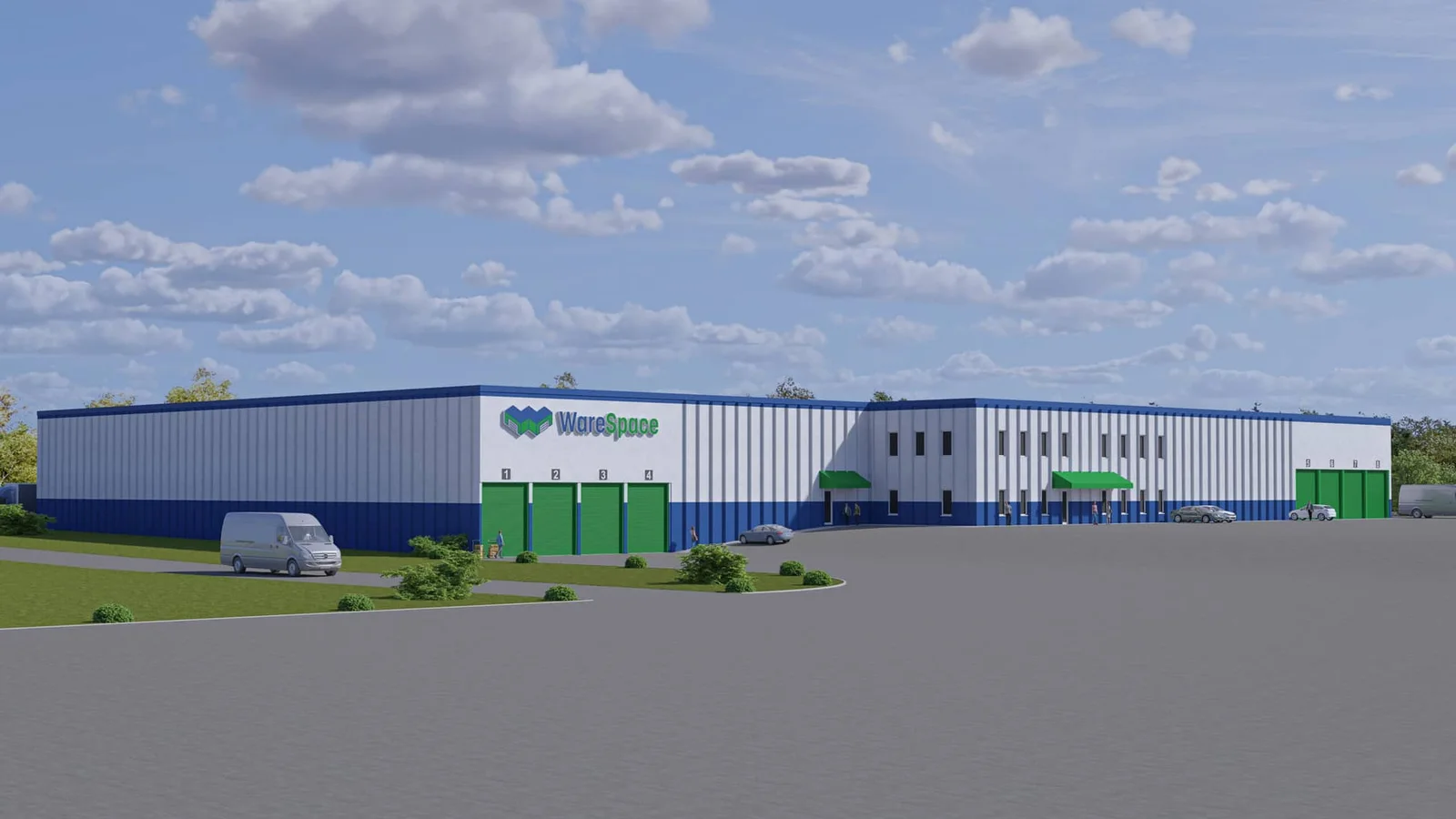
WareSpace acquired 1400 Centre Circle in July 2026 as its second Downers Grove location and third Chicago-area building. The 71,689-square-foot industrial property is planned for conversion into flexible small warehouse space for more than 80 small businesses. The WareSpace acquisition announcement identifies nearby access to I-355, I-88, and I-294.
The DuPage County 2026 Transportation Capital Program allocates $40.25 million in federal and county funds and includes nearly 45 lane miles of pavement work. The county is also studying the Finley-Belmont / US 34 intersection area, east of I-355 and south of I-88. The county says that area handles roughly 50,000 to 55,000 vehicles per day.
WareSpace Downers Grove North, Chicago is coming soon. The opening date, public hours, inventory, and any building-specific offer are not yet verified. Join the Downers Grove North waitlist for confirmed updates.
What the Market Means for Your Business
eCommerce and fulfillment
Chicago’s central freight network supports inbound inventory and national distribution, but your unit still needs a practical layout for receiving, storage, picking, packing, returns, and outbound staging. The Chicago ecommerce warehouse guide explains how to size that workflow.
Contractors and trades
A contractor needs secure tool and material storage, loading access, HVAC, and an operating base that reduces daily retrieval and staging friction. Use the Chicago contractor warehouse guide to compare space and access needs.
Service businesses
A commercial address and organized equipment storage separate operations from the home while keeping supplies available for evenings and weekends. The Chicago service-business storage guide covers this use case.
Businesses choosing a first warehouse
If you are moving out of a garage, start with the small warehouse rental guide for Chicago. It explains the difference between traditional industrial space, self-storage, and right-sized co-warehousing.
Risks to Watch
- Brokerage sources use different geographies, building universes, and methods.
- Most new supply is large-format and may not relieve the shortage of right-sized units.
- Some submarkets returned space in Q1 even as metro absorption improved.
- Construction and transportation projects can affect access and timing.
- Third-party per-square-foot asking rents exclude taxes, insurance, CAM, utilities, equipment, and build-out.
- WareSpace Downers Grove North’s opening date, hours, inventory, GBP profile, and specific offers remain unverified.
2026 Outlook
Chicago’s industrial market remains large, active, and relatively balanced. Vacancy near 5% gives tenants more choice than the record-tight years, while improving absorption and leasing show that demand has not disappeared.
The practical issue for a small business is format, not just total supply. Most available and newly constructed space is much larger than 2,000 square feet. WareSpace serves that middle ground from two Downers Grove buildings and Wheeling, with private units, loading docks, HVAC, shared infrastructure, and short-term 6-12 month leases.
Explore the Chicago locations hub or compare the submarkets in the Downers Grove and Wheeling guide.
Sources and Methodology
This report compares current brokerage and public-infrastructure sources. Figures are shown separately rather than averaged because providers use different geographies, property universes, and timing. All per-square-foot rents are explicitly third-party comparable-market figures.


